# Opus 4.7 + Seedance 2.0 Is INSANELY Cracked for AI UGC...
**作者**: Adrian Solarz
**日期**: 2026-04-17T11:35:47.000Z
**来源**: [https://x.com/adriansolarzz/status/2045103927738122259](https://x.com/adriansolarzz/status/2045103927738122259)
---
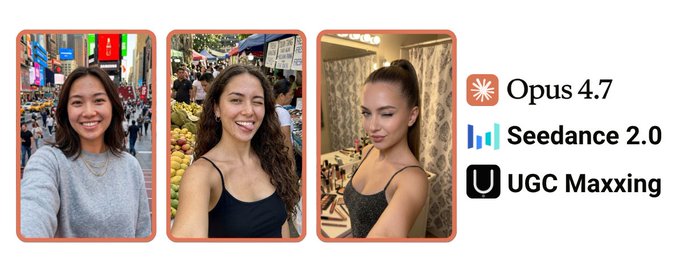
Opus 4.7 was just released so we've already been testing it alongside with Seedance 2.0 for AI UGC... and went VIRAL overnight.
people literally have no clue how good that combination is right now:
I've been running content operations for B2C brands for years, and in that time I have gotten disappointed multiple times whenever a new tool releases, because companies almost always overhype them.
buy that's not what's is happening here.
the output quality and production velocity this combination produces is in a completely different category from what was possible 12 months ago, and the operators who figured this out are already lapping their competiton.
so let me break down the EXACT systems we are running that made clients go viral...
## Why These 2 Tools Together Changed Everything
Opus 4.7 isn't just a better writing tool.
he framing that reduces it to "AI for scripts" misses what actually matters about the capability jump.
the specific thing that changed between previous model generations and Opus 4.7 is the quality of the multi-step reasoning across long context, which is the specific capability that the strategic layer of a B2C content operation has always required.
a creative intelligence brief for a serious AI ugc operation is not a single prompt producing a single output. it is a sequence of analytical passes across customer reviews, competitive ad libraries, performance data from previous campaigns, persona research documents, and product specifications.
the quality of the brief depends on the model's ability to maintain coherent analytical reasoning across all of those inputs simultaneously and produce recommendations that are grounded in the full picture rather than in whatever fragment of context was most recently provided.
Opus 4.7 handles this full context simultaneously without losing the thread.
the persona analysis it produces is specific enough to drive actual script decisions. the competitive gap analysis identifies the positioning angles that are actually underserved in the landscape rather than the obvious angles that every operator is already running. the performance data analysis diagnoses the specific creative variables driving the results rather than producing surface-level summaries of what performed well.
the practical effect is that the strategic work that used to require 40 to 60 hours of coordinated analytical effort across a team with multiple specializations now happens in a single 60-minute session where the model does the heavy analytical work and the operator guides the direction through progressively deeper prompts.
## What Seedance 2.0 is Capable of...

Seedance 2.0 is the first AI video generation tool where the output quality consistently passes as authentic on the first generation rather than requiring the 3 to 5 regenerations and heavy post-production that previous tools required.
before you had tons of issues that that are now solved:
1/ the motion is physically plausible.
previous generation AI video produced movement that the human eye identifies as synthetic within the first second regardless of how convincing the face looks. Seedance 2.0 generates motion that follows the physics of actual human movement, with proper weight distribution, organic acceleration, and the micro-movements that real humans make unconsciously.
2/ the facial expressions track with the script.
one of the fastest routes to the "this looks like AI" response has always been a face that holds a neutral default expression regardless of what is being said. Seedance 2.0 generates expressions that track with the emotional content of the script when the prompt specifies the emotional arc, which means the visual performance supports rather than undermines the script's persuasion architecture.
3/ the lighting behaves like real environmental light.
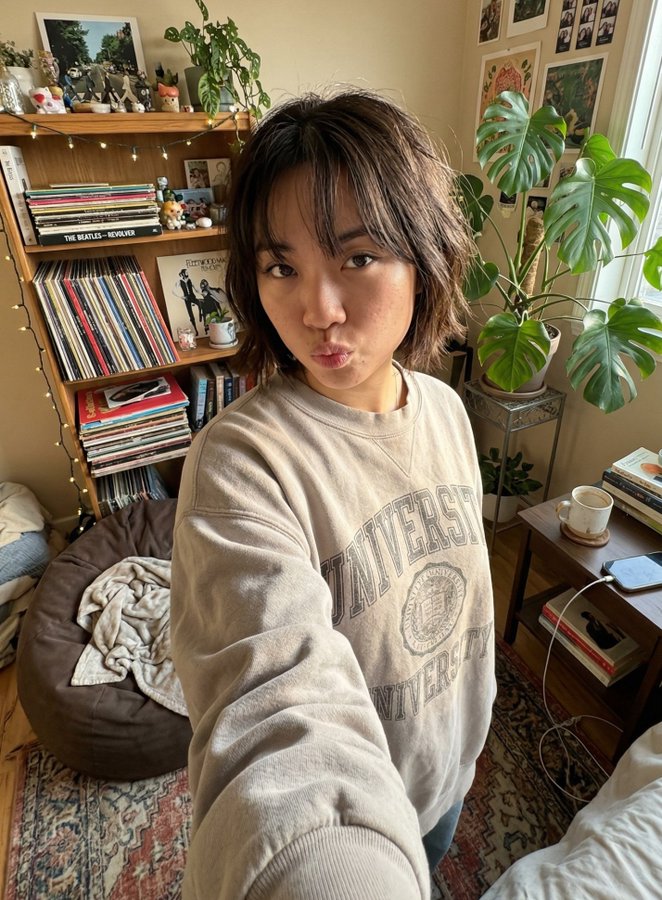
synthetic lighting has been one of the most persistent visual tells of AI video content. Seedance 2.0 renders shadows, reflections, and ambient light behavior consistent with real indoor and outdoor environments, which eliminates one of the most common first-frame signals that triggers the advertising skepticism response in cold audiences.
4/ the audio is natively synchronized.
the voice over, lip sync, and vocal pacing all generate as a single integrated output rather than requiring separate voice generation and subsequent manual sync that almost always produces visible artifacts at the lip-sync layer.
EACH these alone removed tons of bottlenecks for AI UGC, and made generated content super realistic.
but now it got even better with Opus 4.7 (and faster...)
## What a Single Operator Can Actually Do in a Day With This Stack
team-based production models have always had problems with generating content, as it took time and was costly. but now it has been made easier and faster than ever because of how good Opus 4.7 + Seedance 2.0 really is...
with Opus 4.7 handling the strategic and writing layers and Seedance 2.0 handling the production layer, a single operator can sustainably produce 60-100+ pieces per day across a portfolio of 20 to 30 accounts.
and this is exactly how we're running it now:
the daily rhythm that runs this output volume is surprisingly sustainable because the tools handle the cognitively demanding work and the operator handles the judgment and review.
the morning session (60 to 75 minutes):
here we run performance data through Opus 4.7 with a standing analytical prompt that identifies what is working, what is underperforming, and what specifically should change in the day's production brief.
the output is a ranked priority list of which concepts to double down on, which hooks to retest, and which new angles to introduce based on what the data has surfaced.
the midday production session (90 to 120 minutes):
in this session we run through the day's scripts (generated by Opus 4.7 overnight using the previous day's creative brief) and push them through Seedance 2.0 in batches.
the quality review on each output takes approximately 2 minutes, and the outputs that pass the 4-point quality check move directly to the scheduling queue.
the scheduling session (<30 minutes):
we literally just distribute the approved content across the account portfolio using Later (later(.com)) or Buffer (buffer(.com)) at time-zone-calibrated posting times and updates the performance tracking document with the new content and its production parameters.
the weekly intelligence session (90 minutes, once per week):
here we run the full week's performance data through Opus 4.7 for the comprehensive analytical review. the output updates the creative intelligence brief with newly validated patterns and produces the production brief for the following week.
the total time investment is approximately 3-4 hours per day on production days, plus the weekly review vs the 8+ that it used to take.
this way we can focus on other important things too.
## How the Output Passes the "Authenticity Sh*t Test"
the reason the output from this stack passes the authenticity test is not that either tool in isolation produces extraordinary output. it is that the integration between the 2 tools produces output where the strategic quality and the production quality align rather than working against each other.
previous workflows often produced a mismatch:
- strong scripts executed through weak production quality
- strong production quality delivering scripts that sounded fake
- visually engaging content paired with messaging that felt generic
the viewer's social perception system picks up these mismatches immediately because they are the specific signal that distinguishes produced content from organic content.
but after testing it, the script is written in genuinely spoken language because Opus 4.7 can be explicitly prompted to produce dialogue that passes the read-aloud test, with specific instructions about conversational contractions, sentence length variation, and natural disfluencies at specific points.
and that's insanely efficient...
the production preserves the delivery authenticity because Seedance 2.0's native audio generation, combined with the correct prompting for emotional state and micro-imperfection, produces voice over that sounds like a real person delivering a genuine recommendation rather than an AI reading a script.
the visual presentation matches the script's emotional register because the prompt to Seedance 2.0 specifies the emotional arc across the duration of the video, which means the facial expressions and body language track with what the script is saying rather than defaulting to neutral.
the environmental context matches the persona because Opus 4.7's creative intelligence brief specifies the environmental details that would be authentic for the target persona's actual life, and Seedance 2.0's prompt incorporates those details specifically.
so once all 4 layers align, the viewer's social perception system processes the content as genuine personal communication rather than as an ad, which is the specific trust signal that determines whether cold traffic converts or scrolls past.
## The Prompting...

the prompting system that produces this integrated output has a few non-negotiable elements that operators who are getting inconsistent results are usually missing.
on the Opus 4.7 side:
the creative intelligence brief is loaded into the context before any script generation happens.
every script request references the brief explicitly.
hook variations are generated in distinct psychological categories rather than as 5 variations on a single approach.
script quality audits run on every output before production to catch the written-rather-than-spoken sentences that AI writing is prone to producing.
on the Seedance 2.0 side:
prompts specify scene direction rather than static descriptions, including lighting physics, camera behavior, and physical action sequences rather than just what exists in the frame.
skin texture and detail specifications appear in every prompt that includes a human face.
anti-polish language replaces the professional-quality language that pulls the model toward produced aesthetics.
emotional state specifications include the arc across the duration of the video rather than a single default state.
when these prompting disciplines are maintained consistently across the production operation, the output quality ceiling is high enough that the quality review process becomes confirmation rather than filtering, which is what makes the daily production volume sustainable.
## What All of This Means for B2C Brands Not Running it Yet
the specific dynamic that makes this combination such a strong competitive opportunity right now is the gap between how capable the tools are and how many operators are running them together at the level that produces the quality ceiling we talked about before.
But Opus 4.7 literally launched 24h ago, and Seedance 2.0 is still relatively new... so you aren't late just yet.
but this window does not stay open indefinitely.
the tools are already widely available, the prompting techniques are getting documented and shared across AI ugc communities, the capability gap between operators using this stack at capability level and operators using it at baseline level is closing every week.
what doesn't close is the creative intelligence and account portfolio authority that operators build during the window.
an operation that has been running this stack for the next 6 months when the broader market finally adopts it has:
- 6 months of account portfolio authority
- 6 months of validated audience intelligence
- 6 months of an email list and warm lead accumulation
these are things that later entrants cannot replicate regardless of how good their tools are when they finally enter
the early-mover advantage available right now is not about access to tools. it is about starting the compounding intelligence clock now rather than later.
## What Brands Still Running the Previous Stack Are Competing Against
for B2C brands still running content operations with creator dependencies or with the previous generation of AI ugc tools, the competitive landscape in 6 months is going to look structurally different from what it looks like right now.
the brands running Opus 4.7 plus Seedance 2.0 at full capability are going to have accumulated 6 months of daily creative testing at 60 to 100+ variations per day.
that's tens of thousands of validated tests against their specific target audience. the creative intelligence that this produces is not accessible to a brand that starts in 6 months regardless of their budget, because audience intelligence is a function of time and testing volume, not a function of investment.
the brands running this stack are also going to have built email lists of 50,000+ segmented leads from their quiz funnel completions, account portfolios with 6 months of algorithmic authority, and DM automation layers capturing the high-intent traffic that content generates.
all of these are compounding assets that require time to build.
a brand that decides to make this transition in 6 months is going to be competing against operators who started the compounding clock now, and the gap between them is going to be a 6-month head start on every compounding asset in the acquisition stack.
## What You Need To Do NOW

week 1: build the creative intelligence brief.
using Opus 4.7, run the full research and analysis sequence on the target B2C vertical: persona depth research, pain architecture mapping, competitive gap analysis, unique mechanism articulation, and transformation framing. save the brief as the central reference document for every subsequent decision.
week 2: build the script library and run initial Seedance 2.0 production.
generate 20 to 30 initial scripts across distinct concept angles using the creative intelligence brief as context. run the scripts through the naturalness audit. push them through Seedance 2.0 production using the 4-element prompt framework. evaluate the output quality and iterate the prompts until the output consistently passes the 4-point quality check.
week 3: begin distribution across a small initial account portfolio.
deploy 5 to 8 accounts in the initial warmth protocol. distribute content across the portfolio at appropriate posting frequencies. begin collecting performance data from the first content batches.
week 4: run the first weekly optimization review.
feed the first week of performance data through Opus 4.7's analytical framework. identify the patterns that are emerging from the initial content. update the creative intelligence brief with the first validated insights. produce the second week's production brief based on what the data has surfaced.
after 30 days of running this sequence, the operation has a working version of the full stack, initial validated audience intelligence, an account portfolio beginning to build algorithmic authority, and the daily operating rhythm that sustains the whole system going forward.
from that point, the compounding effect takes over.
each subsequent week of testing adds to the creative intelligence library.
each subsequent month of posting adds to the account portfolio authority.
each subsequent quarter of operation widens the gap between this operation and competitors who are still running previous generation stacks or waiting for more evidence before making the transition.
and the tools are available and the method is simple.
the output quality is at the level where AI ugc genuinely competes with human-produced content on every metric that matters for algorithmic distribution and cold traffic conversion.
what determines whether any specific operator captures this is the decision to start running the stack at capability level now rather than waiting.
so don't just bookmark this, actually implement it.
P.S. If you want us to implement this entire ai ugc structure for your campaigns...
DM me "OPUS" on X (@adriansolarzz) and I'll show you exactly how we'd apply these principles to your specific offer.
($800,000+ generated with viral reels)
- adrian
## 相关链接
- [Adrian Solarz](https://x.com/adriansolarzz)
- [@adriansolarzz](https://x.com/adriansolarzz)
- [10K](https://x.com/adriansolarzz/status/2045103927738122259/analytics)
- [@adriansolarzz](https://x.com/@adriansolarzz)
- [Upgrade to Premium](https://x.com/i/premium_sign_up)
- [7:35 PM · Apr 17, 2026](https://x.com/adriansolarzz/status/2045103927738122259)
- [10.7K Views](https://x.com/adriansolarzz/status/2045103927738122259/analytics)
---
*导出时间: 2026/4/18 11:13:51*