# The Ultimate Guide to Claude Opus 4.7
**作者**: Paweł Huryn
**日期**: 2026-04-20T11:59:47.000Z
**来源**: [https://x.com/PawelHuryn/status/2046197132105769065](https://x.com/PawelHuryn/status/2046197132105769065)
---
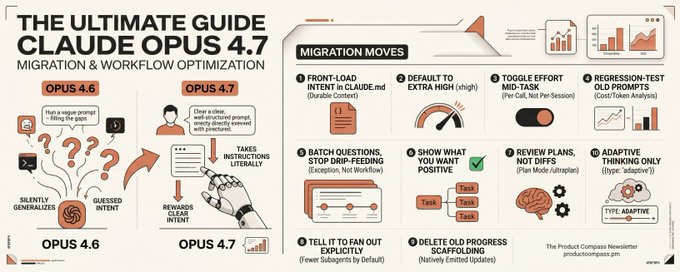
The ten moves to make your 4.6 prompts work on 4.7, leading with context, and why you don't need more instructions.
4.6 guessed. 4.7 stopped guessing. Your old prompts still work, mostly. The ones that break need one of the ten moves below.
Anthropic shipped Claude Opus 4.7 on April 16. The official migration guide puts it plainly: 4.7 “takes the instructions literally” and “will not silently generalize.”

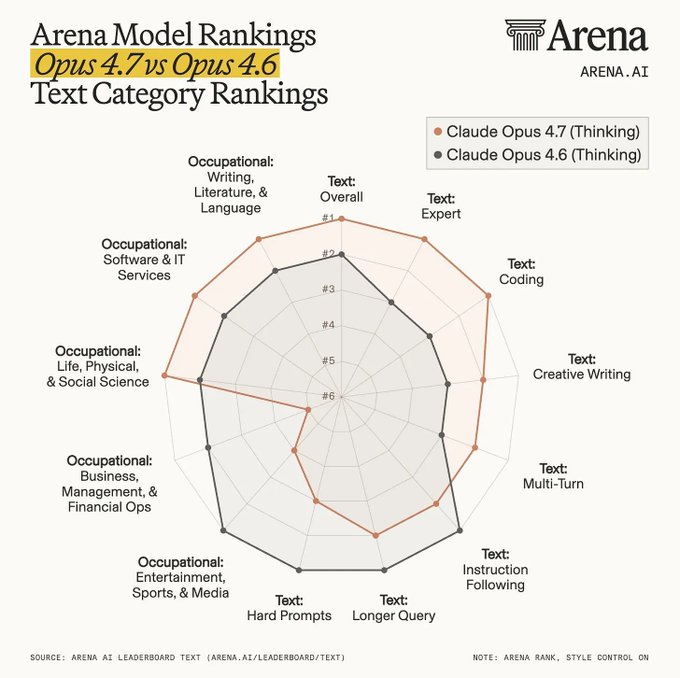
It's not a uniform upgrade. Wins on coding, creative writing, and structured work. Losses on instruction following in vague prompts, multi-turn, and long-context retrieval. The benchmarks show a trade, not a regression. I sort real regressions from preference artifacts and cost mechanics in § 6.
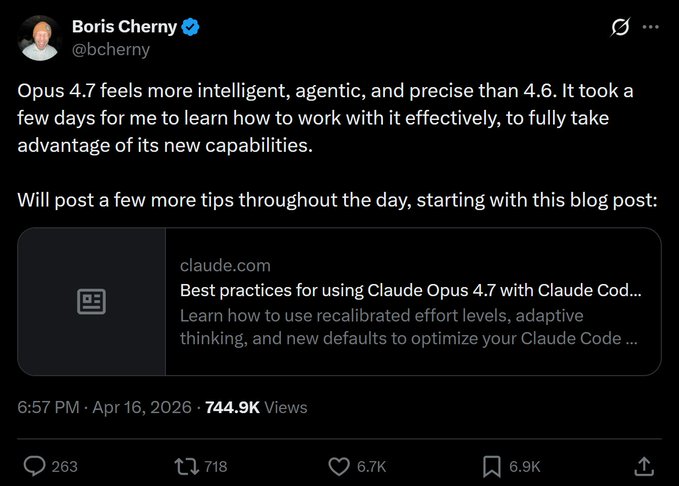
> Boris Cherny, Claude Code lead at Anthropic, posted on release day: "It took a few days for me to learn how to work with it effectively."
## Why Read This, and Why Now
Reddit calls 4.7 a regression. Arena shows 4.6 winning on instruction following. Anthropic's migration guide says it's working as designed. Boris confirms it's more agentic and precise.
The takes don’t agree because they’re measuring different workflows.
I’ve had 16+ hours with 4.7 so far. By the end you’ll know what's new, the ten moves to make your 4.6 prompts work on 4.7, and why you don't need more instructions.
## 1. What’s New in Opus 4.7
4.6 filled the gaps when your instruction was unclear. 4.7 takes you at your word.
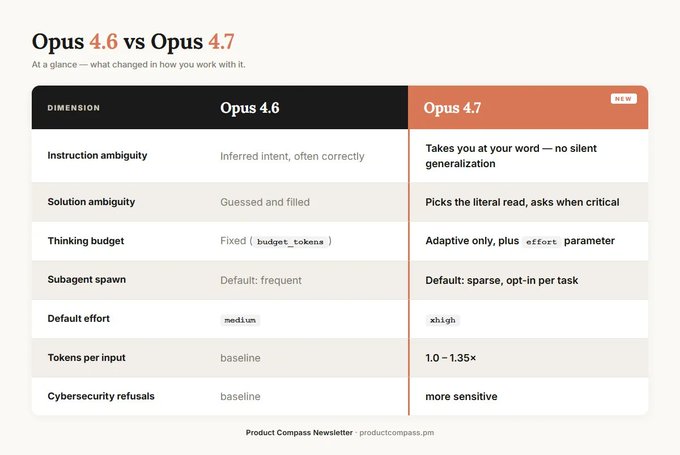
For PMs: if your 4.6 workflow relied on the model “figuring out what you meant,” expect 4.7 to ask more questions, or to do less, or to do exactly what you asked for (which is not what you wanted).
## 2. Intent: The Universal Unlock
This is the principle: 4.7 rewards clear intent. Everything else in this post is a tactic.
Not longer prompts, not more rules, not a bigger CLAUDE.md. Intent splits into two layers:
- Strategic context is durable: what you’re building, who it’s for, what’s off-limits, what good looks like. Write it once. Put it in CLAUDE.md. It loads every session, progressive-disclosure style, so you’re not paying to reintroduce the project on turn one.
- Per-task intent is variable: what specifically do I want Claude to do right now. You still write this every turn. The gain from CLAUDE.md is that you stop retyping the strategic context on top of it.
> Treat Claude as a partner. Help it understand what and why you're doing, your strategy, objectives, and success criteria. Strategic context - not micromanaging the agent.
The full version (seven components, how they compose) is in The Intent Engineering Framework for AI Agents, published three months before 4.7 shipped.
This approach is aligned with Karpathy's claude coding post, too:
> "LLMs are exceptionally good at looping until they meet specific goals and this is where most of the "feel the AGI" magic is to be found. Don't tell it what to do, give it success criteria and watch it go (...) Change your approach from imperative to declarative to get the agents looping longer and gain leverage."
2.1 Anthropic and OpenAI convergence
Anthropic moved Opus 4.7 toward more literal instruction following. OpenAI updated their December 2025 Model Spec to say “consider not just the literal wording but the underlying intent.”
They’re converging from opposite directions. Anthropic is adding precision to its intent-first model. OpenAI is adding intent inference to its precision-first model. The same skill (engineering intent clearly) is becoming the unlock on both sides.
2.2 And Anthropic is already encoding it
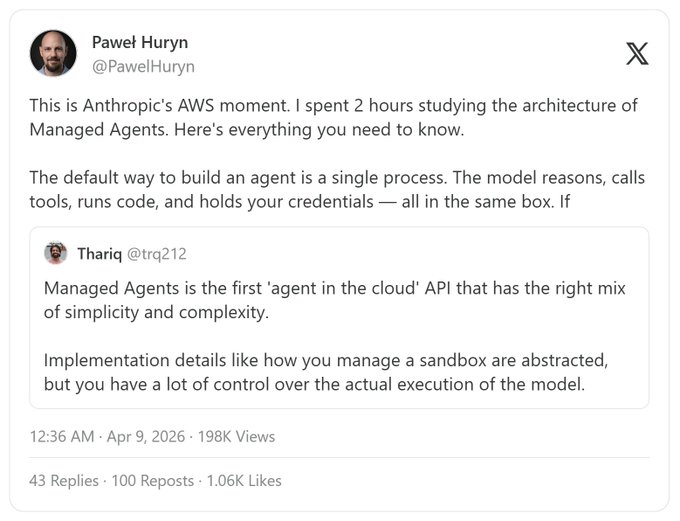
Managed Agents (research preview) bakes success criteria and outcomes into the framework itself. I recently covered it here:
The skill of engineering clear intent is what transfers across vendors and models. That’s why it has the longest shelf life right now.
## 3. The 10 Claude Opus 4.7 Migration Moves

3.1 Front-load intent in CLAUDE.md
You don’t have to retype the strategic context every session. Put it in CLAUDE.md once. Every future session starts with the context already loaded. You still write per-task intent each turn, but you stop paying the “remember what we’re building” tax.
Delegate information the agent doesn’t have to read every session to other files, like strategy.md below:
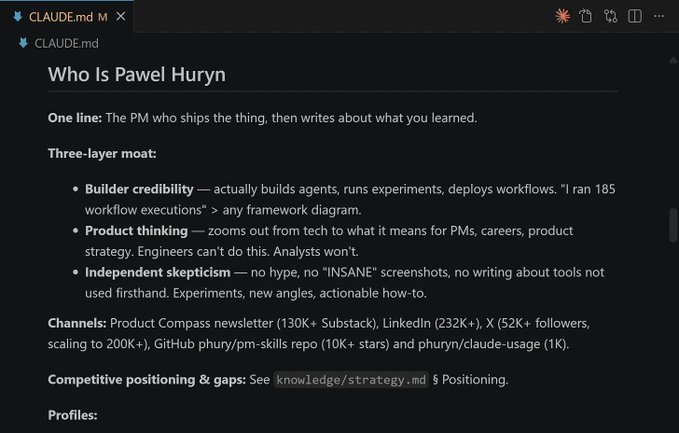
Example: My context from CLAUDE.md
3.2 Default to Extra high (xhigh)
New effort level between high and max. Anthropic’s own recommendation for coding and agentic work.
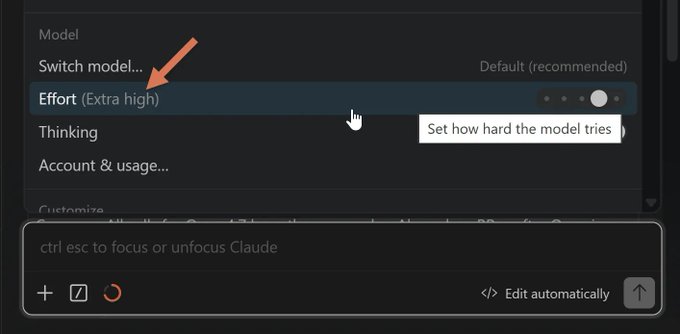
Setting "Extra high" effort in VS Code Claude extension
max is prone to overthinking. Most “4.7 feels slow” reports trace back to people running max by reflex. Use max only when the problem actually needs deep reasoning.

3.3 Toggle effort mid-task
Effort is per-call, not per-session. max for the hard subproblem. Drop back to high for the rest.
3.4 Regression-test old prompts
New tokenizer. 1.0 to 1.35× more tokens per input. Your 4.6 workflows cost more on 4.7 before you’ve changed a line.
The offset to know about: Anthropic raised rate limits alongside the 4.7 launch:
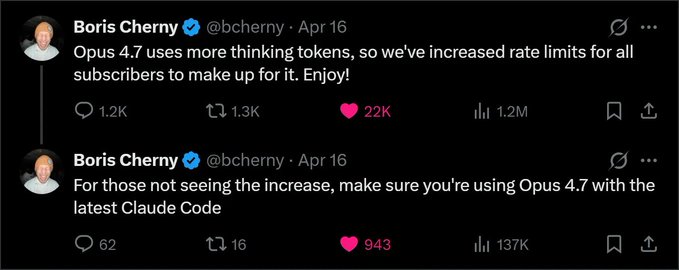
My perspective: what matters most is cost per correct output token. Test it for your specific product before switching the model.
3.5 Batch questions. Stop drip-feeding.
If you have three questions, ask all three in one message.
On 4.6, clarifying across 3-4 turns worked. On 4.7, each turn adds reasoning overhead on top of literal interpretations from earlier turns.
Treat clarification as an exception, not a workflow.
3.6 Show what you want
Positive examples beat negative rules. According to Anthropic:
- “Like this: ” followed by short examples works.
- “Don’t do this: ” rarely lands and burns tokens trying.

Example: Positive examples from my personal agent
If your prompt has more than three “don’t” or “never” lines, flip them. What does the ideal output look like? Show two examples and cut the rules.
3.7 Delete old progress scaffolding
“Summarize every 3 tool calls.” “Give me a status update before moving on.” “Explain your plan, then execute.” Delete these.
Opus 4.7 emits high-quality progress updates natively in long agentic traces:
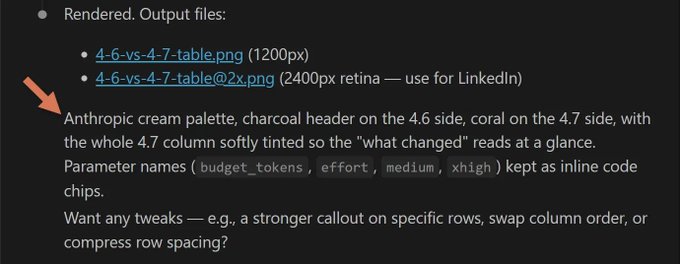
Example: Progress updates generated by my personal agent
3.8 Tell it to fan out explicitly
Opus 4.7 spawns fewer subagents by default and makes fewer tool calls per task. For parallel exploration, you now have to ask.
Phrasings that work: “spawn subagents in the same turn to investigate X, Y, Z.” Autonomy went up. Default delegation went down.
I also added separate instructions for Dispatch in DISPATCH.md. This file is referenced from CLAUDE.md:

Example: My instructions on how to spawn subagents
Later, I explain why I started using Dispatch less often.
3.9 Review plans, not diffs
Two different primitives. Don’t confuse them.
- Plan mode (Shift+Tab twice in the Claude Code CLI): inline, surfaces the plan before any code exists in the current session. Use for any change that touches more than one file:
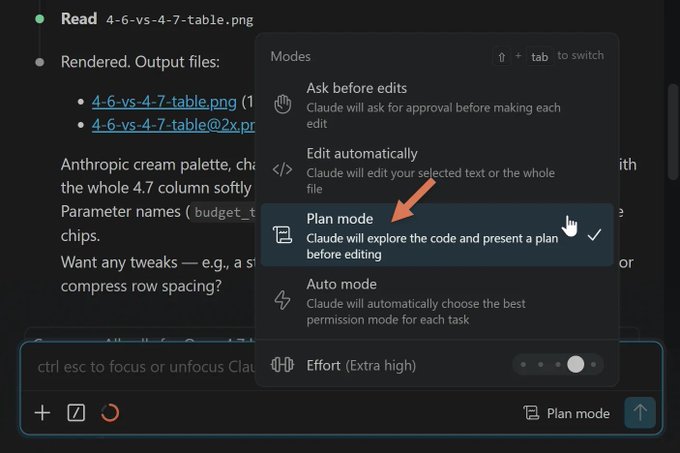
Plan Mode in VS Code Claude extension
- /ultraplan (CLI only, doesn’t work in VS Code extension): cloud-based plan drafting from the CLI, review in the browser. Plan runs in a remote session while your terminal stays free:
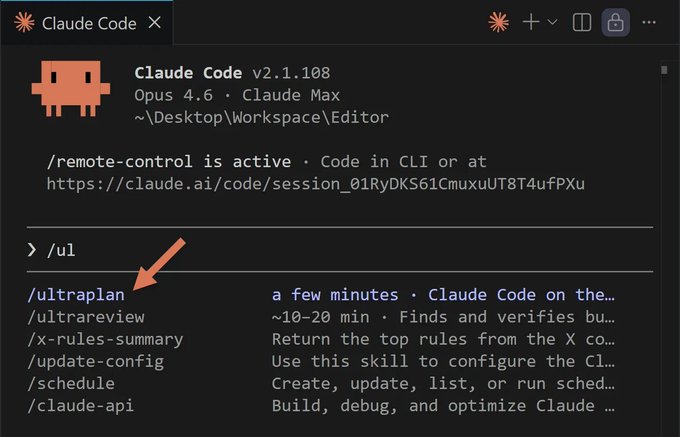
/ultraplan in Claude Code terminal in VS Code
Why this matters more on 4.7: because 4.7 takes intent literally, a small misread in the plan becomes a large misread in the diff. Reviewing a 10-line plan for intent drift takes 30 seconds. Reviewing a 200-line diff for the same drift takes 15 minutes.
My take:
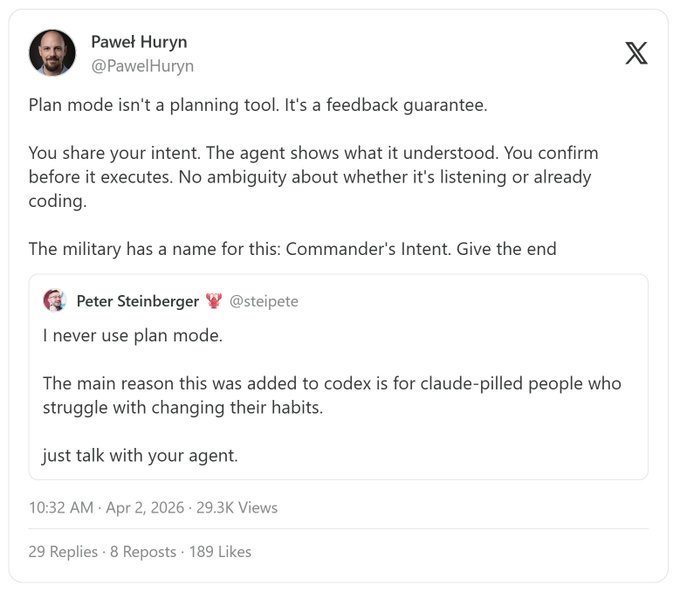
Intent drift compounds. Catch it in the plan.
3.10 Adaptive thinking only
Fixed thinking budgets are gone. Use thinking: {type: 'adaptive'} plus the effort parameter. Old API calls with budget_tokens return HTTP 400. Find and replace before flipping the model flag:
If you’re not an engineer, you don’t need to memorize the syntax. Just give your agent this documentation: https://platform.claude.com/docs/en/build-with-claude/adaptive-thinking.md (remove “.md” for a human-friendly view).
## 4. Closing
4.6 felt smart. 4.7 is honest. What looks like less intelligence is 4.7 refusing to guess.
Your leverage is clear intent. Not reviewing every line of code, writing endless instructions, or retyping the same context every session. The more of your intent and expectations you push up to CLAUDE.md, the less you pay (in money and attention) to run the thing.
P.S. Everything above is the mental model. In my Substack: 10 highest-ROI moves for 4.7 that actually move the bill, my remote setup, and Cowork/Dispatch gotchas.
## 相关链接
- [Paweł Huryn](https://x.com/PawelHuryn)
- [@PawelHuryn](https://x.com/PawelHuryn)
- [101K](https://x.com/PawelHuryn/status/2046197132105769065/analytics)
- [official migration guide](https://platform.claude.com/docs/en/about-claude/models/migration-guide#migrating-to-claude-opus-4-7)
- [posted on release day](https://x.com/bcherny/status/2044822408826380440)
- [The Intent Engineering Framework for AI Agents](https://www.productcompass.pm/p/intent-engineering-framework-for-ai-agents)
- [claude coding post](https://x.com/karpathy/status/2015883857489522876)
- [engineering intent](https://www.productcompass.pm/p/intent-engineering-framework-for-ai-agents)
- [here](https://x.com/PawelHuryn/status/2042008828334764162?s=20)
- [engineering clear intent](https://www.productcompass.pm/p/intent-engineering-framework-for-ai-agents)
- [take](https://x.com/PawelHuryn/status/2039622041960140878?s=20)
- [https://platform.claude.com/docs/en/build-with-claude/adaptive-thinking.md](https://platform.claude.com/docs/en/build-with-claude/adaptive-thinking.md)
- [In my Substack](https://www.productcompass.pm/p/claude-opus-4-7-guide)
- [Upgrade to Premium](https://x.com/i/premium_sign_up)
- [7:59 PM · Apr 20, 2026](https://x.com/PawelHuryn/status/2046197132105769065)
- [101.8K Views](https://x.com/PawelHuryn/status/2046197132105769065/analytics)
- [View quotes](https://x.com/PawelHuryn/status/2046197132105769065/quotes)
---
*导出时间: 2026/4/21 09:56:32*
---
## 中文翻译
# Claude Opus 4.7 终极指南
**作者**: Paweł Huryn
**日期**: 2026-04-20T11:59:47.000Z
**来源**: [https://x.com/PawelHuryn/status/2046197132105769065](https://x.com/PawelHuryn/status/2046197132105769065)
---

让你的 4.6 提示词在 4.7 上继续有效的十个方法,以上下文为先,以及为什么你不需要更多的指令。
4.6 会猜测。4.7 停止了猜测。你的旧提示词仍然有效,大体上如此。那些失效的,需要用到下面十个方法之一。
Anthropic 于 4 月 16 日发布了 Claude Opus 4.7。官方迁移指南说得很直白:4.7 “按字面意思理解指令”,并且“不会默默地进行泛化推断”。


这不是一次全面的升级。它在编程、创意写作和结构化工作上表现更好。在模糊提示词下的指令遵循、多轮对话和长上下文检索上表现变差。基准测试显示的是一种权衡,而非倒退。我在第 6 节中将真正的性能倒退与偏好差异及成本机制区分开来。
> Anthropic 的 Claude Code 负责人 Boris Cherny 在发布当天发帖称:"我花了好几天才学会如何高效地使用它。"

## 为什么要读这篇文章,以及为什么是现在
Reddit 称 4.7 是一次倒退。Arena 排行榜显示 4.6 在指令遵循上更胜一筹。Anthropic 的迁移指南说这是按设计运作的。Boris 确认它更具代理性、更精确。
这些观点不一致,是因为它们衡量的是不同的工作流程。
到目前为止,我已经使用 4.7 超过 16 个小时。读完本文,你将了解什么是新变化、让你的 4.6 提示词在 4.7 上继续有效的十个方法,以及为什么你不需要更多的指令。
## 1. Opus 4.7 的新变化
当你的指令不清晰时,4.6 会填补空白。而 4.7 会完全按你说的做。

对于产品经理来说:如果你的 4.6 工作流程依赖于模型“自行领会你的意图”,那么请预期 4.7 会提出更多问题,或者做得更少,或者精确地执行你的要求(而这可能不是你想要的)。
## 2. 意图:通用的解锁钥匙
这就是核心原则:4.7 回报清晰的意图。本文中的其他一切内容都只是策略。
不是更长的提示词,不是更多的规则,也不是更大的 CLAUDE.md。意图分为两个层面:
- 战略性上下文是持久的:你在构建什么、为谁构建、什么是禁区、好的结果是什么样的。写一次即可。放进 CLAUDE.md。它在每次会话中都会加载,采用渐进式披露的方式,因此你无需在第一轮对话中花成本重新介绍项目。
- 每个任务的意图是可变的:我现在具体想让 Claude 做什么。你在每一轮中仍然需要写这个。CLAUDE.md 带来的好处是,你不必在此基础上重复输入战略性上下文。
> 把 Claude 当作合作伙伴。帮助它理解你在做什么、为什么做、你的策略、目标和成功标准。是战略性上下文,而不是对代理的微观管理。
完整版本(七个组成部分及其组合方式)见《AI 代理的意图工程框架》,发表于 4.7 发布前三个月。
这种方法也与 Karpathy 关于 claude 编程的帖子相一致:
> “LLM 在达成特定目标之前不断循环方面表现得极为出色,而这正是大部分‘感受到 AGI’的魔力所在。不要告诉它该做什么,给它成功标准,然后看它行动(……)。把你的方法从命令式改为声明式,让代理循环得更久,获得更大的杠杆效应。”
2.1 Anthropic 与 OpenAI 的趋同
Anthropic 让 Opus 4.7 向更字面化的指令遵循靠拢。OpenAI 则更新了他们 2025 年 12 月的模型规范,称“不仅要考虑字面措辞,还要考虑底层意图”。
它们正从相反的方向趋同。Anthropic 是在其意图优先的模型中加入精确性。OpenAI 则是在其精确优先的模型中加入意图推断。同样的技能(清晰地工程化意图)正在成为双方的解锁钥匙。
2.2 而且 Anthropic 已经在将其编码化
托管代理(Managed Agents,研究预览版)将成功标准和成果直接内置到框架本身中。我最近在这里介绍过它:

工程化清晰意图的技能是可以在不同供应商和模型之间通用的。这就是为什么它目前具有最长的保质期。
## 3. Claude Opus 4.7 迁移的 10 个动作

3.1 在 CLAUDE.md 中前置意图
你不必每次会话都重新输入战略性上下文。只需将其放入 CLAUDE.md 一次。之后每次会话都会在上下文已加载的状态下开始。你仍然需要在每一轮中编写每个任务的意图,但不再需要支付“记住我们在构建什么”的成本。
将代理不需要每次会话都阅读的信息委派给其他文件,比如下面的 strategy.md:

示例:我来自 CLAUDE.md 的上下文
3.2 默认使用 Extra high(xhigh)
介于 high 和 max 之间的新努力级别。这是 Anthropic 自己对编程和代理工作的推荐设置。

在 VS Code Claude 扩展中设置"Extra high"努力级别
max 容易过度思考。大多数“4.7 感觉很慢”的报告都可以追溯到人们出于习惯使用了 max。只在问题真正需要深度推理时才使用 max。

3.3 在任务中途切换努力级别
努力级别是按调用设置的,而非按会话。对于困难的子问题使用 max。其余部分退回到 high。
3.4 对旧提示词进行回归测试
新的分词器。每个输入的 token 数量增加了 1.0 到 1.35 倍。在你还没改动一行代码之前,你的 4.6 工作流程在 4.7 上的成本就已经更高了。
需要了解的对冲因素:Anthropic 在 4.7 发布的同时提高了速率限制:

我的看法:最重要的是每个正确输出 token 的成本。在切换模型之前,针对你的具体产品进行测试。
3.5 批量提问。停止滴水式提问。
如果你有三个问题,请在一条消息中全部提出。
在 4.6 上,用 3-4 轮对话来澄清问题是有效的。而在 4.7 上,每一轮对话都会在之前轮次的字面理解之上增加额外的推理负担。
把澄清当作例外,而不是工作流程。
3.6 展示你想要什么
正面示例胜过负面规则。根据 Anthropic 的说法:
- “像这样:”后跟简短的示例是有效的。
- “不要这样做:”很少奏效,还会浪费 token。

示例:来自我个人智能体的正面示例
如果你的提示词中有超过三行“不要”或“绝不”,把它们反转过来。理想的输出是什么样的?展示两个示例,然后删掉那些规则。
3.7 删除旧的进度脚手架
“每 3 次工具调用总结一次。”“在继续之前给我一个状态更新。”“先解释你的计划,然后执行。”把这些都删掉。
Opus 4.7 在长时间的智能体运行中会原生输出高质量的进度更新:

示例:我的个人智能体生成的进度更新
3.8 明确要求它扇出
Opus 4.7 默认生成的子智能体更少,每个任务的工具调用也更少。想要并行探索,现在你必须主动要求。
有效的表述:“在同一轮中生成子智能体来调查 X、Y、Z。”自主性提升了,默认的委派减少了。
我还在 DISPATCH.md 中为 Dispatch 添加了单独的说明。这个文件在 CLAUDE.md 中被引用:

示例:我关于如何生成子智能体的说明
稍后我会解释为什么我开始更少使用 Dispatch。
3.9 审查计划,而不是 diff
这是两个不同的原语,不要混淆。
- 计划模式(在 Claude Code CLI 中按两次 Shift+Tab):内联,在当前会话中任何代码存在之前呈现计划。用于任何涉及多个文件的更改:

VS Code Claude 扩展中的计划模式
- /ultraplan(仅限 CLI,在 VS Code 扩展中不可用):在 CLI 中起草云端计划,在浏览器中审查。计划在远程会话中运行,你的终端保持空闲:

VS Code 中 Claude Code 终端里的 /ultraplan
为什么这在 4.7 上更重要:因为 4.7 会按字面意思理解意图,计划中的一个小误读会变成 diff 中的一个大误读。审查一个 10 行的计划是否有意图偏差需要 30 秒。审查一个 200 行的 diff 是否有同样的偏差需要 15 分钟。
我的看法:

意图偏差会累积。在计划阶段就抓住它。
3.10 仅使用自适应思考
固定的思考预算已经没有了。使用 thinking: {type: 'adaptive'} 加上 effort 参数。旧的带 budget_tokens 的 API 调用会返回 HTTP 400。在切换模型标志之前先查找并替换:
如果你不是工程师,不需要记住这些语法。只需把这个文档给你的智能体:https://platform.claude.com/docs/en/build-with-claude/adaptive-thinking.md(去掉“.md”可查看人类友好的版本)。
## 4. 结语
4.6 显得聪明。4.7 是诚实的。看起来智力下降的地方,其实是 4.7 拒绝猜测。
你的杠杆是清晰的意图。而不是审查每一行代码、编写无尽的指令,或者每次会话都重新输入相同的上下文。你把越多的意图和期望上移到 CLAUDE.md,运行这个系统所付出的(金钱和注意力)成本就越低。
附言:以上所有内容都是思维模型。在我的 Substack 上:4.7 真正能降低账单的 10 个最高 ROI 举措、我的远程设置,以及 Cowork/Dispatch 的注意事项。
## 相关链接
- [Paweł Huryn](https://x.com/PawelHuryn)
- [@PawelHuryn](https://x.com/PawelHuryn)
- [101K](https://x.com/PawelHuryn/status/2046197132105769065/analytics)
- [官方迁移指南](https://platform.claude.com/docs/en/about-claude/models/migration-guide#migrating-to-claude-opus-4-7)
- [发布当天发布](https://x.com/bcherny/status/2044822408826380440)
- [面向 AI 智能体的意图工程框架](https://www.productcompass.pm/p/intent-engineering-framework-for-ai-agents)
- [claude coding 帖子](https://x.com/karpathy/status/2015883857489522876)
- [工程化意图](https://www.productcompass.pm/p/intent-engineering-framework-for-ai-agents)
- [这里](https://x.com/PawelHuryn/status/2042008828334764162?s=20)
- [工程化清晰意图](https://www.productcompass.pm/p/intent-engineering-framework-for-ai-agents)
- [看法](https://x.com/PawelHuryn/status/2039622041960140878?s=20)
- [https://platform.claude.com/docs/en/build-with-claude/adaptive-thinking.md](https://platform.claude.com/docs/en/build-with-claude/adaptive-thinking.md)
- [在我的 Substack 上](https://www.productcompass.pm/p/claude-opus-4-7-guide)
- [升级到 Premium](https://x.com/i/premium_sign_up)
- [2026年4月20日 下午7:59](https://x.com/PawelHuryn/status/2046197132105769065)
- [101.8K 次浏览](https://x.com/PawelHuryn/status/2046197132105769065/analytics)
- [查看引用](https://x.com/PawelHuryn/status/2046197132105769065/quotes)
---
*导出时间: 2026/4/21 09:56:32*