# The Codex Masterclass
**作者**: The Startup Ideas Podcast (SIP)
**日期**: 2026-04-27T19:14:29.000Z
**来源**: [https://x.com/startupideaspod/status/2048843244566683724](https://x.com/startupideaspod/status/2048843244566683724)
---

Riley Brown believes Codex by OpenAI is the best surface for working with AI agents.
He has switched permanently. His seven engineers switched too. And Codex comes free with a ChatGPT subscription.
This guide breaks down the masterclass he gave on the Startup Ideas Podcast: the interface that's becoming the standard, why GPT 5.5 changes browser agents, and the four projects to run on day one.
## Understand the new interface standard
Codex looks like ChatGPT at first glance. The shift is structural.
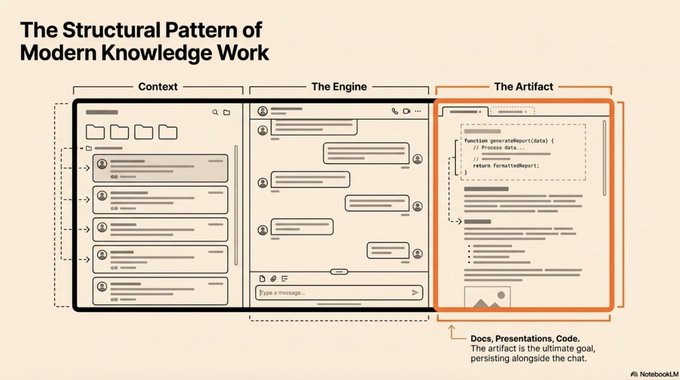
The pattern:
- Chat threads on the left
- Agent in the middle
- Work product on the right
Cloud Code's new desktop app uses it. Cursor uses it. Codex uses it.
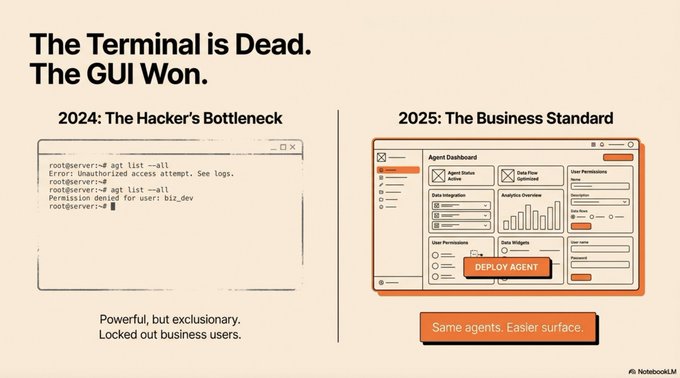
In 2025, the terminal interface (TUI) ruled. Cloud Code in the terminal was fun. It also locked out most people in business who wanted agentic workflows without opening a terminal.
The GUI won. Same agents. Easier surface.
## Set up projects and multitask
Codex organizes work into folders. Each folder is a project. Each chat inside lives under that project.
How:
- Create a new project from an existing folder (example: "Startup Ideas Podcast")
- Every new chat under that project shows in the sidebar
- Press Command-N to fire off parallel agents
- A spinning indicator means an agent is working
- A blue dot means it's done and unread
The interface is built for multitasking. Run a research task. Start a coding task. Start a third. Check back when the dots turn blue.
## Use Skills to compress repeat workflows
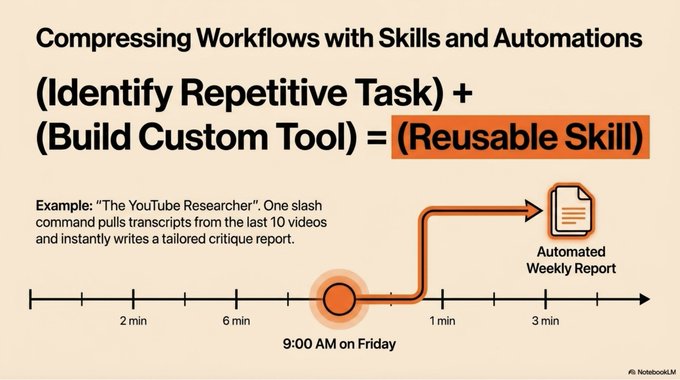
Skills are reusable agents you build once and call by name.
Riley's example: a "YouTube Researcher" skill. One command pulls transcripts from a creator's last 10 videos and writes a tailored report.
The pattern:
- Identify a task you do often
- Build it as a skill
- Call it by name from any chat
This is how Codex starts to feel less like a chatbot and more like an operating system.
## Codex = Claude Code + Cowork in one product
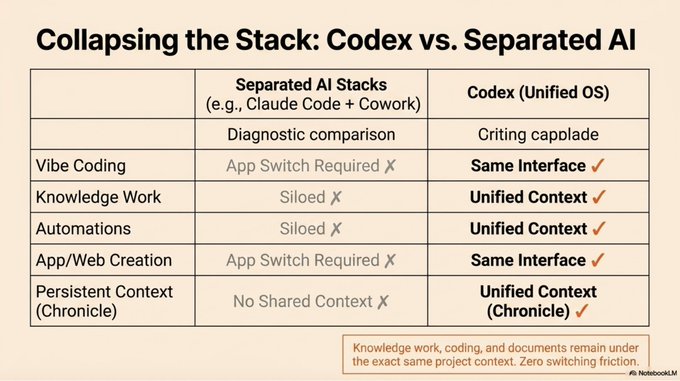
Riley's framing: Codex collapses two separate Anthropic products into one.
Claude split Cowork (business workflows) and Claude Code (coding) into separate apps with different permissions. You cannot ask Cowork to build an app. You have to switch products.
Codex keeps it together. Knowledge work, coding work, automations, documents. Same interface. Same permissions. Same project context.
You can also run Claude Code inside Codex. Bonus.
## Connect Notion (with surgical permissions)
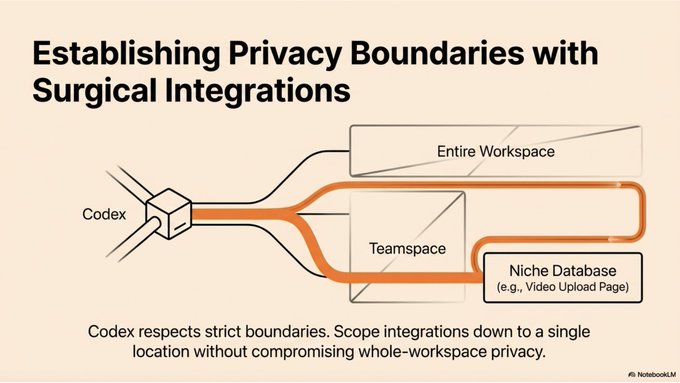
Codex connects to Notion in one click.
The trick is the permission scope. You can give it access to your entire workspace, one teamspace, or a single database.
Riley's use case: he uploads videos to a single Notion page, comments on parts of the script, attaches files. Niche. Specific. Locked to one database.
If privacy matters, scope it down. Codex respects the boundary.
## The four projects to run on day one
Riley wrote these down before recording. Run them in order
Project 1: Have fun for 30 minutes. Most people open a new tool expecting productivity in the first session. Riley's take: play first. Build a game. Have browser use play a game against itself. Get a feel for what's possible.
Project 2: Run an in-depth research task on max effort. Pick a topic. Tell Codex to research it, organize findings into a spreadsheet, then turn that spreadsheet into a document and a presentation. One task, three artifacts. You now understand the output range.
Project 3: Build a 3D simulation. This one is for fun. (Optional alternative: build a mobile app in Swift. Codex can one-shot full mobile apps from your existing web code. Requires a Mac with Xcode installed.)
Project 4: Automate your most annoying daily task. List everything you do daily. Pick the worst one. Build a workflow with computer use or plugins. Tell the agent to convert it into an automation. One useful automation in a couple hours pays for the experiment.
## On browser agents
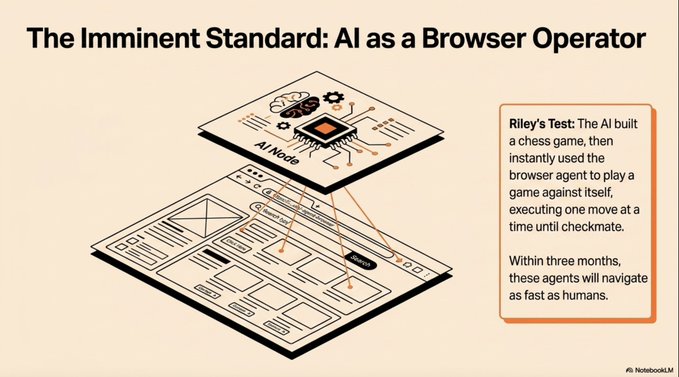
Riley has been skeptical of AI controlling browsers. Slow. Boring.
GPT 5.5 changed his mind. His prediction: within three months, browser agents will control a browser as well as a human can.
You cannot fully convey this by explaining or showing. You have to feel it. Try it now so your documentation and workflows are ready when the speed lands.
## Action checklist
- Open Codex (it's included with ChatGPT)
- Create a project folder for one real workstream
- Build one skill for a task you repeat
- Connect Notion with database-level permissions only
- Run the four day-one projects in order
- Pick your most annoying daily task and turn it into an automation
## Final Thoughts
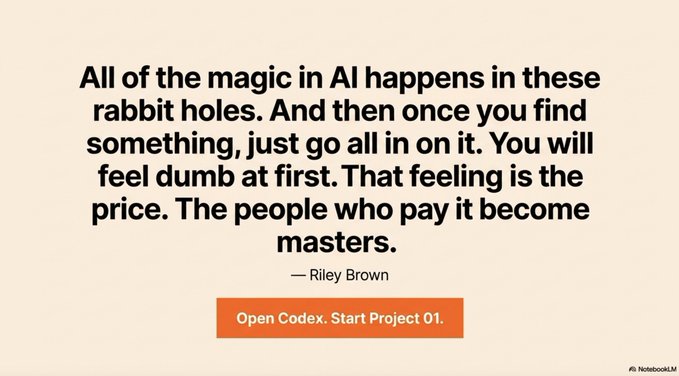
Riley's closing principle: the tinkers who aren't afraid of looking dumb win.
Most people show up to a tool wanting productivity in 30 minutes. They quit when it feels awkward. The reward goes to people who go down rabbit holes, mess up, and stay curious past the discomfort.
You will feel dumb at first. That feeling is the price. The people who pay it become masters.
Codex is a good surface to pay it on.
"All of the magic in AI happens in these rabbit holes. And then once you find something, just go all in on it."
— Riley Brown
## 相关链接
- [The Startup Ideas Podcast (SIP)](https://x.com/startupideaspod)
- [@startupideaspod](https://x.com/startupideaspod)
- [19K](https://x.com/startupideaspod/status/2048843244566683724/analytics)
- [Upgrade to Premium](https://x.com/i/premium_sign_up)
- [3:14 AM · Apr 28, 2026](https://x.com/startupideaspod/status/2048843244566683724)
- [19.3K Views](https://x.com/startupideaspod/status/2048843244566683724/analytics)
- [View quotes](https://x.com/startupideaspod/status/2048843244566683724/quotes)
---
*导出时间: 2026/4/28 12:12:45*