# Become a $1M/yr FDE (Full Course)
**作者**: The Startup Ideas Podcast (SIP)
**日期**: 2026-10-01T21:41:33.000Z
**来源**: [https://x.com/startupideaspod/status/2105775147886264493](https://x.com/startupideaspod/status/2105775147886264493)
---
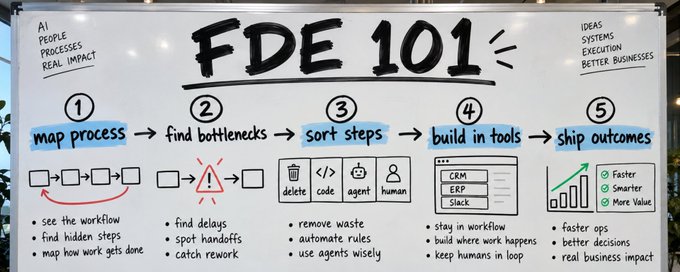
The forward deployed engineer playbook behind million-dollar paychecks
Some forward deployed engineers get paid a million dollars. Deploy agents that drive $5M, $10M or $25M of value for a company, and it will give you a slice of that pie.
Private equity already runs this play. Firms buy accounting firms, IT shops and law practices that run on people and old software, then put forward deployed engineers (FDEs) inside to rebuild the work with agents. Thrive Holdings had 35 engineers across 70 firms, and Vas cites results like tax returns done 30% faster at 98% accuracy.
This guide breaks down his workflow: how to map the real process, sort every step, build inside the client's tools, sell the outcome, and land your first project.
## Map the Real Process
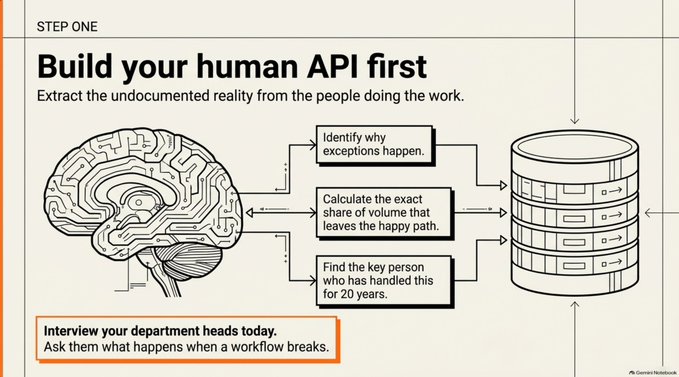
Build a "human API" before you build a single agent.
Start with your own life. You have five inboxes, four file stores and a stack of messaging apps. A client email goes to Gmail, and family texts land in iMessage or WhatsApp.
Now scale that up. One company Vas describes acquired eight others, runs in five regions and sits on 23 systems of record.
Chicago runs SAP, Salesforce and Workday. Toronto runs NetSuite, HubSpot and ADP.
Put AI on top of that and the mess runs faster.
How:
- Interview the humans. Pick one department. In finance, talk to the heads of AP, AR, reconciliations, billing, banking and FP&A. The knowledge lives in their heads, often with one person who has handled it for 20 years.
- Ask five questions. Why do you do it this way? Who decides? Which step is theater? What happens on an exception? How often?
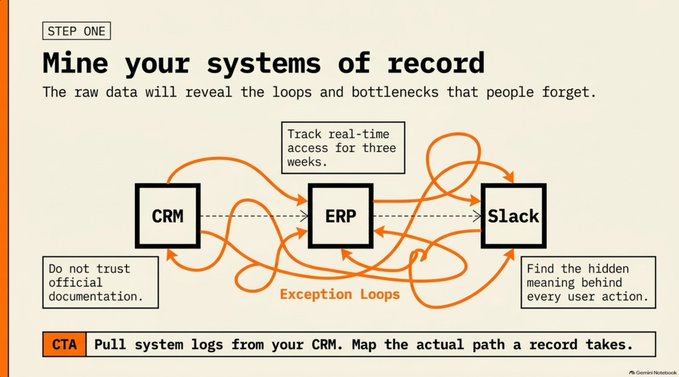
- Mine the systems of record. Get real-time access to Salesforce, NetSuite, Dynamics or Workday for 3 to 4 weeks. Track what data enters, how often people correct it, and use AI to find the pattern behind each action.
- Read what lives outside the systems. SharePoint, Drive, Notion, Slack, Teams, Gmail and spreadsheets.
The split changes per company. A large company has 10 years of Salesforce history to mine. An SMB keeps most of it in people's heads.
Proof: A public software company with $5B in revenue and 150+ products brought Vas in through its CRO. An earlier consulting engagement (Vas believes it was Deloitte) had mapped its quote process as 7 steps:
Build quote → Submit → Deal desk → Approve → Send → Negotiate → Sign
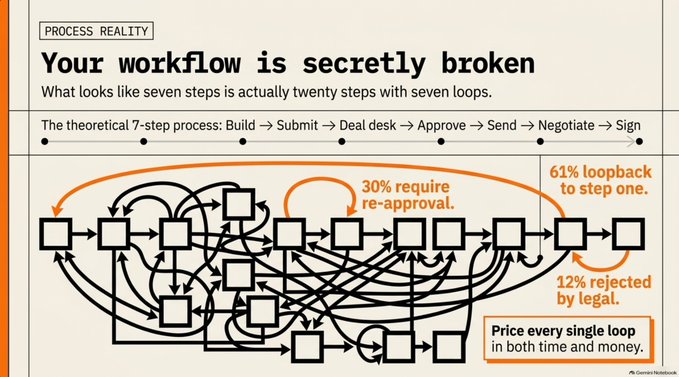
Process mining agents on the CRM found 20 steps and 7 loops.
61% of requests looped back early. Legal sent 12% back. 30% of the time, a new quote had to go through approval again.
CROs and CFOs tell Vas's team: "I feel like you understand our department better than we do."
## Sort Every Step Into 4 Buckets
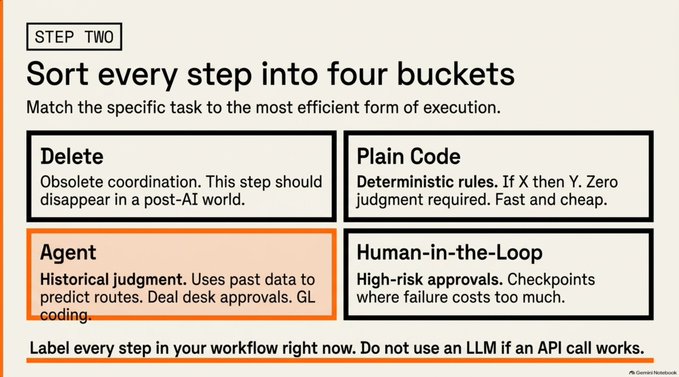
Every step gets one label: delete, plain code, agent or human.
- Delete: The step should disappear in a post-AI world.
- Plain code: If X, then Y. Use it when the step needs zero judgment. Variance means a switch case.
- Agent: The step needs judgment and you have historical data. An invoice line says "monitors," so it's likely office supplies, except from certain vendors. Building a quote also fits here: who's the customer, what's the deal worth, what resources to assign.
- Human in the loop: The step is too risky to get wrong. Approval, negotiation, signing and payment. An agent that pays invoices end to end opens the door to phishing scams.
In the sales example, five of the 20 steps went to agents.
Vas points to Michael Hammer, who wrote about this in Harvard Business Review in 1990. At one insurance company Hammer studied, an application took 22 days to move through the business and got 17 minutes of actual work. Make every step twice as fast and you save about 8 minutes, because the days pile up in the queues and handoffs between steps.
## Build Inside Their Systems of Record
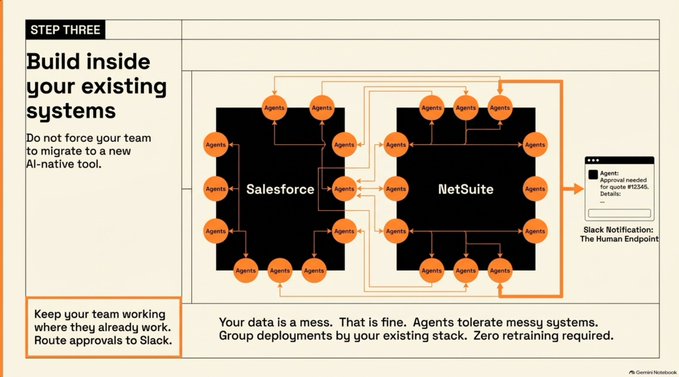
Put the agents in the tools the client already uses.
Vas's agents mine Salesforce and take action in Salesforce. When a human needs to approve something, it arrives as a Slack message. Staff keep working where they already work, so there's zero retraining.
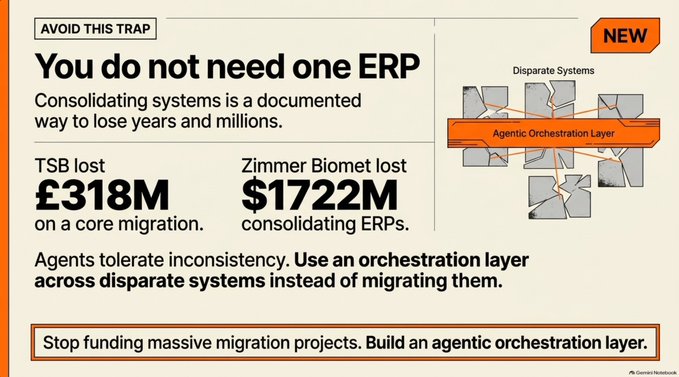
Clients tell Vas they spent several years and millions of dollars moving from one ERP to the next, $10M in one case. Pitch that client a move to an AI-native CRM and, in Vas's words, "you've lost them." The exception is an SMB that has yet to adopt a CRM. Put them on one.
PE scale tactic: group by system of record.
A PE firm with 26 portfolio companies, 10 departments each and 10 workflows per department is thousands of workflows. Vas groups companies by their software:
- 5 companies on NetSuite → one track
- 4 companies on Dynamics → one track
- Learn what each tool offers and where the gaps are
- Connect it to the rest of the stack: Ramp, Brex, Blackline, Concur, Expensify
You solve the same problem several times, and you sell to the same buyer (the CFO) over and over.
## Sell the Outcome in Numbers
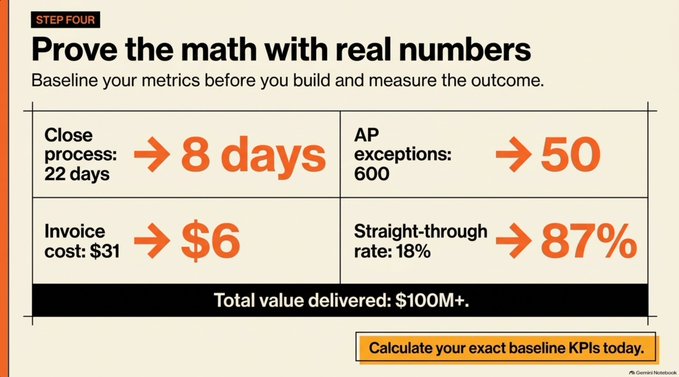
Map the mess, show the clean version, put a price and a KPI on each.
Vas delivers value in three buckets: cost savings, revenue uplift and risk mitigation. Match the bucket to the buyer.
- CFO: Month-end close takes 22 days to 6 weeks. Bring it to 4 or 8 days with higher accuracy, at the same cost or less.
- CHRO: Hire better people faster and train them quicker on day one.
- Any C-suite: List the estimated monthly cost of each agent next to the process. I expect that number to come in shockingly low compared to people.
Baseline every KPI before you build. Six months later, show them the before and after.
Proof: An accounts payable workflow (anonymized). Vas's team mapped it in 2 to 3 weeks with interviews and process mining.
- Process steps: 17 → 7
- Cycle time: 24 days → 6
- Exception loops: 6 → 1
- Straight-through rate on invoices: 18% → 87%
- Cost per invoice: $31 → $6 (an 80% reduction)
Much of that jump came from fixing the process itself. Vas says his Fortune 500 and Fortune 1000 clients usually reallocate their best finance people to higher-value work like FP&A.
Start smaller: A 60-person accounting firm Vas heard about had $12M in revenue, 400 clients and four systems. Every client sent books in a different format, including a photo of a notebook.
The firm said it had 6 steps. It had 14. Collections needed a re-ask 70% of the time, and a partner sent work back 35% of the time.
Price every loop in money and in time.
## Pick the Model per Workflow
Benchmark every workflow against every model.
Most companies start on Microsoft Copilot, with Claude Code and Codex behind it. For an SMB, start in skill files.
Vas rarely needs a frontier model like Fable or Astra. His team runs Opus 4.8, Sonnet more often, GPT on lower thinking settings, open source models like Muse, and Grok. GLM, Kimi and Qwen belong in the toolkit too.
Enterprises have a strict aversion to Chinese models, so check before you pitch one.
Two streams of agents:
- Sidekick agents: You chat with them and they get stuff done. Instinct, Dots, GrokBot and Muse sit here.
- Background agents: They know the job, run all the time and ping you when they need you.
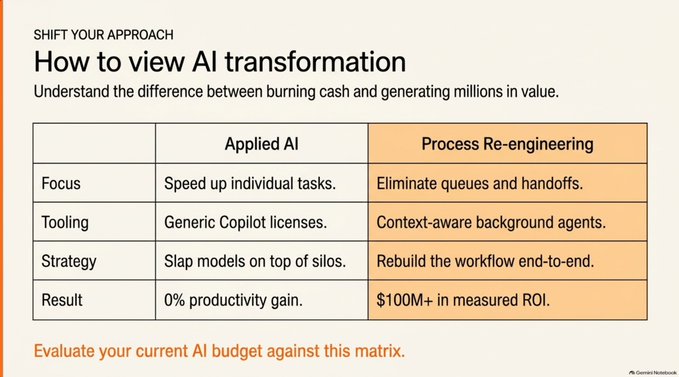
Sidekicks give 10 to 20% faster output. Background agents give 70 to 80% faster output with higher accuracy. Vas's team takes work off people's plates for that reason.
## Become Three People in One
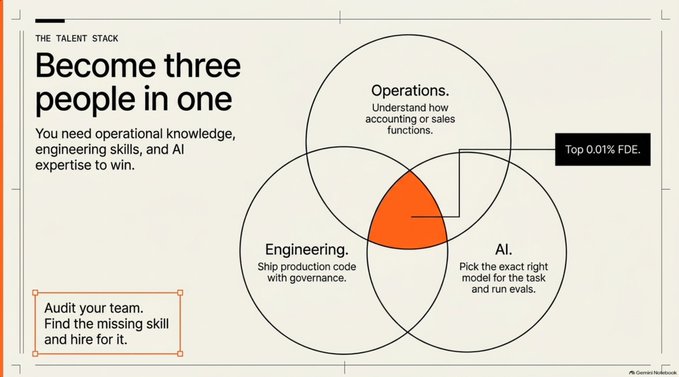
Top FDEs are exceptional at three jobs, plus communication.
1. How the work gets done. Study the systems of record (Salesforce, Dynamics) and what each one offers. Learn how accounting functions.
2. Production code. Ship agents that call into those systems with auditability, governance and security. A CS degree is optional with today's AI engineering tools.
3. The AI layer. Pick the model, decide what you can trust it with, test with evals, tune the setup that runs each model, and roll back when an agent takes the wrong action.
Then sell all of it to senior leadership. I think of this person as the NBA player of the field, the top 0.01%.
The pay follows the value. When I was young, a founder with several multi-billion dollar exits gave me advice: take the job closest to the money.
Drive $10M of value and a 10% cut is a $1M paycheck. Some PE firms give FDEs a share of the carry on the companies they transform.
## Your First FDE Week
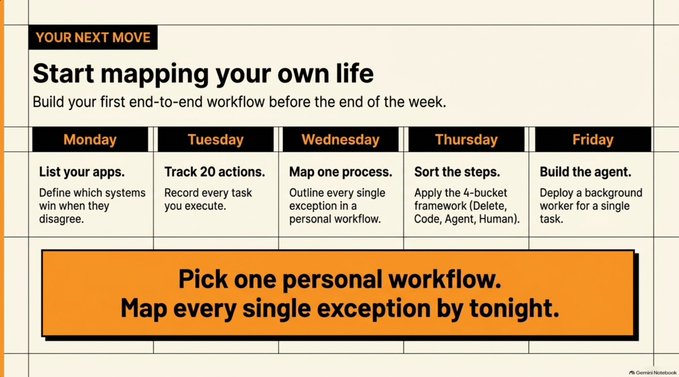
- Monday: List every app that holds your stuff. Write which one wins, which ones disagree and how to route between them.
- Tuesday: Write down 20 things you did last week. Paid a bill. Canceled a subscription.
- Wednesday: Map one process step by step, with every exception. How you pay a bill, or how you submit an invoice as a freelancer.
- Thursday: Sort every step into the 4 buckets. Delete, deterministic, agentic, human.
- Friday: Reach out to SMBs through your network or cold outbound. Offer to fix one workflow end to end: skill files, a personal assistant, the agents and a timeline.
Do the first one for free if you have to. The experience pays for the next one at five or six figures.
For an internal team, run Monday to Thursday on your own company's systems and skip the outreach. Vas gives internal FDE teams the same playbook.
## Final Thoughts
Vas runs every engagement on one rule from his own playbook: baseline before you build.
His engagements follow one timeline:
Audit and proofs of concept (4 weeks) → Build the agents (4 weeks) → Show what it was and what it is now (at 3 and 6 months)
Vas says most AI pilots fail because a team slaps AI on the business: a license rolled out to everyone, or an agent that misreads the workflow. His team maps the process, sorts every step, builds once, deploys everywhere and measures constantly.
Want to learn more? Read Vas's [full article on X](https://x.com/vasuman/status/2095999742031675738), follow [@vasuman](https://x.com/vasuman), and see his team's work at [varickagents.com](https://www.varickagents.com/).
> "We find the real process. We measure the time, baseline all of the KPIs." Vas, Varick Agents
## Checkout the full episode:
Apple: [https://podcasts.apple.com/us/podcast/become-a-%241m-yr-fde-full-course/id1593424985?i=1000792638739](https://podcasts.apple.com/us/podcast/become-a-%241m-yr-fde-full-course/id1593424985?i=1000792638739)
Spotify: [https://open.spotify.com/episode/6TFEiq0oezsbmj9ZwTOECX?si=8bca6a35ff4a413a](https://open.spotify.com/episode/6TFEiq0oezsbmj9ZwTOECX?si=8bca6a35ff4a413a)
Youtube: [https://www.youtube.com/watch?v=1a5HxU52vCQ](https://www.youtube.com/watch?v=1a5HxU52vCQ)
## 相关链接
- [The Startup Ideas Podcast (SIP)](https://x.com/startupideaspod)
- [@startupideaspod](https://x.com/startupideaspod)
- [4.6K](https://x.com/startupideaspod/status/2105775147886264493/analytics)
- [full article on X](https://x.com/vasuman/status/2095999742031675738)
- [@vasuman](https://x.com/vasuman)
- [varickagents.com](https://www.varickagents.com/)
- [https://podcasts.apple.com/us/podcast/become-a-%241m-yr-fde-full-course/id1593424985?i=1000792638739](https://podcasts.apple.com/us/podcast/become-a-%241m-yr-fde-full-course/id1593424985?i=1000792638739)
- [https://open.spotify.com/episode/6TFEiq0oezsbmj9ZwTOECX?si=8bca6a35ff4a413a](https://open.spotify.com/episode/6TFEiq0oezsbmj9ZwTOECX?si=8bca6a35ff4a413a)
- [https://www.youtube.com/watch?v=1a5HxU52vCQ](https://www.youtube.com/watch?v=1a5HxU52vCQ)
- [Upgrade to Premium](https://x.com/i/premium_sign_up)
- [5:41 AM · Oct 2, 2026](https://x.com/startupideaspod/status/2105775147886264493)
- [4,682 Views](https://x.com/startupideaspod/status/2105775147886264493/analytics)
---
*导出时间: 2026/10/2 09:40:47*
---
## 中文翻译
# 成为年薪百万美元的 FDE(前置部署工程师)(完整课程)
**作者**: The Startup Ideas Podcast (SIP)
**日期**: 2026-10-01T21:41:33.000Z
**来源**: [https://x.com/startupideaspod/status/2105775147886264493](https://x.com/startupideaspod/status/2105775147886264493)
---

这就是那些百万美元年薪背后的前置部署工程师方法论
有些前置部署工程师的年薪达到一百万美元。只要你部署的智能体能为一家公司创造500万、1000万或2500万美元的价值,公司就会分给你一块蛋糕。
私募股权(PE)行业早已在践行这套打法。PE机构收购依赖人力和老旧软件运转的会计师事务所、IT公司和律师事务所,然后派前置部署工程师(FDE)进驻,用智能体重建整个业务流程。Thrive Holdings 在70家公司中配置了35名工程师,Vas 引用的成果包括:报税速度提升30%、准确率达到98%。

本指南将拆解他的工作流程:如何梳理真实流程、对每个步骤分类、在客户的现有工具内构建、销售成果,以及拿下你的第一个项目。
## 梳理真实流程
在构建任何智能体之前,先构建一个“人类 API"。

从你自己的生活开始。你有五个收件箱、四个文件存储地和一堆即时通讯应用。客户邮件发到 Gmail,家人的消息则落在 iMessage 或 WhatsApp。
现在把规模放大。Vas 描述过一家公司,它收购了另外八家公司,业务遍布五个地区,使用着23套记录系统。
芝加哥用的是 SAP、Salesforce 和 Workday。多伦多用的是 NetSuite、HubSpot 和 ADP。
在这样的混乱之上加 AI,只会让混乱运转得更快。
方法如下:
- 访谈人类。选一个部门。以财务为例,找应付账款、应收账款、对账、开票、银行和财务规划(FP&A)的负责人聊聊。这些知识都存在于他们脑中,往往集中在一个干了20年的某个人身上。
- 问五个问题。你为什么这么做?谁来做决定?哪个步骤是走形式?出现例外时会发生什么?多久出现一次?
- 挖掘记录系统。获取对 Salesforce、NetSuite、Dynamics 或 Workday 为期3到4周的实时访问权限。追踪什么数据被录入、人们多久修正一次数据,并用 AI 找出每个动作背后的模式。
- 阅读系统之外的内容。SharePoint、Drive、Notion、Slack、Teams、Gmail 和电子表格。

具体比例因公司而异。大公司有10年的 Salesforce 历史数据可供挖掘。中小企业(SMB)的多数知识则存在人们脑中。
例证:一家收入50亿美元、拥有150多个产品的上市软件公司通过其首席营收官(CRO)请来 Vas。此前的一次咨询项目(Vas 认为是德勤)将其报价流程梳理为7个步骤:
构建报价 → 提交 → 交易台 → 审批 → 发送 → 谈判 → 签署

在 CRM 上运行的流程挖掘智能体发现了20个步骤和7个循环。
61%的请求在早期就被打回重来。法务打回了12%。有30%的情况,新报价必须重新走一遍审批。
CRO 和 CFO 们对 Vas 的团队说:“我感觉你们比我们自己还了解我们的部门。"
## 将每个步骤归入4个类别

每个步骤都会获得一个标签:删除、纯代码、智能体或人类。
- 删除:这个步骤在 AI 时代之后应当消失。
- 纯代码:如果 X,则 Y。当步骤完全不需要判断时使用它。有变化就用一个 switch 分支处理。
- 智能体:该步骤需要判断,且你有历史数据。发票行写着"显示器",那大概率是办公用品,但某些供应商除外。构建报价也属于这一类:客户是谁、交易价值多少、要分配哪些资源。
- 人类在环:该步骤风险太高、错不起。审批、谈判、签署和付款。一个能端到端支付发票的智能体,等于给钓鱼诈骗开了大门。
在销售案例中,20个步骤里有5个交给了智能体。
Vas 引用了迈克尔·哈默(Michael Hammer),他1990年就在《哈佛商业评论》上写过这个话题。在哈默研究过的一家保险公司,一份申请要在业务流程中流转22天,而实际处理时间只有17分钟。就算把每个步骤提速一倍,也只能节省约8分钟,因为时间都堆积在步骤之间的队列和交接环节里。
## 在他们的记录系统内构建

把智能体放进客户已经在用的工具里。
Vas 的智能体在 Salesforce 中挖掘数据,也在 Salesforce 中执行操作。当需要人工审批时,审批请求会以 Slack 消息的形式送达。员工在原本的工作环境中继续工作,因此无需任何再培训。
客户告诉 Vas,他们花了好几年和数百万美元从一套 ERP 迁移到另一套,其中一例花了1000万美元。如果向这样的客户推销迁移到 AI 原生 CRM,用 Vas 的话说,"你就失去他们了"。例外是尚未采用 CRM 的中小企业——那就帮他们用上一套。

PE 规模化策略:按记录系统分组。
一家 PE 机构拥有26家被投公司、每家10个部门、每个部门10个工作流,那就是数千个工作流。Vas 按软件对公司分组:
- 5家公司用 NetSuite → 一条产品线
- 4家公司用 Dynamics → 一条产品线
- 了解每个工具能做什么、缺口在哪里
- 把它连接到技术栈的其他部分:Ramp、Brex、Blackline、Concur、Expensify
你把同一个问题解决好几遍,而且反复向同一个买家(CFO)销售。
## 用数字销售成果

梳理混乱的现状,展示整洁的未来版本,为每一项标注价格和 KPI。
Vas 通过三个维度交付价值:成本节约、收入提升和风险缓解。将维度与买家匹配。
- CFO:月末结账需要22天到6周。把它压缩到4天或8天,准确率更高,成本相同或更低。
- CHRO:更快招到更好的人,并让他们在上岗第一天就能更快上手。
- 任何 C 级高管:在每个流程旁边列出每个智能体的预计月成本。我预计这个数字会低得惊人,与人力相比。
在构建之前,先为每个 KPI 建立基线。六个月后,向他们展示前后对比。
例证:一个应付账款工作流(已匿名化)。Vas 的团队在2到3周内通过访谈和流程挖掘完成了梳理。
- 流程步骤:17 → 7
- 周期时长:24天 → 6天
- 异常循环:6 → 1
- 发票直通率:18% → 87%
- 单张发票成本:31美元 → 6美元(降低80%)
其中很大一部分提升来自流程本身的修复。Vas 说,他的财富500强和财富1000强客户通常会把最优秀的财务人员重新分配到 FP&A 等更高价值的工作上。
更小的起步案例:Vas 听说过一家60人的会计师事务所,收入1200万美元,400个客户,使用四套系统。每个客户提交账目的格式都不同,甚至有人提交一个笔记本的照片。
该事务所自称有6个步骤。实际上有14个。催收工作70%的情况下需要再次跟进,一位合伙人35%的情况下会把工作打回重来。
为每个循环标出金钱成本和时间成本。
## 为每个工作流挑选模型
用每个模型对每个工作流做基准测试。
大多数公司从 Microsoft Copilot 起步,辅以 Claude Code 和 Codex。对中小企业来说,可以从 skill 文件入手。
Vas 很少需要 Fable 或 Astra 这类前沿模型。他的团队运行 Opus 4.8,更常用 Sonnet,GPT 调低思考档位,还有 Muse 等开源模型,以及 Grok。GLM、Kimi 和 Qwen 也在工具箱里。
企业客户对中式模型有严格的排斥,所以推销前要先确认。
两类智能体:
- 副手型智能体(Sidekick):你与它们对话,它们帮你把事办成。Instinct、Dots、GrokBot 和 Muse 属于这一类。
- 后台智能体:它们了解工作内容,全天候运行,需要你时才通知你。
副手型智能体能带来10%到20%的产出提速。后台智能体能带来70%到80%的提速且准确率更高。正因如此,Vas 的团队把工作从人们手中接了过来。
## 成为三合一的人才

顶级 FDE 在三项工作上都很出色,再加上沟通能力。
1. 工作是如何完成的。研究记录系统(Salesforce、Dynamics)以及各自能提供什么。学会会计是如何运作的。
2. 生产级代码。交付能调用这些系统的智能体,并具备可审计性、治理和安全性。有了如今的 AI 工程工具,计算机学位已非必需。
3. AI 层。挑选模型、决定哪些可以交给它信任处理、用评测进行测试、调优每个模型的运行配置,并在智能体执行错误操作时回滚。
然后把这一切销售给高层领导。我把这类人视为这个领域的 NBA 球员,即前0.01%。
报酬跟随价值而来。我年轻时,一位拥有多次数十亿美元退出经历的企业家给我建议:选择离钱最近的工作。
创造1000万美元的价值,拿10%的分成就是100万美元的薪水。有些 PE 机构还会给 FDE 分享其所改造公司的部分 carry 收益。
## 你的第一个 FDE 周

- 周一:列出所有存放你资料的应用。写下哪个是权威来源、哪些互相冲突,以及如何在它们之间路由。
- 周二:写下你上周做的20件事。付了一张账单。取消了一个订阅。
- 周三:逐步梳理一个流程,包含所有例外情况。你怎么付账单,或者作为自由职业者你怎么提交发票。
- 周四:把每个步骤归入4个类别。删除、确定性、智能体、人类。
- 周五:通过你的人际网络或冷外联接触中小企业。提出端到端修复一个工作流:skill 文件、一个私人助手、智能体和时间表。
如果有必要,第一个项目就免费做。这份经验会让你下一个项目收费五到六位数。
对于内部团队,周一到周四在公司自己的系统上运行,跳过外联环节。Vas 给内部 FDE 团队用的也是同一套打法。
## 结语
Vas 的每一个项目都遵循他自己方法论中的一条规则:先建立基线,再动手构建。
他的项目遵循一条时间线:
审计与概念验证(4周)→ 构建智能体(4周)→ 展示过去与现在的对比(第3和第6个月)
Vas 说,大多数 AI 试点失败,是因为团队把 AI 直接往业务上一贴:给所有人发放许可证,或者部署一个误读工作流的智能体。他的团队会梳理流程、给每个步骤分类、一次性构建、处处部署、持续度量。
想了解更多?阅读 Vas 的 [X 上的完整文章](https://x.com/vasuman/status/2095999742031675738),关注 [@vasuman](https://x.com/vasuman),并在 [varickagents.com](https://www.varickagents.com/) 查看他团队的工作。
> "我们找出真实的流程。我们测量时间,为所有 KPI 建立基线。" —— Vas,Varick Agents
## 收听完整节目:
Apple:[https://podcasts.apple.com/us/podcast/become-a-%241m-yr-fde-full-course/id1593424985?i=1000792638739](https://podcasts.apple.com/us/podcast/become-a-%241m-yr-fde-full-course/id1593424985?i=1000792638739)
Spotify:[https://open.spotify.com/episode/6TFEiq0oezsbmj9ZwTOECX?si=8bca6a35ff4a413a](https://open.spotify.com/episode/6TFEiq0oezsbmj9ZwTOECX?si=8bca6a35ff4a413a)
YouTube:[https://www.youtube.com/watch?v=1a5HxU52vCQ](https://www.youtube.com/watch?v=1a5HxU52vCQ)
## 相关链接
- [The Startup Ideas Podcast (SIP)](https://x.com/startupideaspod)
- [@startupideaspod](https://x.com/startupideaspod)
- [4.6K](https://x.com/startupideaspod/status/2105775147886264493/analytics)
- [X 上的完整文章](https://x.com/vasuman/status/2095999742031675738)
- [@vasuman](https://x.com/vasuman)
- [varickagents.com](https://www.varickagents.com/)
- [https://podcasts.apple.com/us/podcast/become-a-%241m-yr-fde-full-course/id1593424985?i=1000792638739](https://podcasts.apple.com/us/podcast/become-a-%241m-yr-fde-full-course/id1593424985?i=1000792638739)
- [https://open.spotify.com/episode/6TFEiq0oezsbmj9ZwTOECX?si=8bca6a35ff4a413a](https://open.spotify.com/episode/6TFEiq0oezsbmj9ZwTOECX?si=8bca6a35ff4a413a)
- [https://www.youtube.com/watch?v=1a5HxU52vCQ](https://www.youtube.com/watch?v=1a5HxU52vCQ)
- [升级至 Premium](https://x.com/i/premium_sign_up)
- [2026年10月2日 上午5:41](https://x.com/startupideaspod/status/2105775147886264493)
- [4,682 次浏览](https://x.com/startupideaspod/status/2105775147886264493/analytics)
---
*导出时间: 2026/10/2 09:40:47*