Jack Dorsey's Buzz: Clearly Explained The Startup Ideas Podcast (SIP) 2026-07-29 8.2 KB 151.4K 344 ☆ 收藏 𝕏 文章列表 Buzz 是一款集成了智能体的团队聊天工具,允许用户切换底层模型并保留对话记忆,支持本地共享计算。文章探讨了其 Agents 团队协作、Git 工作流及数据控制优势,适合小团队快速迭代。 BuzzJack DorseySlackAgent本地模型团队协作开源 # Jack Dorsey's Buzz: Clearly Explained (and how to use it) **作者**: The Startup Ideas Podcast (SIP) **日期**: 2026-07-28T22:26:47.000Z **来源**: [https://x.com/startupideaspod/status/2082231321758499004](https://x.com/startupideaspod/status/2082231321758499004) ---  ## Buzz: Slack with agents inside 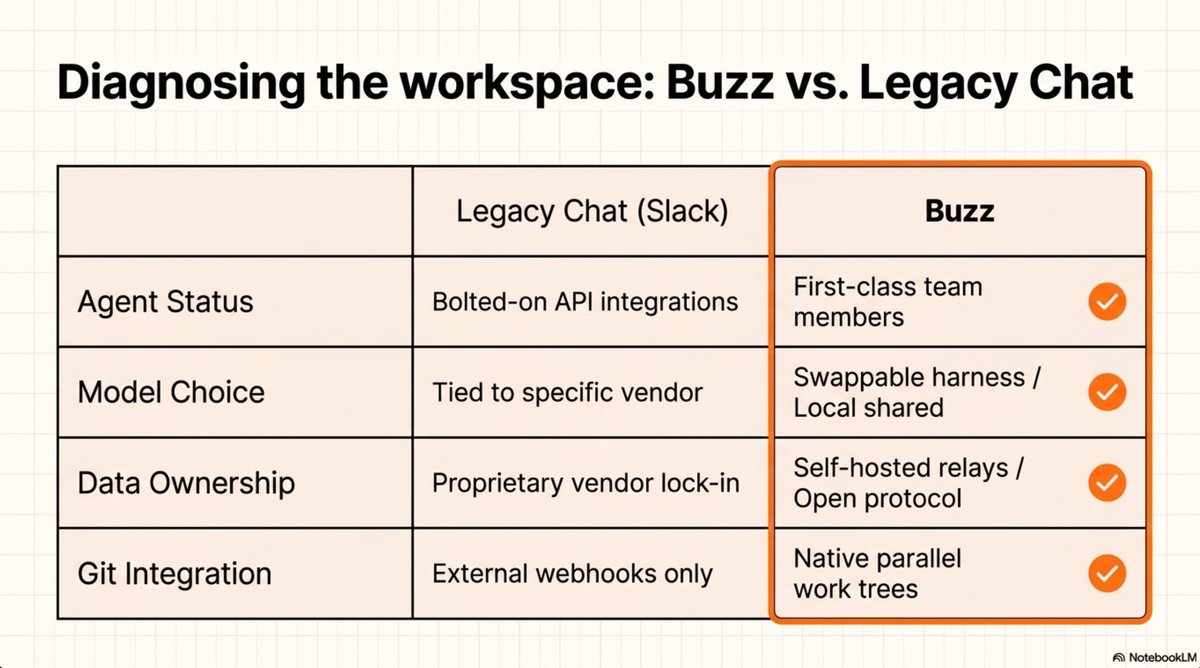 Vinny posted about a tool called Buzz. Jack Dorsey retweeted it. So I asked him for a live tour, and for the best practices nobody had published yet. One question drove the episode: should I use this thing, or should I stay on Slack? ## Agents as members of the team 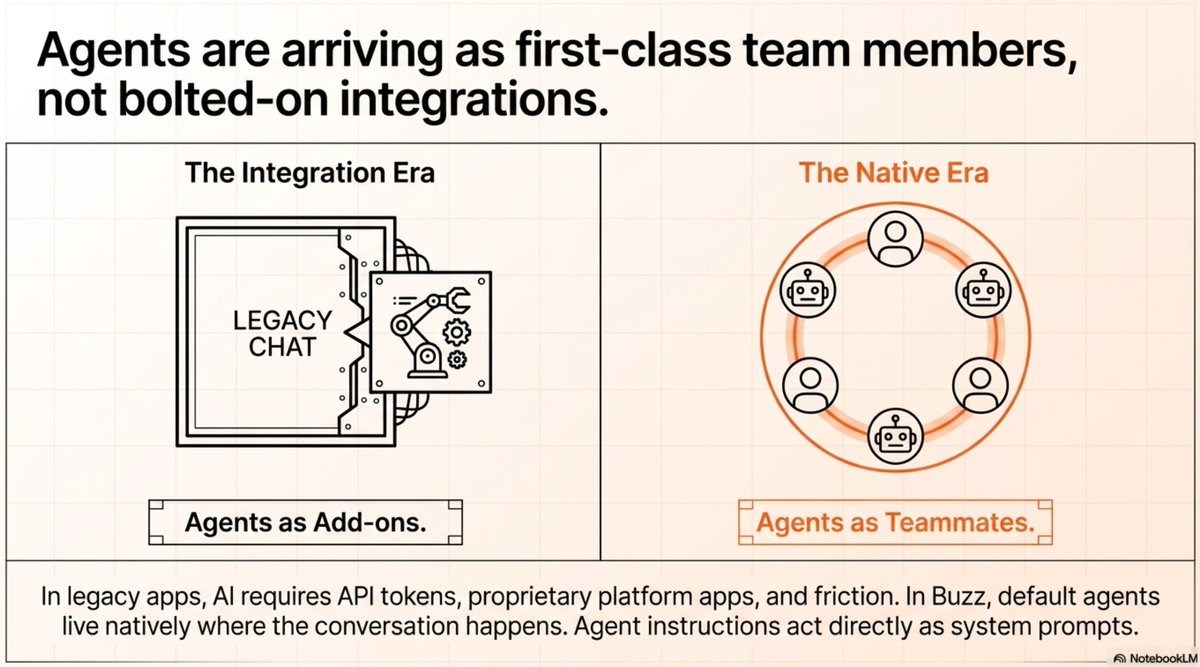 Slack supports agents through an integration. In Buzz they arrive as first class citizens. You get default agents when you start. You can edit them and add your own. Agent instructions work like a system prompt. Vinny's framing: think of them as part of the team. ## The swappable harness 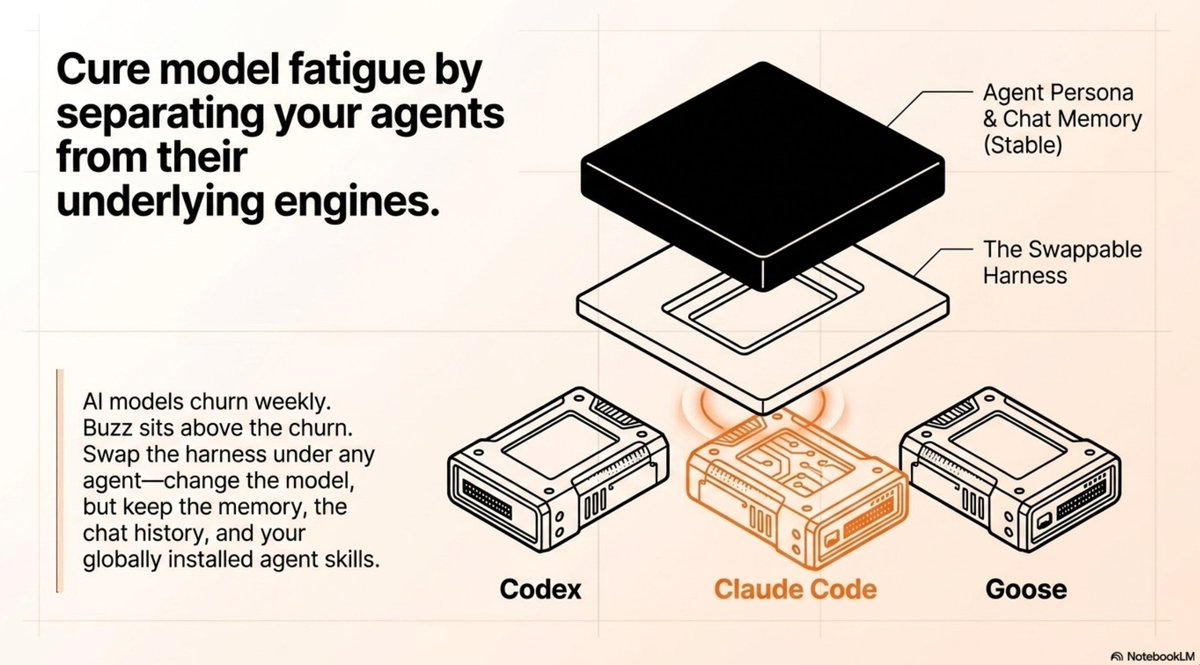 This is the feature that sold him. Under any agent you can run Claude Code, Codex, Goose, or open code. Adapters cover the others. AI moves fast enough to create model fatigue. You settle in, you get comfortable, and a new model ships that same week. Buzz sits as a layer on top of that churn. Swap the harness under an agent and the chats come with it, along with everything you have been building together. Change the model. Keep the memory. Globally installed agent skills travel too. ## What the agents actually do 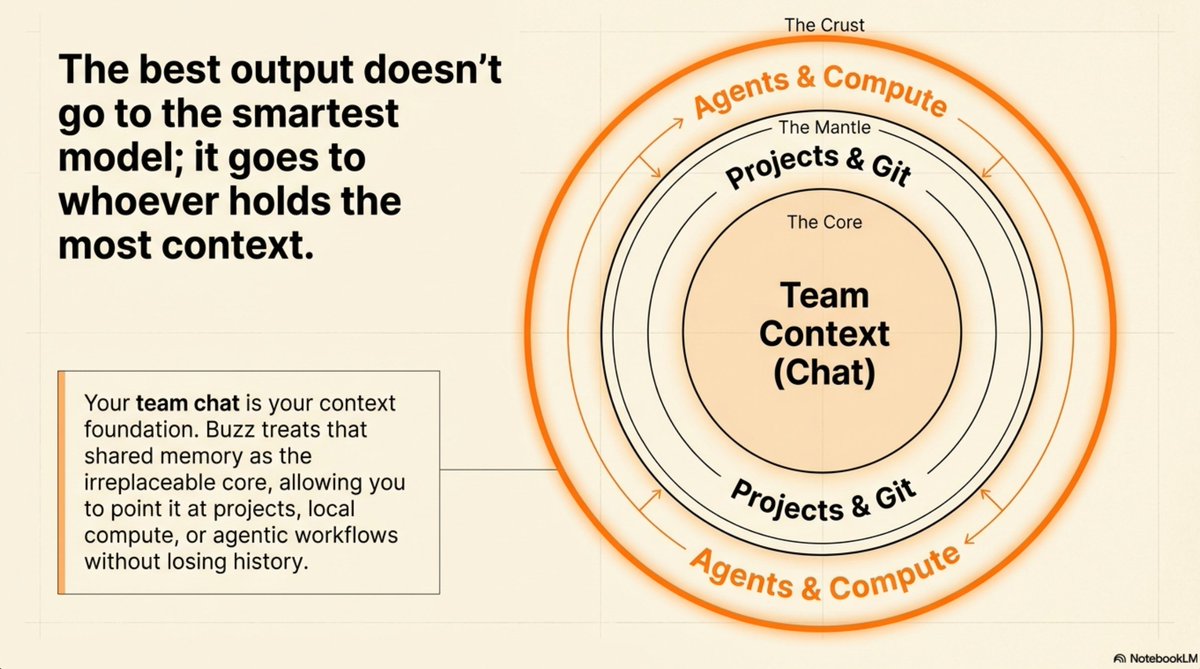 Git sits close to the core. Agents create projects, open feature branches, and work in parallel work trees, so the copy on your machine stays as it was. The pattern looks like this: Chat → agent → work tree → deploy → screenshot back in the channel 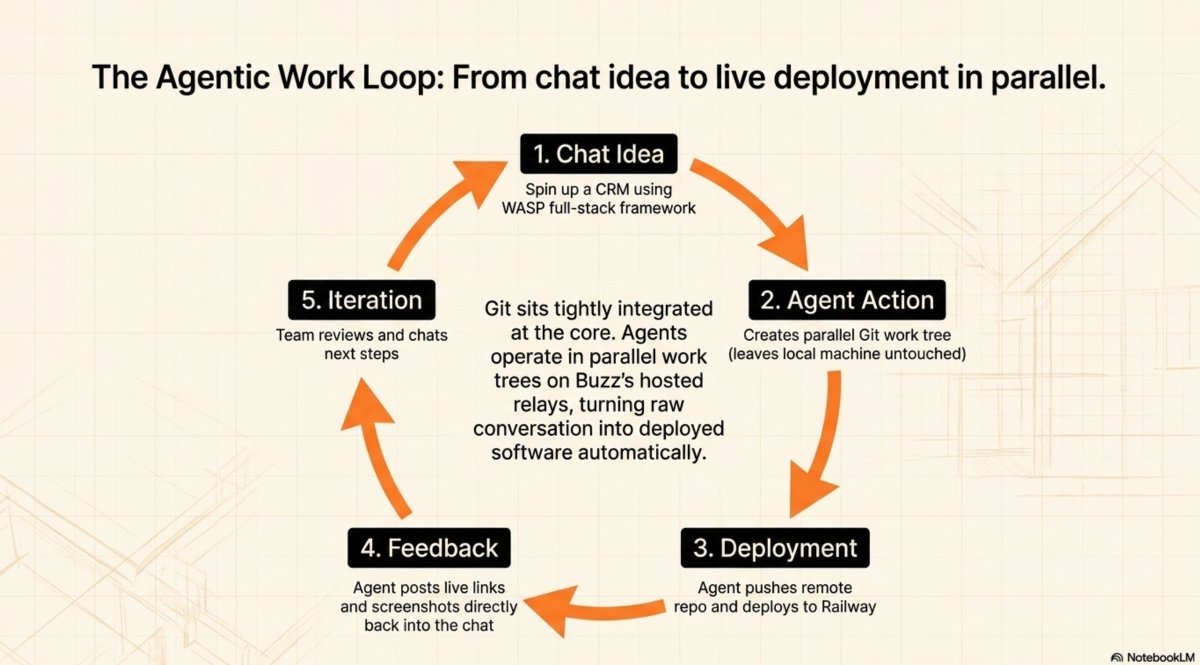 Vinny's example: spin up three versions of a landing page from ideas your team just discussed in the chat. His bigger one: a CRM. He asked for the Wasp full stack framework, deployed to Railway. The agent built it, pushed to a remote repo, put it live, and sent screenshots and links. He checked the work after it landed. Turn on workflows and projects under Settings → Experiments. ## The loop worth stealing 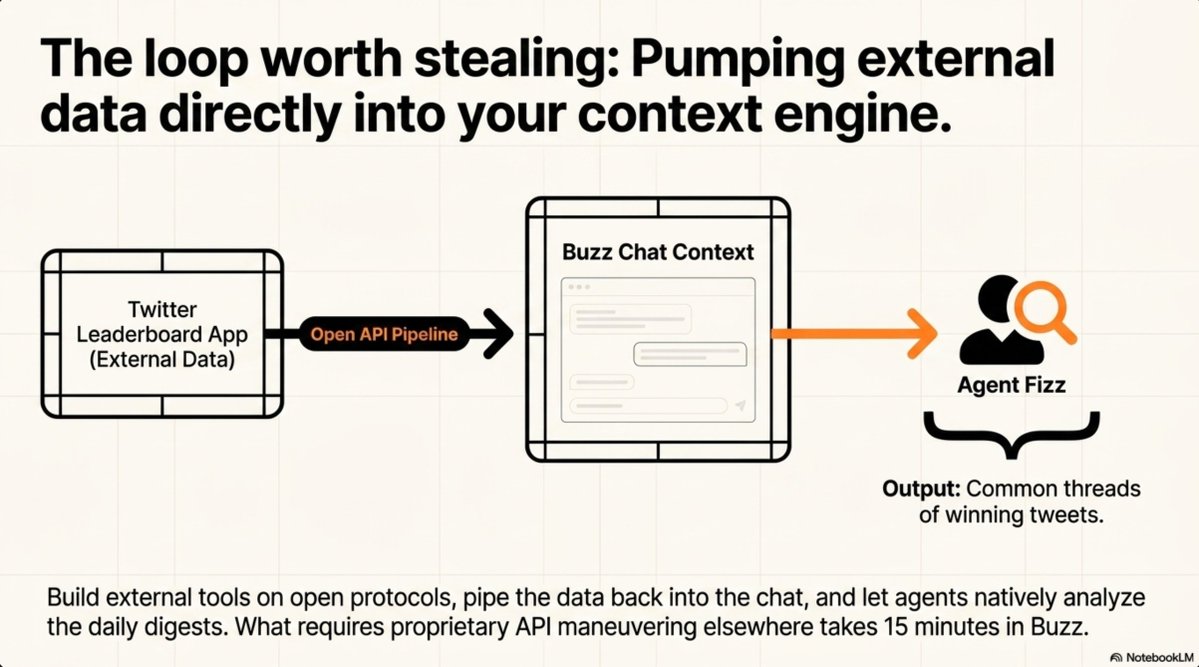 Vinny built a tweet leaderboard app for his team: who is posting, what is performing, which tweets sit on top. Then he closed the loop. He had the agent build a public API on that app. He added a workflow to pull the numbers daily into a channel. Now he replies to the digest and asks his agent Fizz for the common thread across the last seven days of winning tweets. Information out through an app. Information back into the context of the agents. He called the same setup on Slack a project of API tokens, a platform app, and proprietary structure to learn. On an open protocol, connecting a tool takes about fifteen minutes. ## Shared compute 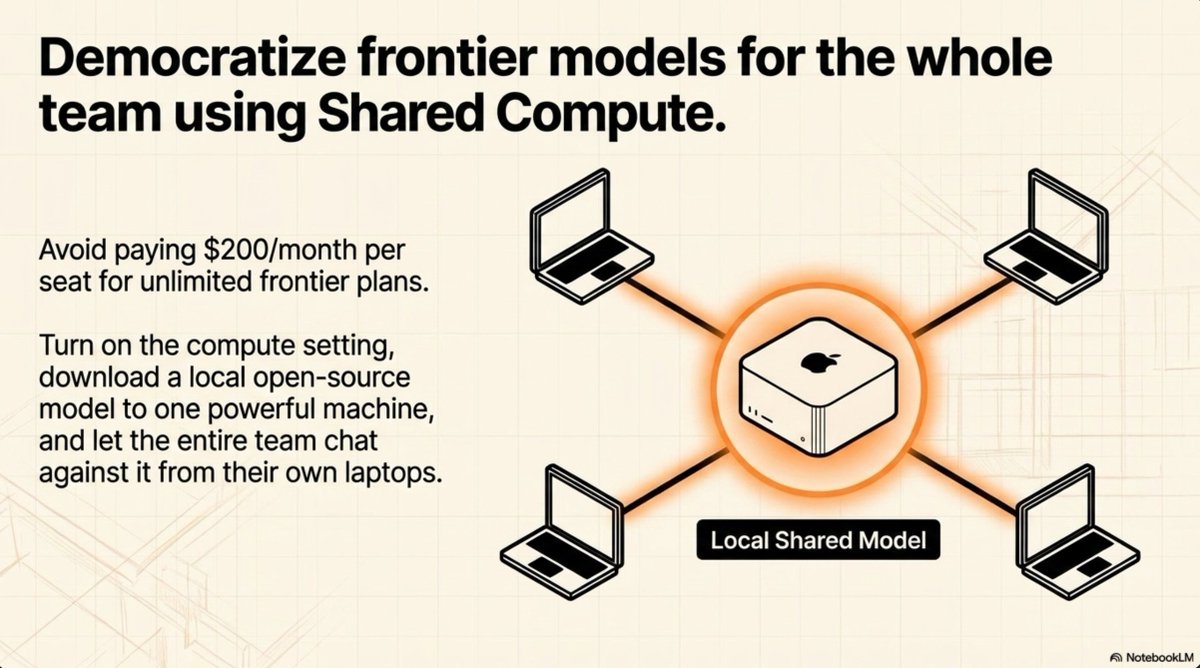 There is a compute setting. Turn it on and Buzz suggests local models you can download. Then you share them with your team. Vinny's example: a college student with an idea, little time, and no budget for the expensive unlimited plans. Get some friends together, buy one decent machine, a Mac Studio or a beefy Mac Mini, and everybody chats from their own laptop against that one model. Local models keep getting stronger. This paves the road for real choice. ## Why the ownership question matters 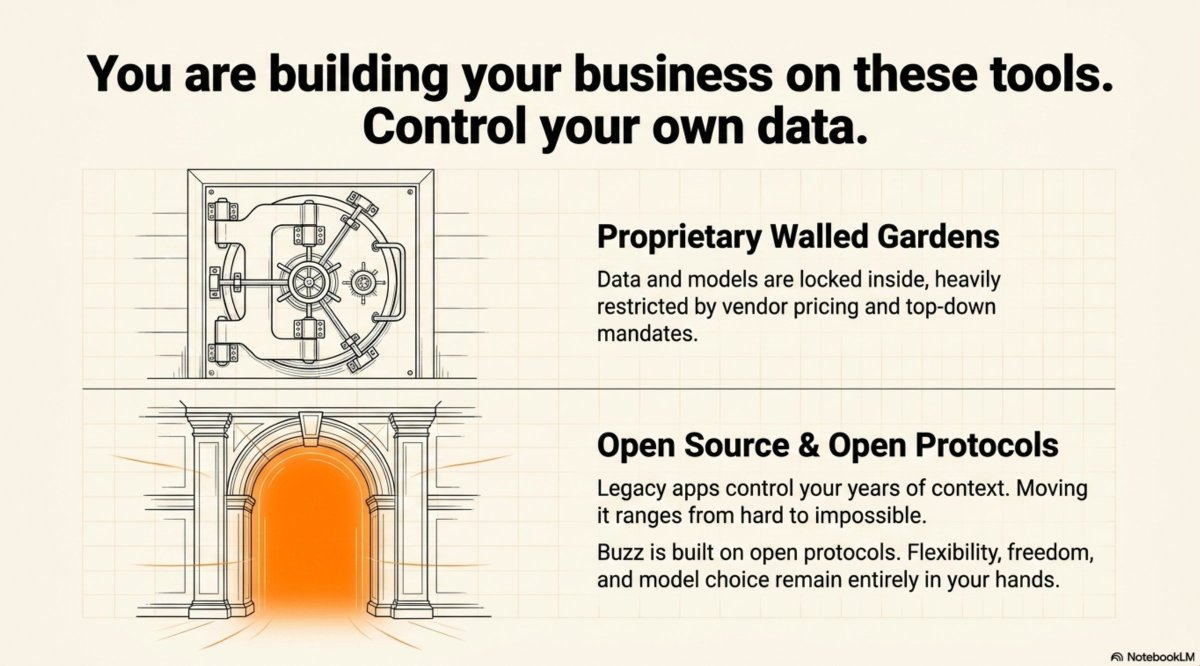 Slack controls your data. Moving years of it somewhere else ranges from hard to impossible, so most teams stay. Model access works the same way. Today an unlimited plan costs $200 a month. Tomorrow the number moves. Some models carry restrictions on what you can ask, some governments issue top down mandates, and we have watched models get pulled back days after release. You build a business on these tools. Flexibility, freedom, and control belong in your hands. ## Setting up your agents 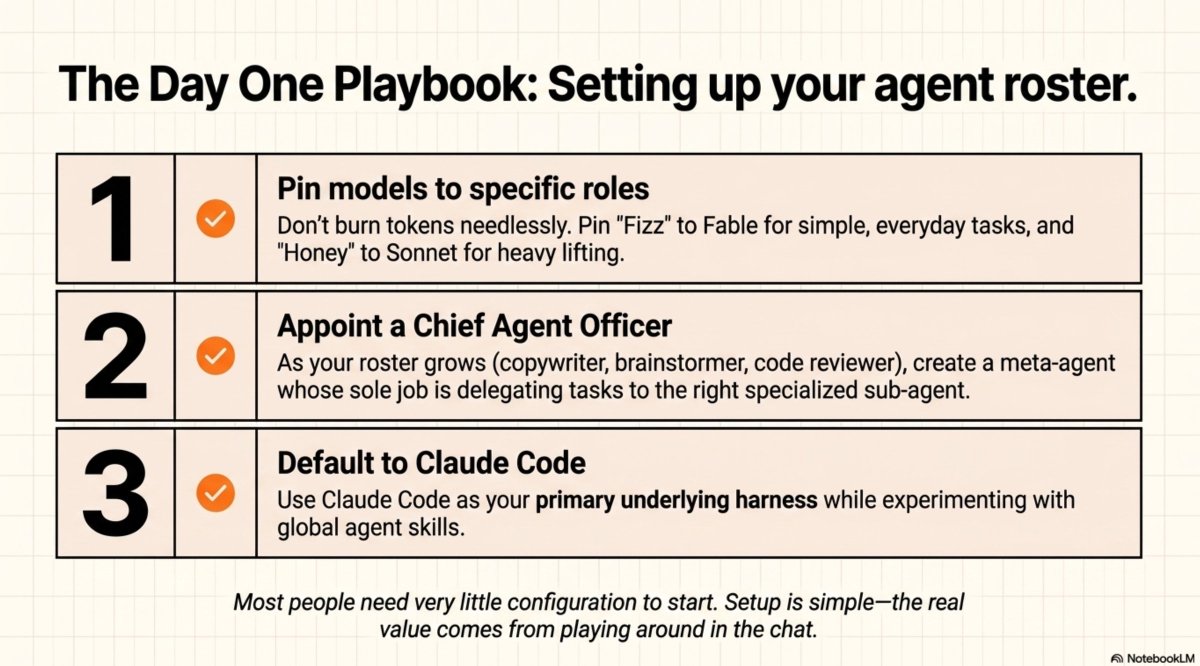 Vinny's honest take: most people need very little here. He runs Claude Code as the harness. His main move was pinning agents to models. Fizz runs on a Fable model, Honey runs on Sonnet, because plenty of tasks burn tokens for power they will never use. He also made a Chief Agent Officer. As his roster grows past a copywriter, a brainstormer, and a code reviewer, he delegates the delegation: here is the task, who is best for it? Everything else, he says, comes from playing around. ## Where it stands today 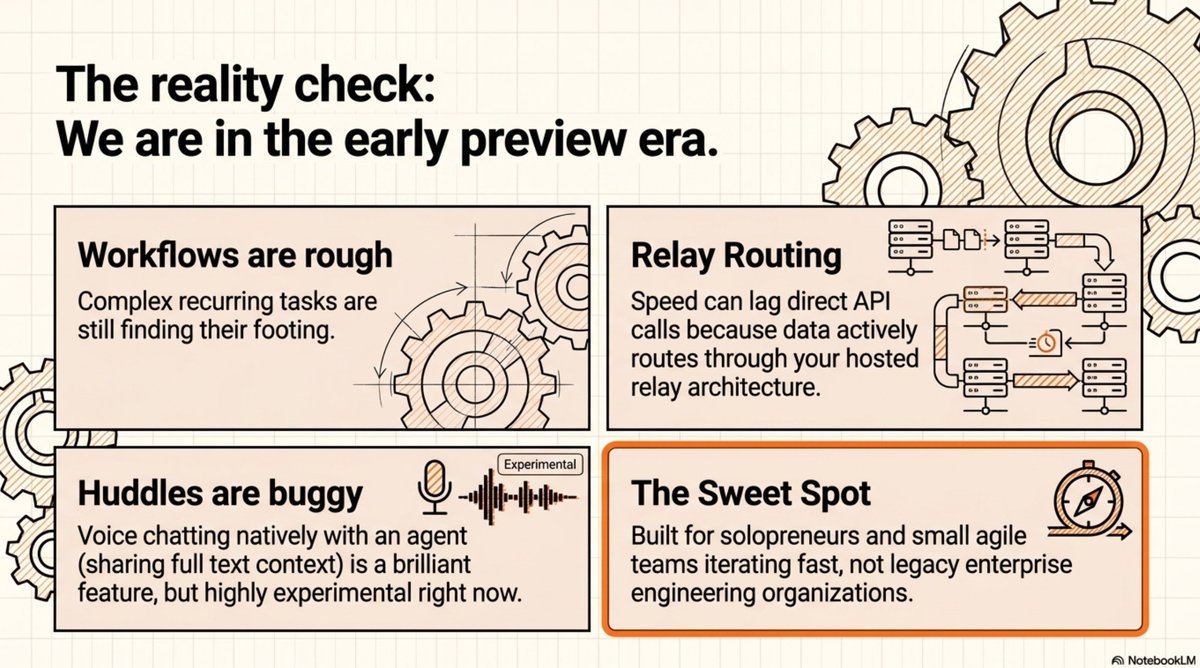 This is early preview software. Beta, and possibly alpha. Workflows and recurring tasks were rough when he tried them. Speed lags Claude Code or Codex, likely because everything routes through your relay and back. Huddles let you voice chat with an agent that has your full chat context, and Vinny had yet to test that one himself. Complex software engineering calls for a different tool. Solopreneurs and small teams iterating on small products land in the sweet spot. Note on the relay: your chats, your files, and your Git remotes live on a server you host or that Block hosts for you. That relay is the thing making the rest of it possible. ## Should you download it Vinny is trying to convince his own team at Wasp to run on it internally. His reason is the shared context. Public channels for your community, private channels for your team, and one agent an @ away from prototyping the bug report someone just filed. My reason is different. I am unaffiliated with Buzz, Block, and Jack Dorsey. I run an agency that designs AI native software, so I look at this and see something close. Try it and one of three things happens. You love it and forget Slack. You go back to Slack and configure it better. You learn how agents behave when they live where the conversation lives. Every outcome pays. ## Final thoughts  The insight sitting under all of this: your team chat quietly became your context foundation, and the best output goes to whoever holds the most context. Buzz treats that context as the core, then lets you point it at projects, Git, local compute, or a voice call with an agent. It is open source, built on an open protocol, which means the people using it get to shape it. "Things change so fast, so who the hell knows?" Vinny said that about where Buzz ends up. The people who find out early are the same people who see around the corner. ## Checkout the full episode: Apple: https://podcasts.apple.com/us/podcast/jack-dorseys-buzz-the-new-hermes-agent/id1593424985?i=1000778781756 Spotify: https://open.spotify.com/episode/2XLp5nBfAWnoP6A2XXDyxj?si=2fa736c6c2c248d1 Youtube: https://www.youtube.com/watch?v=_jGSgzBkzrY ## 相关链接 - [The Startup Ideas Podcast (SIP)](https://x.com/startupideaspod) - [@startupideaspod](https://x.com/startupideaspod) - [11K](https://x.com/startupideaspod/status/2082231321758499004/analytics) - [https://podcasts.apple.com/us/podcast/jack-dorseys-buzz-the-new-hermes-agent/id1593424985?i=1000778781756](https://podcasts.apple.com/us/podcast/jack-dorseys-buzz-the-new-hermes-agent/id1593424985?i=1000778781756) - [https://open.spotify.com/episode/2XLp5nBfAWnoP6A2XXDyxj?si=2fa736c6c2c248d1](https://open.spotify.com/episode/2XLp5nBfAWnoP6A2XXDyxj?si=2fa736c6c2c248d1) - [https://www.youtube.com/watch?v=_jGSgzBkzrY](https://www.youtube.com/watch?v=_jGSgzBkzrY) - [Upgrade to Premium](https://x.com/i/premium_sign_up) - [6:26 AM · Jul 29, 2026](https://x.com/startupideaspod/status/2082231321758499004) - [11.8K Views](https://x.com/startupideaspod/status/2082231321758499004/analytics) - [View quotes](https://x.com/startupideaspod/status/2082231321758499004/quotes) --- *导出时间: 2026/7/29 09:01:05* --- ## 中文翻译 # Jack Dorsey's Buzz: 清晰解读(以及如何使用它) **作者**: The Startup Ideas Podcast (SIP) **日期**: 2026-07-28T22:26:47.000Z **来源**: [https://x.com/startupideaspod/status/2082231321758499004](https://x.com/startupideaspod/status/2082231321758499004) ---  ## Buzz: 内置 Agent 的 Slack  Vinny 发文介绍了一款名为 Buzz 的工具。Jack Dorsey 转发了它。 所以我邀请他进行了一次实时演示,并让他分享一些尚未公开的最佳实践。 本期节目的核心问题只有一个:我应该使用这款工具,还是继续留在 Slack? ## 作为团队成员的 Agent  Slack 通过集成的方式支持 Agent。而在 Buzz 中,它们是一等公民。 启动时你会获得默认的 Agent。你可以编辑它们并添加自己的 Agent。Agent 的指令就像系统提示词一样工作。 Vinny 的定位是:把它们视为团队的一部分。 ## 可更换的“挽具”(Harness)  这是让他彻底买单的功能。 在任何 Agent 底下,你都可以运行 Claude Code、Codex、Goose 或 open code。适配器覆盖了其他模型。 AI 发展速度之快足以让人产生模型疲劳。你刚安顿下来,刚觉得顺手,同一周就有新模型发布了。 Buzz 就位于这种更迭之上的一层。更换 Agent 底下的挽具,聊天记录会随之迁移,你们共同构建的一切也会保留下来。 更换模型,保留记忆。 全局安装的 Agent 技能也会同步迁移。 ## Agent 实际上做什么  Git 紧贴核心运行。Agent 创建项目、打开功能分支,并在并行工作树中工作,因此你机器上的副本保持原样。 模式如下所示: 聊天 → agent → 工作树 → 部署 → 在频道中回传截图  Vinny 的例子:根据团队刚刚在聊天中讨论的想法,快速生成三个版本的着陆页。 更大的例子:一个 CRM(客户关系管理)系统。他要求使用 Wasp 全栈框架,并部署到 Railway。Agent 构建了它,推送到远程仓库,将其上线,并发送了截图和链接。上线后他检查了工作成果。 在 设置 → 实验 中开启工作流和项目。 ## 值得借鉴的闭环  Vinny 为他的团队构建了一个推文排行榜应用:谁在发帖,表现如何,哪些推文位居榜首。 然后他完成了闭环。 他让 Agent 在该应用上构建了一个公共 API。他添加了一个工作流,每天将数据拉取到一个频道中。现在,他回复摘要并询问他的 Agent Fizz,过去七天的热门推文有什么共同点。 信息通过应用输出。信息回到 Agent 的上下文中。 他说在 Slack 上实现同样的设置,需要处理 API 令牌项目、平台应用以及专有结构的学习。而在开放协议上,连接一个工具大约只需要十五分钟。 ## 共享算力  有一个算力设置。开启它,Buzz 会建议你可以下载的本地模型。 然后你可以与团队共享它们。 Vinny 的例子:一个大学生,有点子,时间少,没有预算购买昂贵的无限套餐。找几个朋友凑钱,买一台像样的机器,比如 Mac Studio 或高配 Mac Mini,每个人都可以用自己的笔记本电脑与那台模型上的 Agent 聊天。 本地模型变得越来越强。这为真正的选择铺平了道路。 ## 为什么所有权问题很重要  Slack 控制着你的数据。将多年的数据转移到别处,难度从困难到不可能不等,所以大多数团队选择留下。 模型访问权的运作方式也是如此。今天一个无限套餐每月花费 200 美元。明天价格可能就会变动。有些模型对你提问的内容有限制,有些政府发布自上而下的指令,我们也见过模型在发布几天后被撤回。 你在这些工具上建立业务。灵活性、自由度和控制权应该掌握在你手中。 ## 设置你的 Agent  Vinny 的诚实看法:大多数人在这方面只需要做很少的配置。 他运行 Claude Code 作为挽具。他的主要操作是将 Agent 固定到特定模型。Fizz 运行在 Fable 模型上,Honey 运行在 Sonnet 上,因为很多任务为了用不上的算力而消耗 Token。 他还设立了一位首席 Agent 官。随着他的名单从文案、头脑风暴者和代码审查员不断扩大,他将指派任务的工作委托出去:这是任务,谁最适合做? 他说,其他一切都来自于摸索和尝试。 ## 目前的现状  这是早期的预览软件。测试版,甚至可能是 alpha 版。 当他尝试工作流和循环任务时,体验还比较粗糙。速度滞后于 Claude Code 或 Codex,可能是因为所有内容都需要通过你的中继来回传输。Huddles 功能允许你与拥有完整聊天上下文的 Agent 进行语音聊天,而 Vinny 自己还没测试过那个功能。 复杂的软件工程需要不同的工具。在小型产品上迭代的独立创业者和小团队处于最佳甜点区。 关于中继的说明:你的聊天、文件和 Git 远程仓库位于你托管或 Block 为你托管的服务器上。那个中继正是让其余一切成为可能的关键。 ## 你应该下载它吗 Vinny 正试图说服他在 Wasp 的团队内部使用它。 他的理由是共享上下文。针对社区的公开频道,针对团队的私密频道,以及一个只需 @ 一下就能为某人刚刚提交的错误报告制作原型的 Agent。 我的理由不同。我与 Buzz、Block 和 Jack Dorsey 没有任何关系。我经营一家设计 AI 原生软件的机构,所以我看到这个时觉得很亲切。 试一试,结果无非三种。你会喜欢上它并忘记 Slack。你会回到 Slack 并把它配置得更好。你会了解到当 Agent 生活在对话发生的地方时,它们是如何表现的。 每一种结果都有价值。 ## 最后的思考  这一切背后的洞察:你的团队聊天悄然成为了你的上下文基础,而最好的输出属于掌握最多上下文的人。 Buzz 将这种上下文视为核心,然后让你将其指向项目、Git、本地算力或与 Agent 的语音通话。 它是开源的,构建在开放协议之上,这意味着使用它的人可以塑造它。 “世事变化太快,所以谁知道呢?” Vinny 这样评价 Buzz 的最终走向。那些最早发现的人,正是那些能看清拐角处未来的人。 ## 收听完整节目: Apple: https://podcasts.apple.com/us/podcast/jack-dorseys-buzz-the-new-hermes-agent/id1593424985?i=1000778781756 Spotify: https://open.spotify.com/episode/2XLp5nBfAWnoP6A2XXDyxj?si=2fa736c6c2c248d1 Youtube: https://www.youtube.com/watch?v=_jGSgzBkzrY ## 相关链接 - [The Startup Ideas Podcast (SIP)](https://x.com/startupideaspod) - [@startupideaspod](https://x.com/startupideaspod) - [11K](https://x.com/startupideaspod/status/2082231321758499004/analytics) - [https://podcasts.apple.com/us/podcast/jack-dorseys-buzz-the-new-hermes-agent/id1593424985?i=1000778781756](https://podcasts.apple.com/us/podcast/jack-dorseys-buzz-the-new-hermes-agent/id1593424985?i=1000778781756) - [https://open.spotify.com/episode/2XLp5nBfAWnoP6A2XXDyxj?si=2fa736c6c2c248d1](https://open.spotify.com/episode/2XLp5nBfAWnoP6A2XXDyxj?si=2fa736c6c2c248d1) - [https://www.youtube.com/watch?v=_jGSgzBkzrY](https://www.youtube.com/watch?v=_jGSgzBkzrY) - [升级到 Premium](https://x.com/i/premium_sign_up) - [6:26 AM · Jul 29, 2026](https://x.com/startupideaspod/status/2082231321758499004) - [11.8K Views](https://x.com/startupideaspod/status/2082231321758499004/analytics) - [View quotes](https://x.com/startupideaspod/status/2082231321758499004/quotes) --- *导出时间: 2026/7/29 09:01:05*
开 开源 Company Brain:多玩家 Agent Harness 的架构设计 Supermemory 团队宣布开源其 Company Brain 产品,并详细介绍了背后的多玩家 Agent Harness 设计。该系统构建于 Cloudflare Agents SDK 之上,核心是一个以组织 ID 为键的 Durable Object,负责回合生命周期、状态管理、权限策略、记忆边界和工具调用。文章重点阐述了如何设计一个'像队友而非机器人'的 Agent:包括 Slack 事件的分类路由、基于置信度模型而非二元判断的主动性决策、审批流程、steering 处理、运行时恢复等。作者还解释了停止该产品的原因——团队希望专注于构建世界领先的 Agent 记忆 API。 技术 › Agent Dhravya Shah 2026-09-26 AgentHarness开源CloudflareSlack多玩家架构设计记忆系统Durable Object主动性
多 多租户 Agent Dashboard:小团队共享 Agent 平台 Octop 文章介绍了一个面向小企业、小团队的多租户 Agent Dashboard——腾讯开源的 Octop。团队可以在内部共享一个 Agent 平台来创建技能和 Agent。亮点包括:支持单点登录和简单的多租户权限控制;支持 Docker 服务端部署并提供 Web Dashboard;可对接不同的存储后端、数据库以及沙盒服务。作者将其定位为 Grok Bot 的小团队版,与面向个人的 OpenClaw/Hermes 和桌面端的 WorkBuddy 形成差异化。作者表示非广告,如果领导要求做类似系统可直接参考。 技术 › Agent 九原客 (@9hills) 2026-09-20 AgentOpenClawHermes多租户Docker自托管开源团队协作Octop
1 1分钟,开源模型原生支持移动端 作者分享通过UU远程的最新升级,让本地运行的开源大模型(如Qwen 27B)拥有了手机端入口。相比Codex远程控制只支持自家模型、Claude Code远程有封号风险,本地模型不花钱、不封号且速度快。UU远程基于tmux实现,支持完整TUI渲染、多终端会话、跨端接管和语音输入,且免费。作者还开源了uu-term-bridge工具,让iTerm2中的所有会话自动出现在手机列表,实现桌面与手机双向无缝切换,补齐了与Codex远程体验的差距。 技术 › 移动端 实践哥 Li 2026-09-06 本地模型开源QwenUU远程tmuxiTerm2AgentClaude CodeCodex远程终端
M Meet Scout: 开源的企业级上下文代理 本文介绍了 Scout,一个开源的企业级“上下文代理”(Company Brain)。针对现有方案将所有数据存入向量数据库导致索引过时的问题,Scout 提出了“导航优于搜索”的理念,通过 Context Providers 连接 Slack、Google Drive 等实时数据源,像操作文件系统一样导航信息。它还能动态构建 Wiki 和 CRM,并通过持续学习形成闭环。 技术 › Agent Ashpreet Bedi 2026-04-29 Agent开源RAG上下文提供商企业知识库SlackCRMLLM向量数据库自动化
A AI 视频情报站开放 MCP,接上 Claude、Codex 每天替你找新选题 作者宣布其 AI 视频情报站正式开放 MCP 接口,支持 Claude Code、Codex 等 Agent 直接接入查询。文章介绍了接入方法(一条命令即可),并展示了几种典型用法:每天早上让 Agent 查询新起和升温的视频题材、查询某个题材的来源和时间线、追踪特定 AI 模型的动态,以及将情报站接入自己的工作流(如自动生成选题卡、晨会材料等)。情报站每天早上更新一期,提供题材归类、X 热议、开源项目、题材溯源等数据,同时说明了查询范围限制。不接 MCP 也可通过网页或开源版自行部署使用。 技术 › MCP Gary曹淦 2026-10-27 MCPClaude CodeCodexAgentAI视频选题工具开源情报站内容创作
1 10月25日我生日:从实验室到 LayerFS 的开源创业之路 作者在生日之际回顾过去一年的经历:从加拿大到新加坡再到中国,从实习生到代理 CEO,再到创业未果后投身开源。他坚信 AI 时代的基础设施应围绕 agent 重新设计,尝试申请创业营但因对国内 VC 模式失望而放弃融资,转而 all in 研发 Ephemeral Sandbox。在田老师等人的帮助下,项目转向 FUSE 技术路线并演化为 LayerFS,于四天前发布 v1.0.0。尽管面对 90% 的质疑,他决心把这一底层基础设施项目长期做下去。 技术 › Agent Yifan Xu (@yifanxu_ephai) 2026-10-26 LayerFSAgent开源创业基础设施Ephemeral ComputingFUSEbuild in public
G Grok Bot Memory Engineering: How One Agent Learns With a Team 文章围绕 Grok Bot 新发布的 Team Bots 展开,深入分析团队级 AI Agent 的记忆工程。核心观点:团队 Bot 需要在共享学习与私有上下文之间划清边界。作者提出将上下文分为五类:实时源数据、团队技能、团队记忆、私有笔记和任务状态,并强调'可复用判断放记忆,易变数据留在源头'的原则。文章还提出记忆准入卡与审查机制的设计方案,包括准入门槛、外部账本、审查日期和评估流程,避免 Bot 在错误位置记住错误信息或把过时决策套用到新场景。作者同时说明这些流程是其提议方案,而非已验证的产品功能。 技术 › Agent rari🈀 2026-10-26 GrokTeam Bots记忆工程共享记忆私有上下文Agent架构团队协作Slack插件数据边界
构 构建企业级 Agent Harness 的五大核心组件 LangChain 创始人 Harrison Chase 分享了在营销、销售和工程团队内部构建 Agent(GTM Agent、OpenSWE、Content Studio)的经验,总结出构建企业 harness 的五大核心要素:1) 用户体验——Agent 嵌入员工日常使用的 Slack,支持 breakout 独立线程;2) 身份——区分 On-behalf-of 代理用户身份与固定服务凭证两种模式;3) 记忆——分为全局记忆与用户级记忆两层;4) 代码执行——通过沙箱安全运行代码并借助 secret proxy 访问服务;5) 计划运行——大量任务由定时任务或事件触发而非用户显式调用,形成环境感知型 Agent。所有 Agent 均基于 Managed Deep Agents 构建。 技术 › Agent Harrison Chase 2026-10-25 AgentLangChainSlack沙箱身份认证记忆系统环境AgentManaged Deep Agents企业级AI
D DS Bot开源了,那Grok Bot 和 DS Bot,到底该选哪个? 文章对比了社区开源的 DS Bot(DeepSeek-Bot)与 Grok Bot 两款多角色 AI 助手。核心差异在于'动手能力':Grok Bot 提供托管云电脑,可操作浏览器、跨网站执行任务且合盖继续运行;DS Bot 内置浏览器仅能读网页,但支持自选模型、MCP/Skills 扩展和可检查的 Markdown 记忆。文章从网页操作、模型控制权、数据与权限、成本等维度给出选购建议:不想维护、需要网页自动化选 Grok Bot;已有 API、重视控制权选 DS Bot。作者建议先用一个每周固定任务实测,再决定是否扩展。 技术 › Agent Ethan 恩宇 2026-10-25 Grok BotDS BotDeepSeekAgent多角色协作模型选择MCP开源成本对比工具评测
开 开源和 DevRel,是我的本命坑 作者leonliuzx回顾了自己与开源和开发者关系(DevRel)结缘的历程:初中开始在GitHub上折腾代码,2023年通过AGI Playground参与无障碍AI项目'声桥AI语训',之后深入书生浦语、飞桨等社区做助教、写教程、贡献文档。2024年底加入百度从事社区运营实习并转正,组织Hackathon活动、培养贡献者,甚至与李彦宏共进晚餐。工作之余还发起了OMDSH和OpenAIGames等独立社区。作者将开源社区比作同好群,认为因纯粹热爱而聚集的感觉非常棒,并庆幸自己在这个年纪找到了愿意长期投入的热爱。 技术 › 杂谈 leonliuzx 2026-10-25 开源DevRel社区运营飞桨HackathonDeepSeekAgent个人成长AI社区无障碍
h huashu-design 3.0发布!让你的设计审美再提升100%! 花叔开源的AI设计技能huashu-design发布3.0版本,该技能可让agent自动生成网页、PPT、App原型、信息图等设计。3.0主要改进:先出六个候选再挑三个成稿;现实参照改为同媒介并先截图;风格库从60种扩到84种(新增中文与东亚风格);App原型采用有构图的展示板;新增本机记录系统(经验、外观账本、设计体检)实现越用越懂用户;坚持事实核实。作者分享了三轮迭代的过程,核心教训是:对agent应加选项而非禁令,禁令会让设计变得保守无聊,提供更多可见样例反而能激发更好的设计。 技术 › Skill 花叔 2026-10-24 huashu-designAI设计SkillClaude开源Agent设计审美前端
商 商单内耗终结者:开源「商单 Skill」+ EverOS,经验永久复用 作者针对商单博主接单时反复从零开始的内耗问题,开源了一套「商单 Skill」工作流,配合 EverOS 记忆工具使用。方案分三步:将过往 Brief、交付稿件、踩坑复盘入库转为可检索记忆;自动沉淀 SOP 与可复用流程;新单先由 AI 拆解需求、调取历史爆款套路,再动笔成稿。改稿经验也会永久存档,帮助提前规避品牌禁词、法务审核等雷区。所有经验本地或云端存储,工具负责记忆,人负责决策。附赠动笔核对清单,实现「记录→提炼→检索→回存」的经验复用闭环。 技术 › Skill Modengsir AI 2026-10-23 商单SkillEverOSAgent记忆库工作流SOPAI写作开源效率工具内容创作