# Building recursive agent systems
**作者**: Lee Robinson
**日期**: 2026-06-12T16:22:28.000Z
**来源**: [https://x.com/leerob/status/2065469795529588940](https://x.com/leerob/status/2065469795529588940)
---

At Cursor, we run thousands of agents to help us train the next version of Composer.
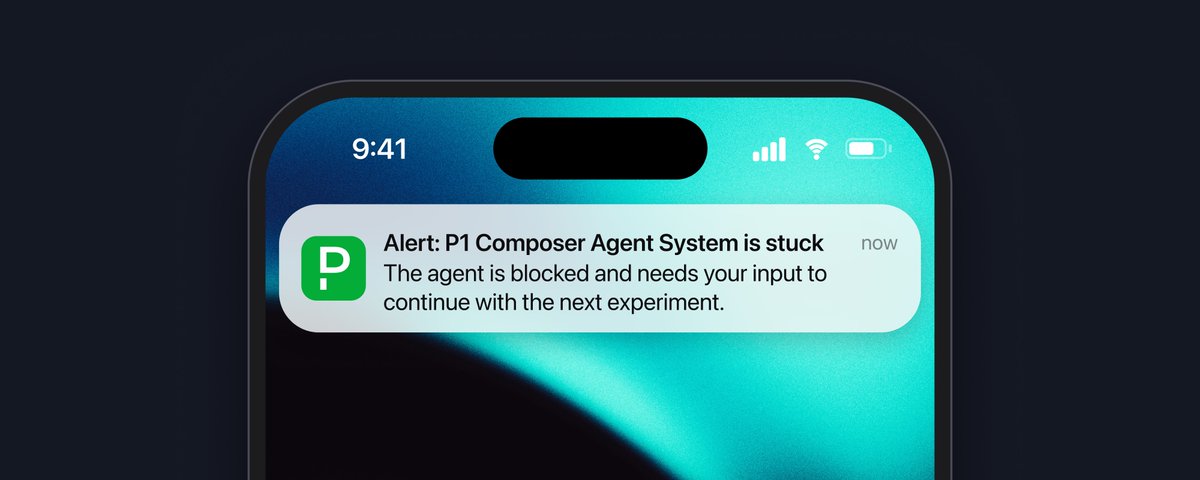
We give them research tasks, and if they aren't succeeding or run into issues, they DM us on Slack or page us via PagerDuty.
## Scaling training for Composer
We’ve built an org chart of agents that work together.
As we’ve scaled training for Composer, we’ve wanted to run thousands more experiments. This was possible before, but it was slow and hard to keep track of every experiment’s status. To speed things up and parallelize work, we built an always-running agent system (yes, it's a loop).
## An agent system for research
Here’s how the system works:
1. The main agent runs on a massive remote machine with all the tools you'd use locally, plus a file on disk acting as an “inbox” for the fleet.
2. It SSHes into machines running hundreds of child agents and collects their statuses into the inbox.
3. On every loop, it checks fleet health, keeps healthy tasks running in the background, and surfaces anything broken to the team on Slack.
4. Like all infra, the agents occasionally hit transient issues or need to be poked, so the main agent can control the whole fleet, quitting or restarting processes as needed.
This “fleet manager” builds on our previously published research on long-running agents. We’ve given the manager many different skills that encode tacit knowledge for how to run ML experiments, review and monitor results, and more.
## Researchers with superpowers
Training a great model means trying a bunch of ideas for creating useful RL data.
A single laptop is not enough here, you really want an army of computers in the cloud to run experiments in parallel. And since we aren't compute-constrained, we rolled out this infra for everyone in ML.
Researcher time is our scarcest resource and we’ve found a way to scale their leverage by orders of magnitude. Imagine if you had a human manager with 10,000 direct reports. Obviously that wouldn’t work well, but this human → agent “org” kind of does!
If you have a problem that is verifiable, where throwing more tokens at it will solve it faster or better, it’s worth considering building a system like this. It’s enabled us to have swarms of agents crawling through Composer’s data to recursively improve itself for future versions.
And if this sounds exciting, we’re hiring!
## 相关链接
- [Lee Robinson](https://x.com/leerob)
- [@leerob](https://x.com/leerob)
- [220K](https://x.com/leerob/status/2065469795529588940/analytics)
- [Composer](https://cursor.com/blog/composer-2-5)
- [all the tools you'd use](https://cursor.com/blog/agent-computer-use)
- [ong-running agents](https://cursor.com/blog/scaling-agents)
- [skills](https://x.com/leerob/status/2011810357942084085)
- [compute-constrained](https://cursor.com/blog/spacex-model-training)
- [swarms of agents](https://cursor.com/blog/multi-agent-kernels)
- [recursively improve itself](https://x.com/leerob/status/2065069068722241729)
- [we’re hiring](https://cursor.com/careers)
- [Upgrade to Premium](https://x.com/i/premium_sign_up)
- [12:22 AM · Jun 13, 2026](https://x.com/leerob/status/2065469795529588940)
- [220.2K Views](https://x.com/leerob/status/2065469795529588940/analytics)
- [View quotes](https://x.com/leerob/status/2065469795529588940/quotes)
---
*导出时间: 2026/6/14 13:05:45*
---
## 中文翻译
# 构建递归智能体系统
**作者**: Lee Robinson
**日期**: 2026-06-12T16:22:28.000Z
**来源**: [https://x.com/leerob/status/2065469795529588940](https://x.com/leerob/status/2065469795529588940)
---

在 Cursor,我们运行着数千个智能体来帮助我们训练下一版本的 Composer。
我们给它们分配研究任务,如果它们没有成功或遇到问题,它们会在 Slack 上私信我们,或者通过 PagerDuty 通知我们。
## 扩展 Composer 的训练规模
我们构建了一个协同工作的智能体组织架构图。
随着我们扩展 Composer 的训练规模,我们希望能够运行数千个更多的实验。这在以前是可行的,但速度很慢,而且很难追踪每个实验的状态。为了加快速度并实现工作并行化,我们构建了一个全天候运行的智能体系统(是的,这是一个循环)。
## 用于研究的智能体系统
系统的工作原理如下:
1. 主智能体运行在一台巨大的远程机器上,拥有你在本地会使用的所有工具,外加磁盘上的一个文件,作为整个智能体群的“收件箱”。
2. 它通过 SSH 连入运行着数百个子智能体的机器,并将它们的状态收集到收件箱中。
3. 在每次循环中,它会检查智能群的健康状况,保持健康任务在后台运行,并将任何出现问题的内容通过 Slack 暴露给团队。
4. 像所有基础设施一样,智能体偶尔会遇到瞬时问题或需要被“戳”一下,所以主智能体可以控制整个群,根据需要退出或重启进程。

这个“群管理器”建立在我们之前关于长时间运行的智能体的研究基础之上。我们赋予管理者许多不同的技能,这些技能编码了如何运行 ML 实验、审查和监控结果等方面的隐性知识。
## 拥有超能力的研究人员
训练一个伟大的模型意味着要尝试很多点子来创建有用的 RL 数据。
单台笔记本电脑在这里是不够的,你真的需要一支云计算机大军来并行运行实验。由于我们不受计算资源的限制,我们向 ML 团队的每个人开放了这套基础设施。
研究人员的时间是我们最稀缺的资源,我们找到了一种方法,可以将其杠杆作用扩大一个数量级。想象一下,如果你有一个管理着 10,000 名直属下属的人类经理。显然这行不通,但这种人类 → 智能“组织”架构在某种程度上确实可行!
如果你有一个可验证的问题,并且投入更多的 Token 能更快或更好地解决它,那么考虑构建这样一个系统是值得的。它让我们能够拥有成群的智能体在 Composer 的数据中爬行,从而递归地改进自身,以适应未来的版本。
如果你觉得这很令人兴奋,我们正在招聘!
## 相关链接
- [Lee Robinson](https://x.com/leerob)
- [@leerob](https://x.com/leerob)
- [220K](https://x.com/leerob/status/2065469795529588940/analytics)
- [Composer](https://cursor.com/blog/composer-2-5)
- [all the tools you'd use](https://cursor.com/blog/agent-computer-use)
- [ong-running agents](https://cursor.com/blog/scaling-agents)
- [skills](https://x.com/leerob/status/2011810357942084085)
- [compute-constrained](https://cursor.com/blog/spacex-model-training)
- [swarms of agents](https://cursor.com/blog/multi-agent-kernels)
- [recursively improve itself](https://x.com/leerob/status/2065069068722241729)
- [we’re hiring](https://cursor.com/careers)
- [Upgrade to Premium](https://x.com/i/premium_sign_up)
- [12:22 AM · Jun 13, 2026](https://x.com/leerob/status/2065469795529588940)
- [220.2K Views](https://x.com/leerob/status/2065469795529588940/analytics)
- [View quotes](https://x.com/leerob/status/2065469795529588940/quotes)
---
*导出时间: 2026/6/14 13:05:45*