# How to Get More Out of Claude's $20 Plan
**作者**: Alex Prompter
**日期**: 2026-08-24T14:00:55.000Z
**来源**: [https://x.com/alex_prompter/status/2091888489491304830](https://x.com/alex_prompter/status/2091888489491304830)
---
Every week, another list of Claude token-saving habits goes viral. Ten habits, precise token counts, zero sources.
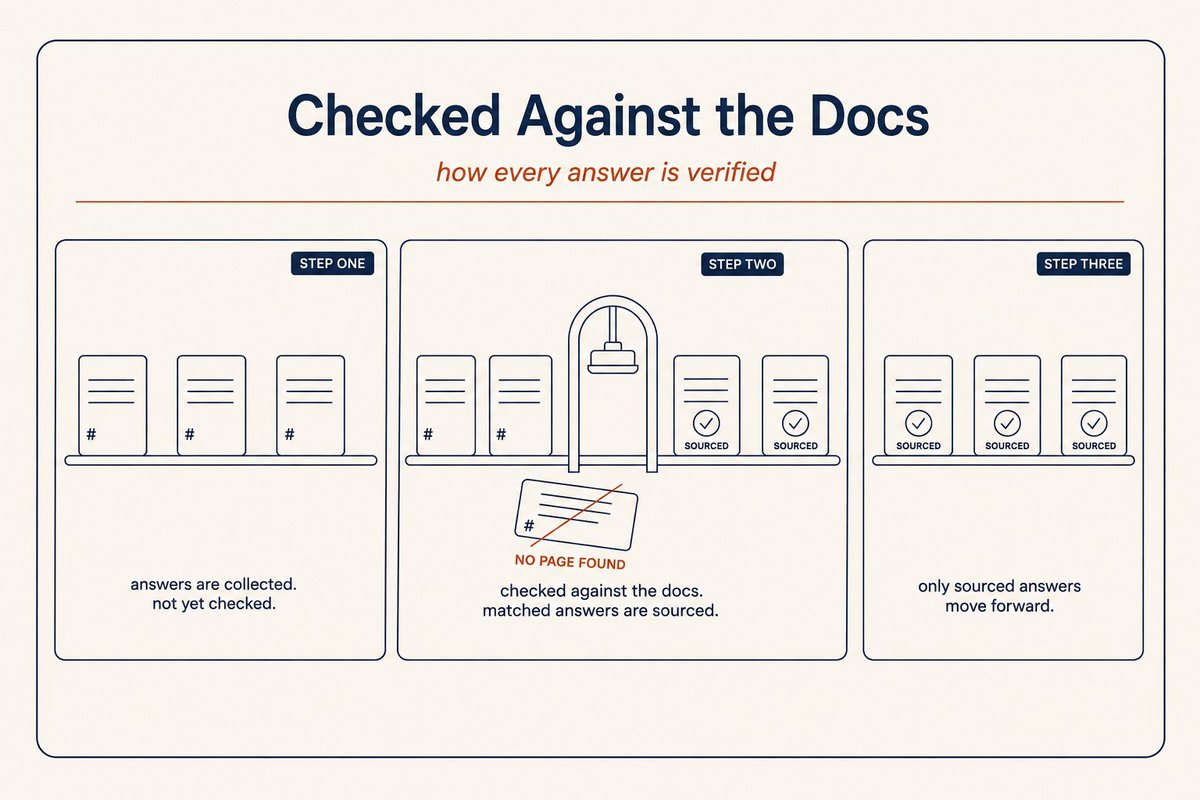
Some of that advice traces straight back to Anthropic's documentation. Some of it is one person's guess wearing a number. You can't tell which is which from the posts, so I spent a day reading Anthropic's help center and developer docs and checking the most repeated tips against them, one by one.
Below is what survived, what didn't, and the one mechanism behind both. Every claim carries a link to the page it came from.
## One help center page explains most of it
The plan in the title is Claude Pro, Anthropic's individual paid tier at $20 per month in the US. The first thing I went looking for was a message count, the number of messages that $20 buys
Anthropic doesn't publish one, because there isn't one. Instead, the help center lists the factors that drain your allowance. Message length, file attachment size, current conversation length, tool usage, model choice, effort level, and artifact creation. Different work drains the tank at different speeds, and the viral posts skip the list.
The heavyweight on that list is conversation length, and the developer docs explain why. Everything in a request counts toward the context window. The system prompt, every earlier message, every file, every tool result, plus the reply being generated. Claude processes your conversation from the top each time you send something, so your 30th message carries 29 exchanges with it.
Two calibration facts before the tips. A token is about 3.5 English characters, about three-quarters of a word, so a 1,000-word document weighs around 1,300 tokens. And the drain has a brake built in. Anthropic caches project content and even partially caches prompts you repeat often, so identical cargo costs less the second time it ships.
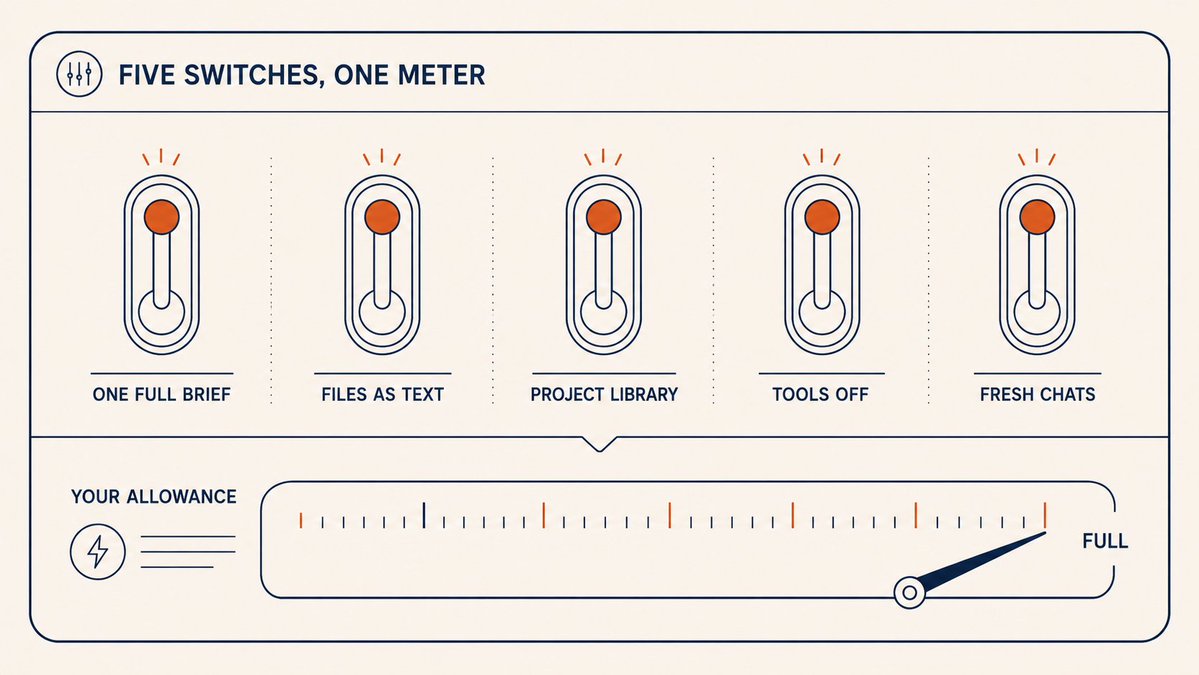
Hold onto the factor list, because it converts straight into mileage. Shrink anything on it and the same $20 covers more work before either limit is reached. Every tip I checked either shrinks something on the list or claims a precision this system doesn't offer.
## The folklore-sounding tip checked out first
I expected "ask for everything in one message" to be superstition. It's in the documentation almost word for word.
Anthropic's best-practices page tells you to batch similar requests in a single message, to plan conversations before starting them, and to review your prompt before sending so you need fewer follow-ups. The reason sits in the mechanism above. Three separate follow-ups make Claude process the whole conversation three times. One complete brief means one pass over the history.
The same page spells out what a good first message contains, and it reads like a checklist. The specific outcome you need, every related question combined, and the background context upfront. Anthropic's own example is blunt. Send all your math problems in one message, not one per message.
In practice, the difference looks like this. Weak opening: "Can you help me improve my landing page?" Strong opening: "Rewrite this landing page for freelance designers, keep it under 300 words, match the tone of the two samples below, and flag any claim I'd need to verify." The second version costs one exchange. The first one starts a five-message interview you pay for line by line.
The savings compound across a workday. Every follow-up you don't send is one full pass over the chat history you don't spend.
## Then I found the discount Anthropic built on purpose
Projects are the one place the pricing tilts in your favor, and the docs say so outright.
Content in projects is cached and doesn't count against your limits when reused. The docs use a research paper as their example. Load your reference materials once, then ask repeated questions against them while spending fewer messages than re-uploading would cost. For your budget, that turns your heaviest reference material into a one-time cost instead of a per-chat one.
Large projects get a second mechanism. Once your project knowledge approaches or exceeds the context window limit, Claude switches on retrieval-augmented generation, or RAG, for short, with no setup needed.
Instead of loading all project content at once, Claude searches your documents and retrieves the most relevant pieces for the question, and Anthropic says this lets a project store up to 10x more content. Below that threshold, project content loads in-context the normal way.
The docs add two maintenance habits most posts skip. Keep project instructions short, because long instructions ride into every chat in that project, and delete files you've stopped using, because clutter costs context space. Anthropic frames project instructions as the place for role and general guidelines, with task-specific asks living in the chat itself.
One circulating claim to separate out. You'll see posts naming a hard ceiling on project files before Claude supposedly degrades. No such number appears anywhere in Anthropic's documentation. Keeping projects tidy is documented advice. The specific ceiling is someone's anecdote.
## The docs tell you to turn things off, in those words
I didn't expect a vendor to recommend using fewer of its features. Anthropic's help center does.
It calls tools and connectors token-intensive and recommends temporarily disabling web search, Research, and MCP connectors when a conversation doesn't need them. Effort level and extended thinking sit on the same cost list, with the docs suggesting lower effort for routine tasks and extended thinking off when you don't need deeper reasoning.
The docs also note a double payoff from managing tools. Switched-on tools consume usage allowance, and they eat context window space that could hold your work. So the same 60-second audit stretches your weekly budget and makes room in long conversations at once.
A concrete pass looks like this. Web search off while you edit text you already pasted. Extended thinking off for reformatting and cleanup. Effort lowered for routine asks. Connectors on in the chats that use them and off everywhere else. You're matching the meter to the job, and everything you switch off is allowance handed back to the work.
## Anthropic warns you about its own long chats
The docs get candid on this one.
Conversation length is on the official cost list, and the help center's advice is direct. If you're approaching your usage limit in a longer chat, start a new conversation. The same article explains what happens if you don't. Conversations long enough to trigger automatic context management, where Claude summarizes earlier messages to keep going, consume more of your usage limit.
The window itself depends on the model, and Anthropic publishes the per-model breakdown. In chat on paid plans, Opus 5 and Sonnet 5 support a 1M token context window, Opus 4.8, 4.7, and 4.6 and Sonnet 4.6 support 500K, and other models 200K, with part of the window reserved for Claude's reply. A bigger window raises the ceiling on what a chat can hold. It doesn't change the cost logic, because everything the window holds gets processed again with your next message. The budget rule holds on any model. Fresh chats keep messages cheap.
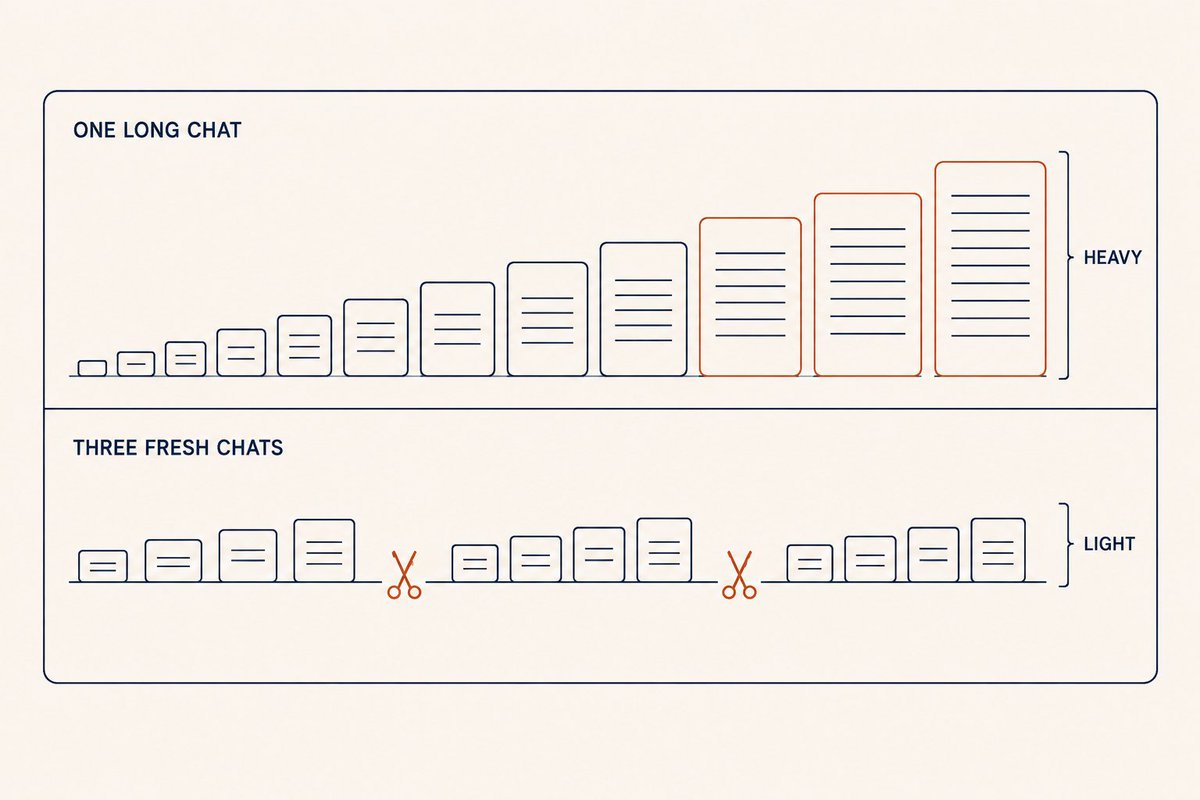
The working habit is one topic per chat, closed when it's done. Mixing three unrelated jobs in one thread means every message processes the other two jobs' history. And closing chats costs less than it feels like it should, because paid plans let you prompt Claude to search your previous conversations and pull the relevant context into a new one. You keep access to the old decisions without carrying the transcript.
## The priciest habit was hiding in a developer doc
The biggest number I found sits in the PDF documentation, a developer page most people uploading files skip past.
Upload a PDF and the system converts each page into an image and extracts the text alongside it. Claude analyzes both. Anthropic prices the text at 1,500 to 3,000 tokens per page depending on content density, with image-based cost calculations applied as well, since each page is converted into an image.
The design has a purpose, and knowing it tells you when a PDF upload is worth the price. Pages become images so Claude can read charts, tables, and layouts, and the docs pitch those use cases, like analyzing the graphs in a financial report. For plain prose, you pay the imaging cost and use none of it. Most uploads are plain prose.
Run the numbers on a 10-page prose report. The text alone lands between 15,000 and 30,000 tokens for a document that might hold 4,000 words, before the image costs are counted. Then the conversation-length mechanism takes over, and that weight travels with every later message in the chat.
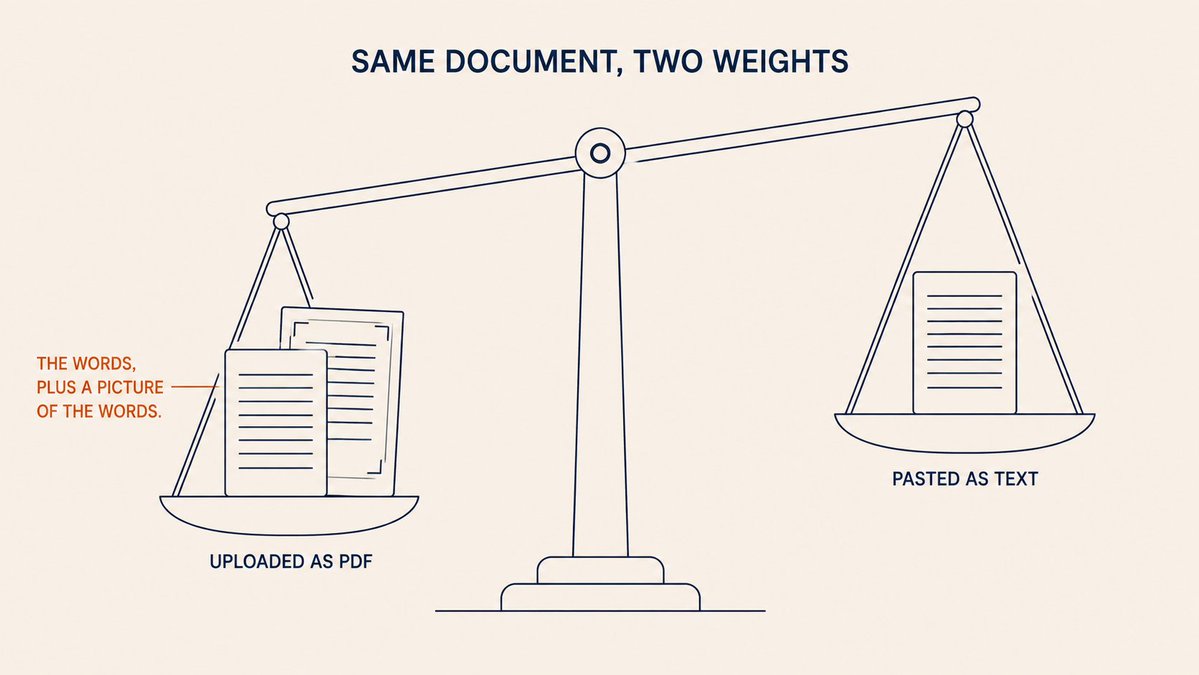
The cheap alternative is boring and it works. Need two paragraphs, paste the two paragraphs. Need the whole document, convert it to plain text or markdown first, formats Claude reads as text without any page imaging. If a PDF earns its keep, say charts you need analyzed, the docs suggest splitting large files and sending the relevant sections.
Of everything on Anthropic's factor list, file weight is the cost you can cut deepest without changing how you work. That makes this the highest-value habit in the article.
## The claims that didn't survive checking
The other half of the investigation matters as much. These three circulate the most, and I couldn't find any of them in Anthropic's pages.
Exact token figures for chat sizes. Posts quote precise costs for a 20-message or 30-message conversation down to the thousand. Anthropic states that allowances vary with message length, files, model, features, and demand, and publishes no per-chat numbers. The person who measured that was working from their own account and their own settings.
Behavior cliffs. The claim that Claude degrades or contradicts itself past some universal turn count appears in no documentation. Long-context behavior is a real research topic. A fixed number is an anecdote rounded up to a rule.
Reset-gaming schedules. Session-scheduling systems built around the 5-hour clock assume your allowance behaves the same every day. Anthropic says it varies with demand, which is the one thing a fixed schedule can't price in.
None of these claims has to be wrong. They're unknowable from outside Anthropic, and that's a different thing from knowledge.
A ten-second test for any future tip. Ask whether the number could exist on a vendor page. Prices, limits, and mechanisms can. "Claude gets dumb after 40 messages on everyone's account" can't, because Anthropic itself says the variables differ per account and per day. If the number couldn't be published, it came from a sample of one.
The test protects your time as much as your tokens. Skip the fake optimizations, and put that effort into the five habits the vendor confirms in writing.
## Before any of it, check which wall you hit
The habits fix different problems, so one diagnostic first.
Your paid plan runs two limits at once. A session limit that resets every five hours, and a separate weekly limit. They drain on separate clocks, which is why a short wait sometimes fixes nothing. If the session bar resets and you're still blocked, you're against the weekly cap, and no habit rescues the current week. The habits protect the next one.
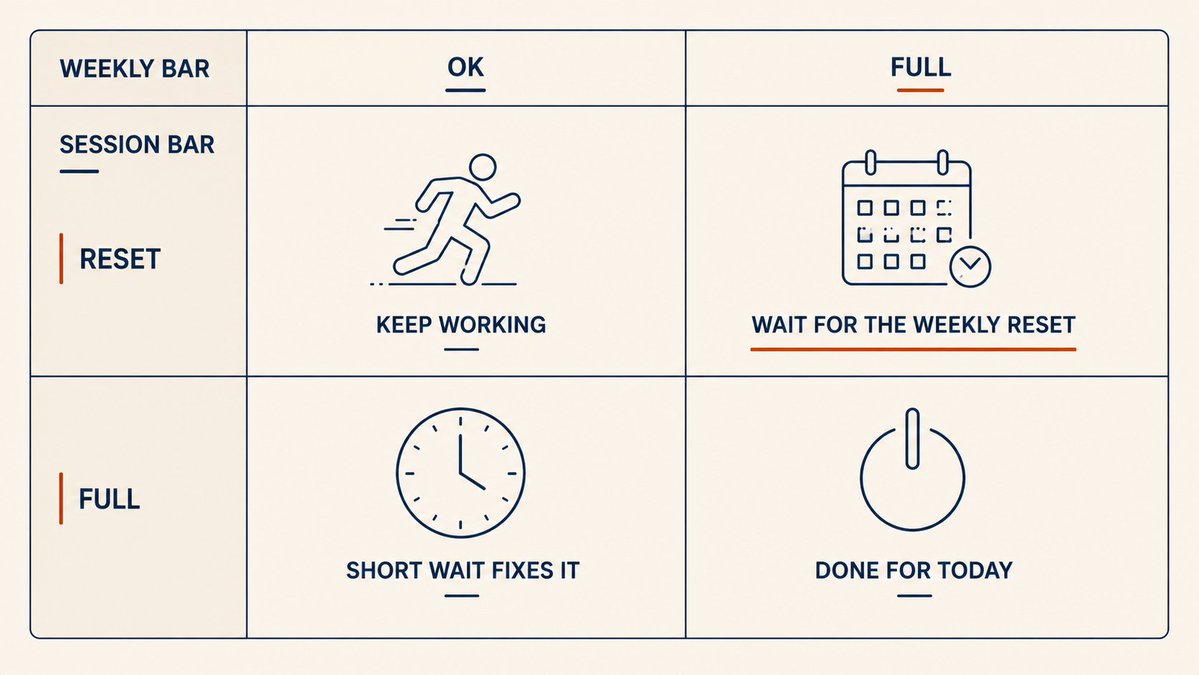
Three more facts worth having before you blame the plan. Usage across [claude.ai](http://claude.ai/), Claude Code, and Claude Desktop counts toward the same limit, so a heavy morning in Code explains a thin afternoon in chat. Settings > Usage shows both bars with their reset times, which turns "Claude cut me off again" into a diagnosis. And if a deadline can't wait for a reset, paid plans can enable usage credits to keep working past the included limit, a documented escape hatch that beats upgrading in a panic.
## The short version
Claude Pro weighs what your messages carry, and most of that weight is cargo you loaded without noticing. The habits worth keeping come straight from the vendor's manual, read closely, and the manual is free.
LLMs don't think; you do.
If you found this useful, check out my newsletter below
I share one AI superpower every week
Subscribe, it’s free👇
[https://linktr.ee/alex_prompter](https://linktr.ee/alex_prompter)
## 相关链接
- [Alex Prompter](https://x.com/alex_prompter)
- [@alex_prompter](https://x.com/alex_prompter)
- [2.6K](https://x.com/alex_prompter/status/2091888489491304830/analytics)
- [claude.ai](http://claude.ai/)
- [https://linktr.ee/alex_prompter](https://linktr.ee/alex_prompter)
- [Upgrade to Premium](https://x.com/i/premium_sign_up)
- [10:00 PM · Aug 24, 2026](https://x.com/alex_prompter/status/2091888489491304830)
- [2,649 Views](https://x.com/alex_prompter/status/2091888489491304830/analytics)
---
*导出时间: 2026/8/24 22:29:36*
---
## 中文翻译
# 如何从 Claude 的 20 美元订阅中获取更多价值
**作者**: Alex Prompter
**日期**: 2026-08-24T14:00:55.000Z
**来源**: [https://x.com/alex_prompter/status/2091888489491304830](https://x.com/alex_prompter/status/2091888489491304830)
---

每周都有另一份 Claude 省 token 技巧清单走红。十条习惯,精确的 token 数字,零来源。
其中一些建议可以直接追溯到 Anthropic 的官方文档,另一些则只是某个人披着数字外衣的猜测。你从这些帖子中根本分不出哪个是哪个,所以我花了一天时间阅读 Anthropic 的帮助中心和开发者文档,并把流传最广的建议逐一与文档核对。
下面是经受住检验的、没经受住的,以及背后的同一个机制。每个论断都附带了出处链接。

## 一页帮助中心文档解释了大部分问题
标题中提到的计划是 Claude Pro,即 Anthropic 在美国每月 20 美元的个人付费档位。我第一件想找的是消息数量,也就是 20 美元能买多少条消息。
Anthropic 没有公布这个数字,因为这个数字根本不存在。取而代之的是,帮助中心列出了消耗你额度的因素:消息长度、附件文件大小、当前会话长度、工具使用、模型选择、努力程度以及 artifact 创建。不同的工作以不同的速度消耗这个“油箱”,而那些走红帖全都略过了这份清单。
清单中的重量级因素是会话长度,开发者文档解释了原因。请求中的所有内容都会计入上下文窗口:系统提示词、之前的每一条消息、每一个文件、每一个工具结果,再加上正在生成的回复。每次你发送内容,Claude 都会从头处理整个会话,所以你的第 30 条消息要背上之前 29 轮对话。
在讲技巧之前,先说两个校准事实。一个 token 约等于 3.5 个英文字符,大约四分之三个单词,所以一篇 1,000 词的文档约重 1,300 token。其次,消耗量自带刹车。Anthropic 会缓存项目内容,甚至部分缓存你经常重复的提示词,所以同样的“货物”第二次运送时成本更低。
记住这份因素清单,因为它可以直接转化为“里程”。缩小清单上的任何一项,同样的 20 美元在触及任一上限之前就能覆盖更多工作。我核对的每一条技巧,要么是缩小清单上的某一项,要么是声称一种这个系统根本不提供的精确度。
## 最像民间传说的技巧最先通过了验证
我原本以为“把所有要求放在一条消息里提出来”是迷信。结果它几乎一字不差地出现在文档中。
Anthropic 的最佳实践页面告诉你:将类似的请求合并到一条消息中批量提出;在开始对话前先规划;发送前检查提示词,以减少后续追问。原因就在上面的机制里。三次独立的追问意味着 Claude 要完整处理整个会话三次。而一份完整的任务说明只需要对历史记录做一次处理。
同一页面还明确说明了一条好的首条消息应包含什么,读起来就像一份清单:你需要的具体结果、所有相关问题合并提出、以及前置的背景信息。Anthropic 自己的例子很直白:把所有的数学题放在一条消息里发,而不是一条一题。
在实践中,差异是这样的。弱开局:“你能帮我改进落地页吗?”强开局:“为自由职业设计师重写这个落地页,保持在 300 词以内,匹配下面两个样例的语气,并标记出任何我需要核实的说法。”第二个版本只花一次对话。第一个版本则开启一场五条消息的访谈,你要为每一行买单。
省下的成本会在一个工作日中不断复利。每一条你没发的追问,都是一次你不用付费的完整历史处理。
## 然后我发现了 Anthropic 故意内置的折扣
项目(Projects)是唯一一个定价向你倾斜的地方,而且文档直接说明了这一点。
项目中的内容会被缓存,复用时不会计入你的限额。文档用一篇研究论文作为例子:把参考资料加载一次,然后反复针对它提问,花费的消息比每次重新上传要少。对你的预算来说,这把你最重的参考资料变成了一次性成本,而不是每次对话的成本。
大型项目还有第二个机制。当你的项目知识接近或超过上下文窗口限制时,Claude 会自动启用检索增强生成(简称 RAG),无需任何设置。
Claude 不再一次性加载所有项目内容,而是搜索你的文档并检索与问题最相关的片段。Anthropic 表示,这让一个项目能存储多达 10 倍的内容。低于该阈值时,项目内容则以正常方式在上下文中加载。
文档还补充了两个大多数帖子都会跳过的维护习惯:保持项目指令简短,因为长指令会随该项目中的每次对话一起加载;删除不再使用的文件,因为杂乱会占用上下文空间。Anthropic 将项目指令定位为放置角色设定和通用准则的地方,而任务特定的要求则应放在对话本身中。
有一条流传的说法需要单独澄清。你会看到一些帖子声称项目文件数量存在一个硬性上限,超过后 Claude 就会退化。Anthropic 的文档中任何地方都没有出现这样的数字。保持项目整洁是有文档依据的建议,而具体的上限数字只是某个人的个人经验之谈。
## 文档用原话告诉你:把一些功能关掉
我没想到会有厂商建议你少用它的功能。Anthropic 的帮助中心就这么做了。
它称工具和连接器是“token 密集型”的,并建议在对话不需要时暂时禁用网络搜索、Research 和 MCP 连接器。努力程度和扩展思考也列在同一个成本清单上,文档建议对常规任务使用较低的努力程度,在不需要深度推理时关闭扩展思考。
文档还指出,管理工具有双重回报。开启的工具会消耗使用额度,还会占用本可以存放你工作内容的上下文窗口空间。所以,同样一次 60 秒的检查,既能拉长你的每周预算,又能为长对话腾出空间。
一次具体的检查是这样的:编辑你已粘贴的文本时关掉网络搜索;做格式调整和清理时关掉扩展思考;常规请求降低努力程度;连接器只在使用它的对话中开启,其他地方一律关闭。你是在把计量表与任务匹配,而你关掉的每一样都是交还给工作的额度。
## Anthropic 亲自警告你小心它自己的长对话
在这一点上,文档非常坦率。
会话长度列在官方成本清单上,帮助中心的建议也很直接:如果你在一个较长的对话中接近使用限额,请开启新对话。同一篇文章解释了不这样做的后果:长到触发自动上下文管理(Claude 为继续对话而对早期消息进行摘要)的对话会消耗更多使用限额。
窗口本身取决于模型,Anthropic 公布了各模型的细分说明。在付费计划的聊天中,Opus 5 和 Sonnet 5 支持 100 万 token 的上下文窗口;Opus 4.8、4.7、4.6 和 Sonnet 4.6 支持 50 万;其他模型为 20 万,其中一部分窗口预留给 Claude 的回复。更大的窗口提高了单次对话能容纳的上限,但不改变成本逻辑,因为窗口中的所有内容都会随你的下一条消息被再次处理。预算规则在任何模型上都成立:新对话让消息保持便宜。

实用习惯是:每个对话一个主题,完成即关闭。在一个线程里混入三个不相关的任务,意味着每条消息都要处理另外两个任务的历史。而关闭对话的代价比感觉上要低,因为付费计划允许你提示 Claude 搜索你之前的对话,并将相关上下文带入新对话。你保留了旧决策的访问权,而不必拖着整份记录。
## 最昂贵的习惯藏在一页开发者文档里
我找到的最大数字在 PDF 文档中,那是一页大多数人上传文件时会直接跳过的开发者页面。
上传 PDF 后,系统会将每一页转换为图像,并同时提取文本。Claude 会同时分析两者。Anthropic 对文本的定价是每页 1,500 到 3,000 token(取决于内容密度),同时还按图像计算成本,因为每一页都被转换成了图像。
这个设计有其目的,了解它就知道什么时候上传 PDF 值这个价。页面变成图像是为了让 Claude 能读取图表、表格和排版,文档也以这些用例作为卖点,比如分析财务报告中的图表。对于纯文字内容,你支付了成像成本却完全用不上。而大多数上传的都是纯文字。
对一份 10 页的文字报告算一下:文本部分就在 15,000 到 30,000 token 之间,而这篇文档可能只包含 4,000 词——这还没算图像成本。然后会话长度机制开始发挥作用,这份重量会跟随该对话中的每一条后续消息。

便宜的替代方案很无聊但有效。需要两段话,就粘贴那两段。需要整份文档,就先转换为纯文本或 Markdown——这些是 Claude 作为纯文本读取的格式,不需要任何页面成像。如果 PDF 确实物有所值(比如你需要分析图表),文档建议拆分大文件,只发送相关章节。
在 Anthropic 的因素清单上,文件重量是你在不改变工作方式的前提下能削减得最深的成本。这使它成为本文中价值最高的习惯。
## 没有经受住检验的说法
调查的另一半同样重要。以下三条流传最广,而我在 Anthropic 的页面上找不到任何一条的依据。
聊天规模的精确 token 数字。帖子引用 20 条或 30 条消息对话的精确成本,精确到千位。而 Anthropic 声明,额度随消息长度、文件、模型、功能和需求量波动,且不公布任何单次对话的数字。测出那个数字的人,用的是自己的账户和自己的设置。
行为悬崖。“Claude 在超过某个通用的轮次后会退化或自相矛盾”的说法在任何文档中都不存在。长上下文行为确实是一个真实的研究课题,但一个固定数字只是被包装成规则的个人见闻。
卡重置时间的排班系统。围绕 5 小时时钟构建的时段排班系统假设你的额度每天表现一致。而 Anthropic 说它会随需求量变化——这正是固定排班唯一无法计入的因素。
这些说法未必是错的。它们只是从 Anthropic 外部无法知晓,这与“已知”是两回事。
对未来的任何技巧,这里有一个十秒测试:问一问这个数字是否可能出现在厂商的页面上。价格、限额和机制可以。“Claude 在所有人的账户上 40 条消息后变笨”不可能,因为 Anthropic 自己说了,这些变量因账户和日期而异。如果一个数字不可能被官方发布,那它就来自样本量为一的样本。
这个测试既保护你的 token,也保护你的时间。跳过虚假的优化,把精力投入到厂商以书面形式确认的那五个习惯上。
## 在做任何事之前,先确认你撞上的是哪堵墙
这些习惯解决的是不同的问题,所以先做一个诊断。
你的付费计划同时运行两个限额:一个每五小时重置的会话限额,和一个独立的每周限额。它们按不同的时钟消耗,这就是为什么有时稍等一会儿也毫无用处。如果会话进度条已重置而你仍被阻挡,那你撞上的是每周上限,任何习惯都救不了当前这一周——这些习惯保护的是下一周。

在怪罪这个计划之前,还有三个值得知道的事实。[claude.ai](http://claude.ai/)、Claude Code 和 Claude Desktop 的使用量计入同一个限额,所以在 Code 里忙碌的早晨可以解释聊天中冷清的下午。“设置 > 使用情况”会显示两条进度条及其重置时间,这能把“Claude 又把我掐断了”变成一个诊断。而如果截止日期等不及重置,付费计划可以启用使用额度积分,在包含的限额之外继续工作——这是有文档依据的后备方案,比慌乱升级划算。
## 简短总结
Claude Pro 衡量的是你的消息携带了多少重量,而大部分重量是你在不知不觉中装上去的货物。值得保留的习惯直接来自厂商的手册——仔细读一读吧,手册是免费的。

LLM 不思考,思考的是你。
如果你觉得这篇文章有用,请看看下方的我的新闻通讯
我每周分享一个 AI 超能力
订阅是免费的👇
[https://linktr.ee/alex_prompter](https://linktr.ee/alex_prompter)
## 相关链接
- [Alex Prompter](https://x.com/alex_prompter)
- [@alex_prompter](https://x.com/alex_prompter)
- [2.6K](https://x.com/alex_prompter/status/2091888489491304830/analytics)
- [claude.ai](http://claude.ai/)
- [https://linktr.ee/alex_prompter](https://linktr.ee/alex_prompter)
- [Upgrade to Premium](https://x.com/i/premium_sign_up)
- [10:00 PM · Aug 24, 2026](https://x.com/alex_prompter/status/2091888489491304830)
- [2,649 Views](https://x.com/alex_prompter/status/2091888489491304830/analytics)
---
*导出时间: 2026/8/24 22:29:36*