# The New Frontier of AI Agents: Self-Evolving from Real-World Experiences
**作者**: AlloomiAI
**日期**: 2026-08-13T00:56:18.000Z
**来源**: [https://x.com/AlloomiAI/status/2087704766868750787](https://x.com/AlloomiAI/status/2087704766868750787)
---
AI Agents have come a long way - they evolved from calling tools, to coordinating teams of sub-agents and now to handling ever-larger contexts. But for most agents, doing something for the 100th time is no different from the first. Unlike humans, they don't grow more capable through experience. Today, what holds agents back in real work is not model capability, tools, memory or context; increasingly, it's real world experiences and the ability to learn from these experiences.
And most attempts to solve this problem don't touch the core issue:
Application wrappers / agent harnesses: They can connect tools and organize workflows, but the model itself stays static. Their capability ceiling remains that of the model underneath.
RAG / external knowledge bases: They can pull facts from documents, conversations, and databases. But what they can't retrieve is the expert's way of thinking - how decisions get made, why revisions happen, what 'good' actually looks like. That never makes it into the model. So every time the AI picks up a task, it starts from the raw material all over again."
Fine-tuning: Periodic retraining is expensive, slow, and always a step behind the business.
Self-reflective learning: Without expert anchoring or a reliable way to evaluate itself, a model just circles at its own level, or worse yet, drift off-course.
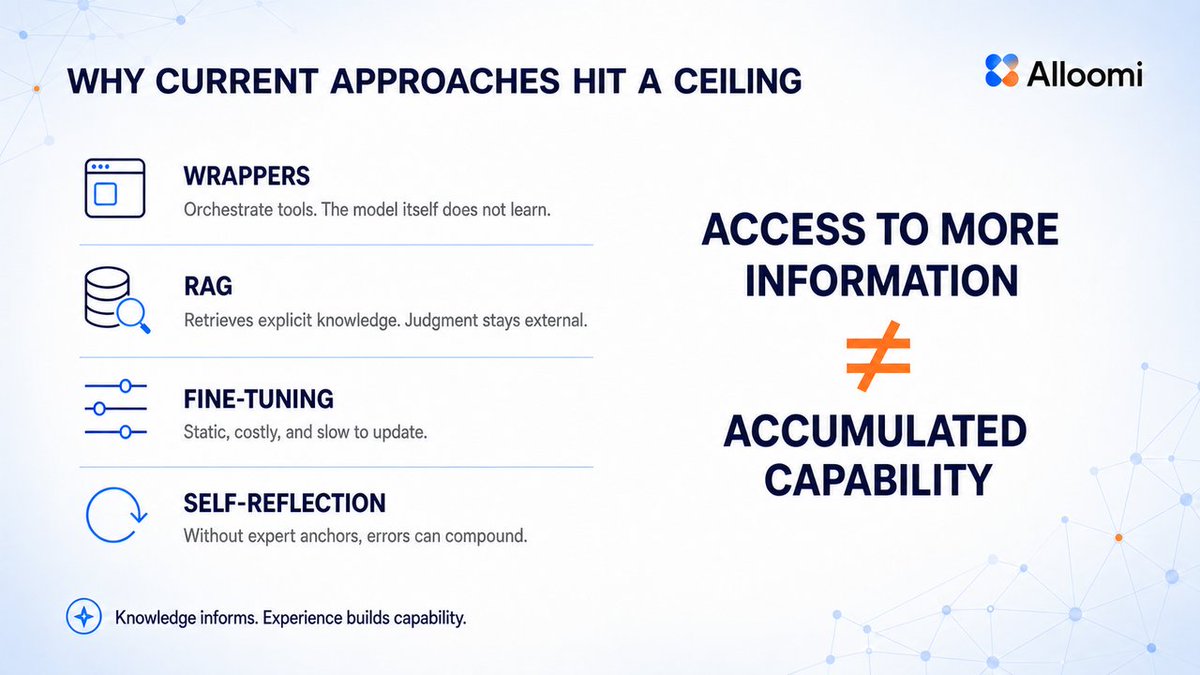
The problem isn't that tools, knowledge bases, or fine-tuning are not useful, but the reality is that knowledge and experience stay outside the model. These approaches give AI more information, but do not make the agent itself more capable. What lives inside the model can continue to compound and evolve the agent.
At the same time, this kind of experience data is exceptionally scarce, because it's produced only through real work. It's usually private, dynamic, and surfaces during the process, and sometimes exists in nothing but one person's head.
What actually grows an agent from a junior assistant into a seasoned partner is work experience - the kind that carries judgment and feedback. And that kind of experience simply isn't on the internet. This is exactly where general-purpose LLMs hit their ceiling.
## Our Approach: Full Stack Model + Application
At Alloomi, we take a full-stack approach, combining the application layer and the model layer.
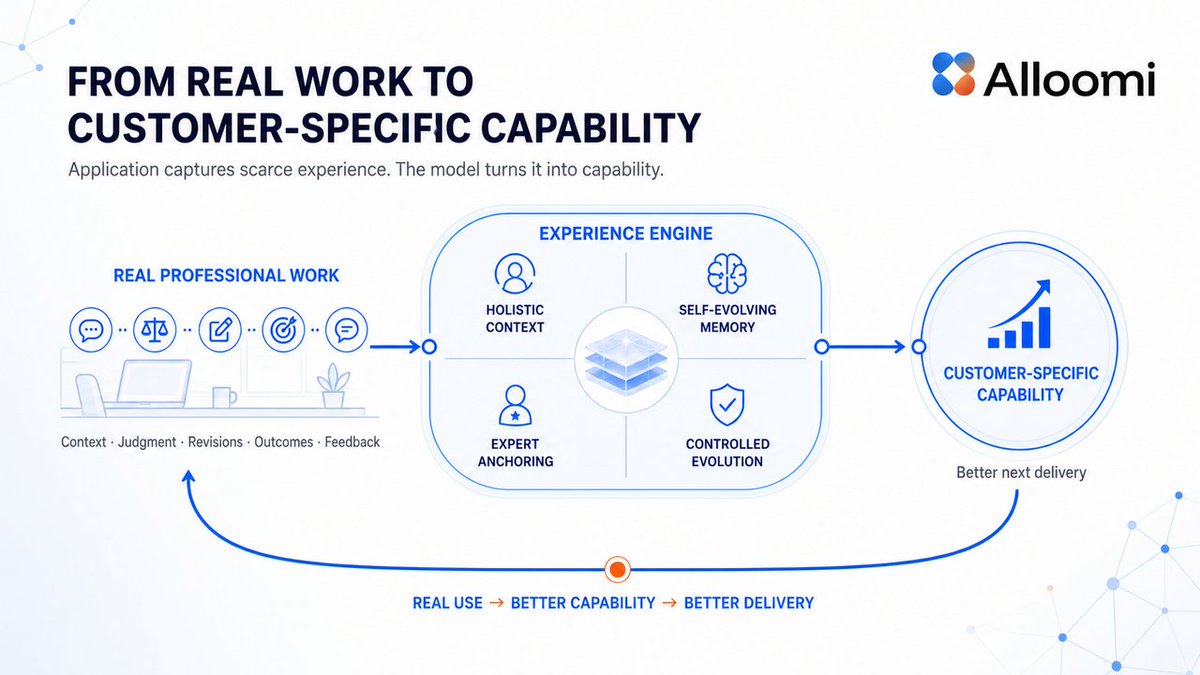
Agents work inside real workflows, capturing professional data that does not exist in public domains; and what they learn from that work is built back into the model through post-training. In practice, this happens across four layers:
1)Holistic context: help the model see the whole picture Bring people, conversations, documents, relationships, timelines, decisions, outcomes, and feedbacks into a unified context, then continuously track the complete trajectory of the work.
Traditional RAG assumes that facts live in static documents. But in real work, facts are revised, overturned, and may carry different meanings for different customers.
Retrieval answers "what happened". Holistic context answers "how what happened became what is".
2)A self-evolving memory model: learning while working Context, expert judgment, revision histories, delivery outcomes, and customer feedback from real work are filtered, replayed, and used for post-training. The resulting experience is written into the model’s own weights rather than living in an external database.
3)Expert anchoring: keeping capability moving up "During learning, the model is anchored to expert demonstrations and the standards of the best deliverables. That way, it does not circle at its own level or let errors compound."
4)Controlled evolution: making evolution safe Self-evolution is only useful if it's safe. Quality gates, continuous monitoring, and automatic rollback keep every model change verifiable, auditable, and reversible - drift is caught and undone before it matters.
And that completes the flywheel: every task finished is data earned; every judgment captured compounds into the next delivery. The work makes the agent better, and a better agent makes better work.
## The Technical Foundation: Nine Benchmarks for Measuring Memory, Learning, and Delivery
The four layers describe how Alloomi works. We test Alloomi where it counts: does it understand the whole picture, does it keep learning, and does it deliver professional work. Nine benchmarks trace the entire chain of memory, learning, delivery.
1)Holistic Understanding: It remembers Real work spans many conversations, many tasks, and long stretches of time. To participate productively, an agent has to remember what matters, understand how people, events, and time connect, and hold onto the whole picture as its history keeps growing. 3 benchmarks show Alloomi's context capabilities:
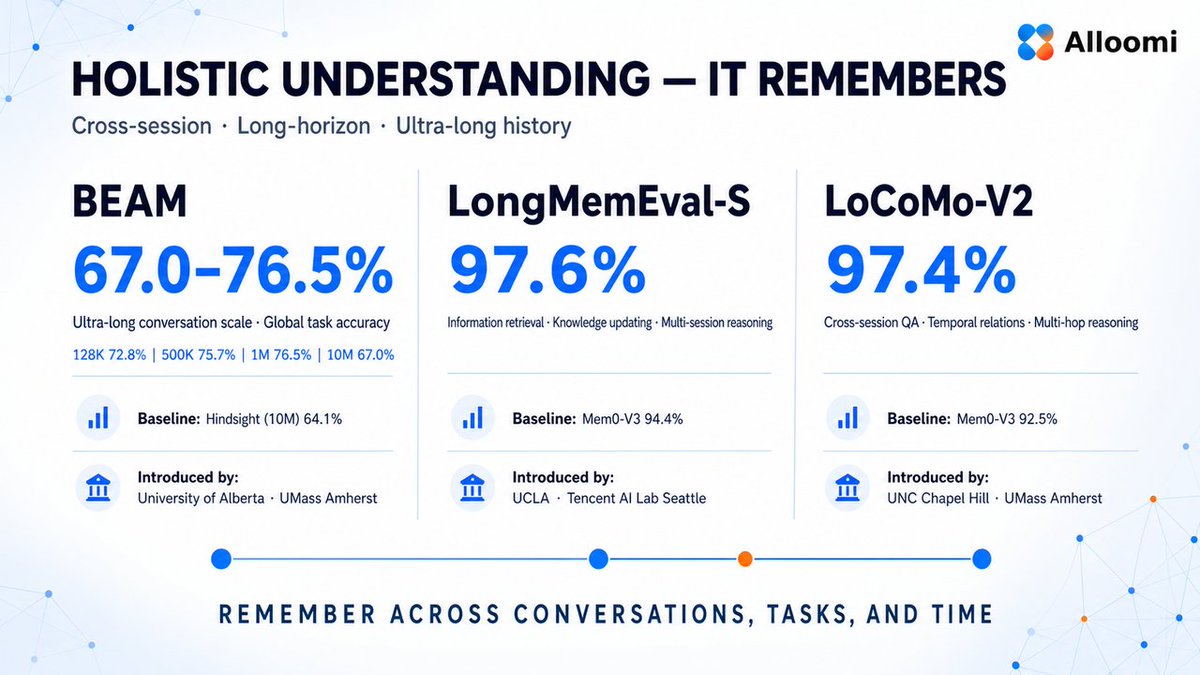
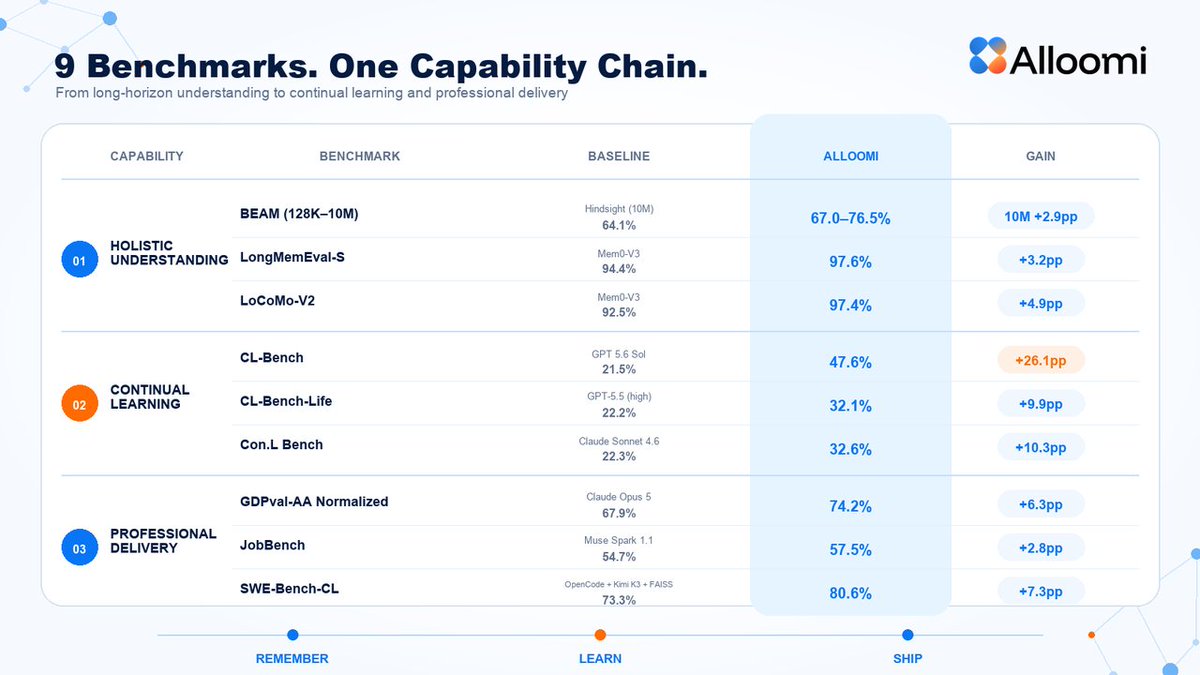
On BEAM, Alloomi achieves global task accuracy of 72.8% at 128K, 75.7% at 500K, 76.5% at 1M, and 67.0% at 10M. Even at the 10M scale, it maintains 67.0%, above Hindsight’s 64.1%, demonstrating that it can preserve relatively stable global task performance across extremely long histories.
On LongMemEval-S, Alloomi reaches 97.6%, compared with 94.4% for Memo-V3. This evaluates long-term memory across information extraction, knowledge updates, and multi-session reasoning.
On LoCoMo-V2, Alloomi scores 97.4%, compared with 92.5% for Memo-V3, demonstrating its ability to handle cross-session question answering, temporal relationships, and multi-hop reasoning rather than simply retrieving isolated facts.
2)Continual Evolution: It learns Memory is only the beginning. Beyond that, a long-horizon agent faces three harder tests: learning new rules from complex context, transferring experience across tasks, and keeping hard-won capabilities intact as the environment changes. We tested three evolution-related benchmarks here:
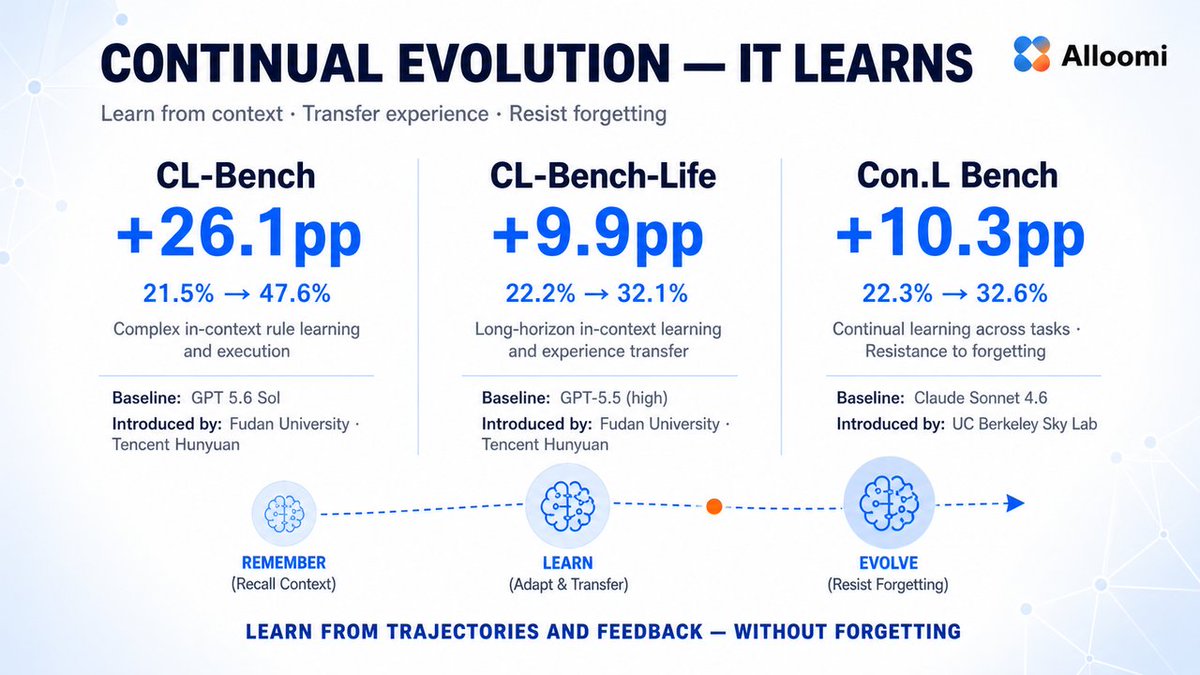
On CL-Bench, Alloomi improves from the GPT 5.6 Sol baseline of 21.5% to 47.6%, a gain of 26.1 percentage points. This demonstrates its ability to learn new rules from complex context and apply them in execution.
On CL-Bench-Life, performance rises from the GPT-5.5 (high) baseline of 22.2% to 32.1%, an improvement of 9.9 percentage points. The result shows that the model can accumulate experience over long-horizon tasks and transfer it to later stages.
On Con.L Bench, performance increases from the Claude Sonnet 4.6 baseline of 22.3% to 32.6%, a gain of 10.3 percentage points. This evaluates whether the model can continue learning across tasks while reducing the loss of previously acquired capabilities.
Together, these results show that Alloomi doesn't just adapt once, it compounds experience over time and carries it across tasks.
3)Professional Delivery: It ships Remembering and learning ultimately matter only if they improve real work. This group moves beyond memory or learning in isolation and tests whether Alloomi can deliver results across high-value professional tasks, complex real-world workflows, and continual software engineering.
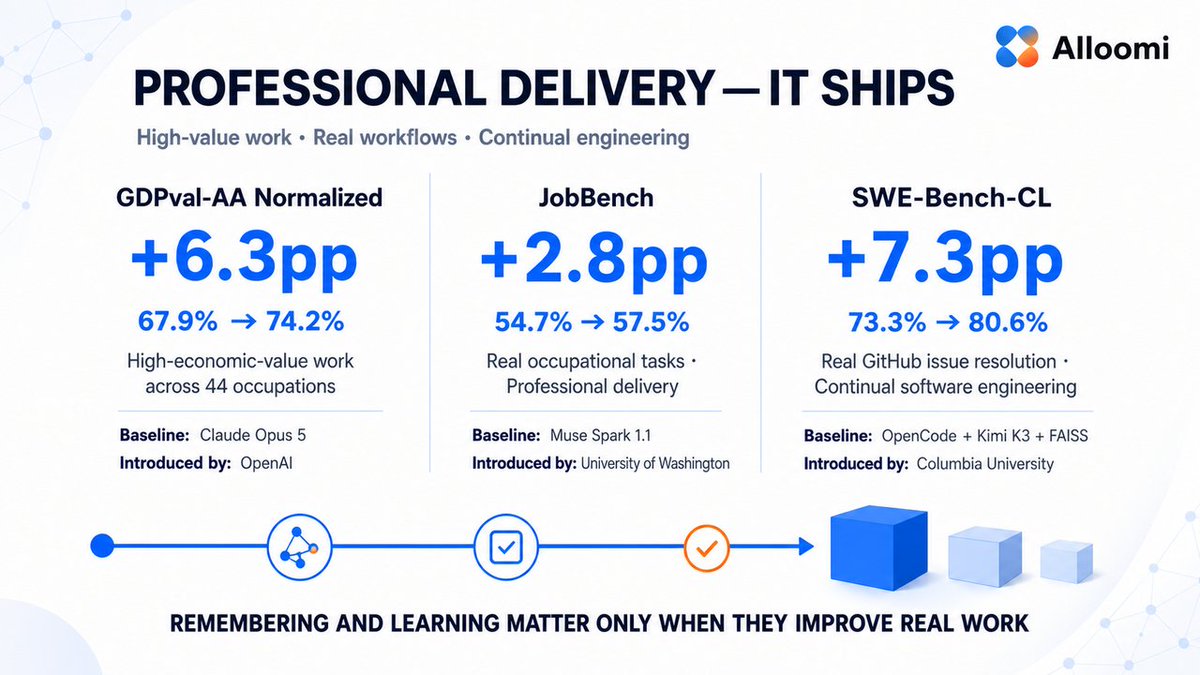
On GDPval-AA Normalized, Alloomi reaches 74.2% across high-value tasks spanning 44 occupations, improving on Claude Opus 5’s 67.9% by 6.3 percentage points. This indicates that long-term context and continual learning can translate into stronger performance on complex professional work.
On JobBench, Alloomi scores 57.5%, compared with 54.7% for Muse Spark 1.1, an improvement of 2.8 percentage points. This validates its ability to produce better results on real occupational tasks and professional deliverables.
On SWE-Bench-CL, Alloomi reaches 80.6%, compared with 73.3% for OpenCode + Kimi K3 + FAISS, a gain of 7.3 percentage points. The result shows that the system can not only resolve real GitHub issues, but also retain and build on its capabilities across a sequence of software-engineering tasks.
Together, these benchmarks show that improvements in memory and learning can ultimately translate into measurable gains in real-world work delivery.
Detailed experimental settings, evaluation methods, and reporting conventions for all nine results are available in two public technical reports:
- [Holistic Context](https://alloomi.ai/reports/hc.pdf)
- [Self-Evolving Agent](https://alloomi.ai/reports/sea.pdf)
We have published these details so readers can verify the results, and we welcome discussion and corrections from the community.
## From Technology to Products
Today we're doing two things: building Alloomi AI, digital employees for professional services; and open-sourcing OpenContext, the context layer that powers it.
[OpenContext](https://github.com/melandlabs/opencontext) is our context runtime for AI agents, now open-sourced. It is the working implementation of the holistic context layer. It embeds into agentic applications as a context harness, providing temporal context, memory and retrieval, context correction, multi-platform connectivity, and proactive scheduling. The project is young; try it, break it, contribute, and help us map what context harnesses can become.
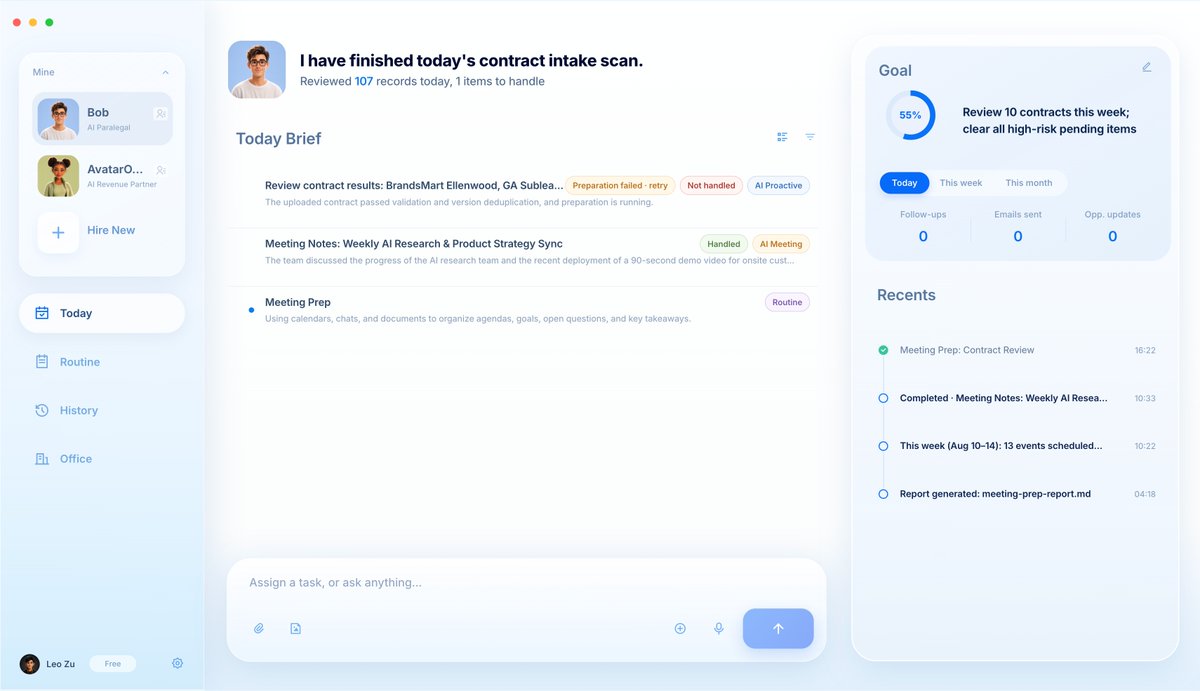
[Alloomi AI ](https://alloomi.ai/)is our commercial product for individuals and teams in professional services: an OKR-driven, outcome-focused system of self-evolving digital employees. It understands long-term business context, breaks down and advances work on its own, and converts expert judgment, execution history, and outcome feedback from real operations into capabilities unique to each customer. We've already validated this through early co-design in some of the most specialized fields - legal, insurance and financial advisory - and we're continuing to work closely with early users on their core needs while expanding into more specialized domains.
We believe the next phase of AI agents won't be decided by how intelligent a model is, but by what it learns from every piece of real work it does in the real world.
Every frontier model is brilliant out of the box, and identically so for everyone who uses it. What no one else can copy is what an agent accumulates inside your business: the judgment calls it absorbed, the revisions it learned from, the standards it internalized delivery after delivery.
Intelligence is where every agent begins. Experience is where they diverge. That's the future we are building for.
## 相关链接
- [AlloomiAI](https://x.com/AlloomiAI)
- [@AlloomiAI](https://x.com/AlloomiAI)
- [25K](https://x.com/AlloomiAI/status/2087704766868750787/analytics)
- [Holistic Context](https://alloomi.ai/reports/hc.pdf)
- [Self-Evolving Agent](https://alloomi.ai/reports/sea.pdf)
- [OpenContext](https://github.com/melandlabs/opencontext)
- [Alloomi AI](https://alloomi.ai/)
- [Upgrade to Premium](https://x.com/i/premium_sign_up)
- [8:56 AM · Aug 13, 2026](https://x.com/AlloomiAI/status/2087704766868750787)
- [25.2K Views](https://x.com/AlloomiAI/status/2087704766868750787/analytics)
- [View quotes](https://x.com/AlloomiAI/status/2087704766868750787/quotes)
---
*导出时间: 2026/8/14 13:19:15*
---
## 中文翻译
# AI代理的新前沿:从真实世界经验中自我进化
**作者**: AlloomiAI
**日期**: 2026-08-13T00:56:18.000Z
**来源**: [https://x.com/AlloomiAI/status/2087704766868750787](https://x.com/AlloomiAI/status/2087704766868750787)
---

AI代理已经走过了漫长的道路——从调用工具,到协调子代理团队,再到如今处理越来越大的上下文。但对大多数代理来说,第100次做某件事和第一次做并没有区别。与人类不同,它们不会通过经验变得更强大。如今,阻碍代理在实际工作中发挥作用的不再是模型能力、工具、记忆或上下文;越来越多的瓶颈在于真实世界经验以及从这些经验中学习的能力。
而大多数解决这一问题的尝试都没有触及核心:
应用包装器/代理框架:它们可以连接工具、组织工作流,但模型本身保持不变。它们的能力上限仍然是底层模型的能力上限。
RAG/外部知识库:它们可以从文档、对话和数据库中提取事实。但无法检索到的是专家的思维方式——决策是如何做出的、修订为何发生、'好'的标准究竟是什么。这些永远不会进入模型。所以每次AI接手一项任务,它都要从头开始处理原始材料。
微调:定期重新训练成本高昂、速度缓慢,而且总是落后于业务需求一步。
自我反思学习:没有专家锚定或可靠的自我评估方式,模型只会停留在自身水平上打转,甚至更糟——偏离正确方向。

问题不在于工具、知识库或微调没有用,而在于现实是知识和经验仍然停留在模型之外。这些方法给了AI更多信息,但并没有让代理本身变得更强大。只有存在于模型内部的东西才能持续复利并推动代理进化。
与此同时,这类经验数据极其稀缺,因为它只能通过真实工作产生。它通常是私密的、动态的,在工作过程中浮现,有时只存在于某个人的头脑中。
真正将代理从初级助手培养成资深合作伙伴的是工作经验——那种承载着判断和反馈的经验。而这种经验根本不在互联网上。这正是通用大语言模型触及天花板的地方。
## 我们的方法:全栈模型+应用
在Alloomi,我们采用全栈方法,将应用层和模型层结合起来。

代理在真实工作流中工作,捕获公共领域不存在的专业数据;它们从工作中学习到的东西通过后训练被构建回模型中。在实践中,这发生在四个层面:
1)整体上下文:帮助模型看到全局 将人员、对话、文档、关系、时间线、决策、结果和反馈纳入统一上下文,然后持续追踪工作的完整轨迹。
传统RAG假设事实存在于静态文档中。但在真实工作中,事实会被修订、推翻,并且对不同客户可能意味着不同的含义。
检索回答的是"发生了什么"。整体上下文回答的是"发生的事情是如何变成现在的样子的"。
2)自我进化的记忆模型:边工作边学习 来自真实工作的上下文、专家判断、修订历史、交付成果和客户反馈经过筛选、回放,并用于后训练。由此产生的经验被写入模型自身的权重中,而不是存在于外部数据库中。
3)专家锚定:让能力持续向上 "在学习过程中,模型以专家示范和最佳交付成果的标准为锚点。这样,它就不会在自身水平上打转,也不会让错误不断累积。"
4)受控进化:让进化安全可靠 自我进化只有在安全的前提下才有价值。质量门禁、持续监控和自动回滚确保每一次模型变更都是可验证、可审计和可逆的——偏移在造成影响之前就会被发现并撤销。
这样就完成了飞轮效应:每完成一项任务就是获得一份数据;每一个被捕获的判断都会复利到下一次交付中。工作让代理变得更好,更好的代理做出更好的工作。
## 技术基础:衡量记忆、学习和交付的九项基准
这四个层面描述了Alloomi的工作方式。我们在关键之处测试Alloomi:它是否理解全局、是否持续学习、是否能交付专业工作。九项基准追踪了记忆、学习、交付的完整链条。

1)整体理解:它记得住 真实工作跨越许多对话、许多任务和很长的时间跨度。要有效参与,代理必须记住重要的事情,理解人员、事件和时间如何关联,并在历史不断增长的同时保持对全局的把握。3项基准展示了Alloomi的上下文能力:

在BEAM上,Alloomi在128K时达到72.8%的全局任务准确率,500K时为75.7%,1M时为76.5%,10M时为67.0%。即使在10M规模下,它仍保持67.0%,高于Hindsight的64.1%,表明它能在极长历史中保持相对稳定的全局任务表现。
在LongMemEval-S上,Alloomi达到97.6%,而Memo-V3为94.4%。这评估了跨信息提取、知识更新和多会话推理的长期记忆能力。
在LoCoMo-V2上,Alloomi得分97.4%,而Memo-V3为92.5%,展示了其处理跨会话问答、时间关系和多跳推理的能力,而非仅仅检索孤立事实。
2)持续进化:它在学习 记忆只是开始。除此之外,一个长周期代理面临三个更难的考验:从复杂上下文中学习新规则、跨任务迁移经验、以及在环境变化时保持来之不易的能力。我们在这里测试了三个与进化相关的基准:

在CL-Bench上,Alloomi从GPT 5.6 Sol基线的21.5%提升到47.6%,提升了26.1个百分点。这展示了它从复杂上下文中学习新规则并将其应用于执行的能力。
在CL-Bench-Life上,性能从GPT-5.5(高)基线的22.2%提升到32.1%,提升了9.9个百分点。结果表明模型可以在长周期任务中积累经验并将其迁移到后续阶段。
在Con.L Bench上,性能从Claude Sonnet 4.6基线的22.3%提升到32.6%,提升了10.3个百分点。这评估了模型是否能在跨任务持续学习的同时减少先前获得能力的损失。
综合来看,这些结果表明Alloomi不仅仅是一次性适应,而是随着时间推移不断积累经验并将其跨任务携带。
3)专业交付:它能产出 记忆和学习最终只有转化为实际工作的改进才有意义。这一组超越了孤立的记忆或学习测试,检验Alloomi是否能跨高价值专业任务、复杂真实世界工作流和持续软件工程交付成果。

在GDPval-AA Normalized上,Alloomi在覆盖44个职业的高价值任务中达到74.2%,比Claude Opus 5的67.9%提升了6.3个百分点。这表明长期上下文和持续学习可以转化为复杂专业工作中更强的表现。
在JobBench上,Alloomi得分57.5%,而Muse Spark 1.1为54.7%,提升了2.8个百分点。这验证了它在真实职业任务和专业交付成果上产生更优结果的能力。
在SWE-Bench-CL上,Alloomi达到80.6%,而OpenCode + Kimi K3 + FAISS为73.3%,提升了7.3个百分点。结果表明该系统不仅能解决真实的GitHub问题,还能在一系列软件工程任务中保持并增强其能力。
综合来看,这些基准表明记忆和学习的改进最终可以转化为真实世界工作交付中可衡量的提升。
所有九项结果的详细实验设置、评估方法和报告规范可在两份公开技术报告中获取:
- [整体上下文](https://alloomi.ai/reports/hc.pdf)
- [自我进化代理](https://alloomi.ai/reports/sea.pdf)
我们公开了这些细节以便读者验证结果,并欢迎社区的讨论和指正。
## 从技术到产品
今天我们正在做两件事:构建Alloomi AI——面向专业服务的数字员工;以及开源OpenContext——为其提供动力的上下文层。
[OpenContext](https://github.com/melandlabs/opencontext) 是我们的AI代理上下文运行时,现已开源。它是整体上下文层的工作实现。它作为上下文框架嵌入到代理应用中,提供时间上下文、记忆和检索、上下文修正、多平台连接和主动调度。这个项目还很年轻;欢迎试用、测试、贡献,帮助我们探索上下文框架的可能性。
[Alloomi AI](https://alloomi.ai/) 是我们面向专业服务领域个人和团队的商业产品:一个由OKR驱动、以成果为导向的自我进化数字员工系统。它理解长期业务上下文,自主分解和推进工作,并将来自真实运营的专家判断、执行历史和成果反馈转化为每个客户独有的能力。我们已经在一些最专业的领域——法律、保险和财务咨询——通过早期联合设计验证了这一点,并继续与早期用户密切合作解决他们的核心需求,同时扩展到更多专业领域。

我们相信,AI代理的下一个阶段将不由模型有多聪明来决定,而由它从真实世界中每一件实际工作中学习到什么来决定。
每一个前沿模型开箱即用都很出色,而且对所有使用者来说都一样出色。别人无法复制的是代理在你的业务内部积累的东西:它吸收的判断决策、它从中学习的修订、它在一次次交付中内化的标准。
智能是每个代理的起点。经验是它们分道扬镳的地方。这就是我们正在构建的未来。
## 相关链接
- [AlloomiAI](https://x.com/AlloomiAI)
- [@AlloomiAI](https://x.com/AlloomiAI)
- [25K](https://x.com/AlloomiAI/status/2087704766868750787/analytics)
- [整体上下文](https://alloomi.ai/reports/hc.pdf)
- [自我进化代理](https://alloomi.ai/reports/sea.pdf)
- [OpenContext](https://github.com/melandlabs/opencontext)
- [Alloomi AI](https://alloomi.ai/)
- [升级到Premium](https://x.com/i/premium_sign_up)
- [2026年8月13日上午8:56](https://x.com/AlloomiAI/status/2087704766868750787)
- [25.2K次浏览](https://x.com/AlloomiAI/status/2087704766868750787/analytics)
- [查看引用](https://x.com/AlloomiAI/status/2087704766868750787/quotes)
---
*导出时间: 2026/8/14 13:19:15*