如何在 Claude Code 中集成 Kimi K3 以降低成本 ✍ Rahul🕐 2026-07-21📦 9.5 KB 🟢 已读 𝕏 文章列表 文章指出在 Claude Code 中使用昂贵模型处理基础任务是浪费。作者介绍了三种方法将 Kimi K3 集成到工作流中:使用 Kimi Code、通过 CC Switch 在 Codex 中配置 K3,或使用 Codex Orchestration 插件进行角色级路由。通过将繁琐的代码实现交给便宜的 K3,仅将推理留给高级模型,可在保持质量的同时将成本降低 10 倍以上。 Claude CodeKimi K3Cost OptimizationCodexCC SwitchLLMRoutingDevToolsAI Coding # How To Use Kimi K3 Inside Claude Code (Fable-level Coding, 5x Cheaper) **作者**: Rahul **日期**: 2026-07-20T06:31:46.000Z **来源**: [https://x.com/sairahul1/status/2079091878482624755](https://x.com/sairahul1/status/2079091878482624755) --- 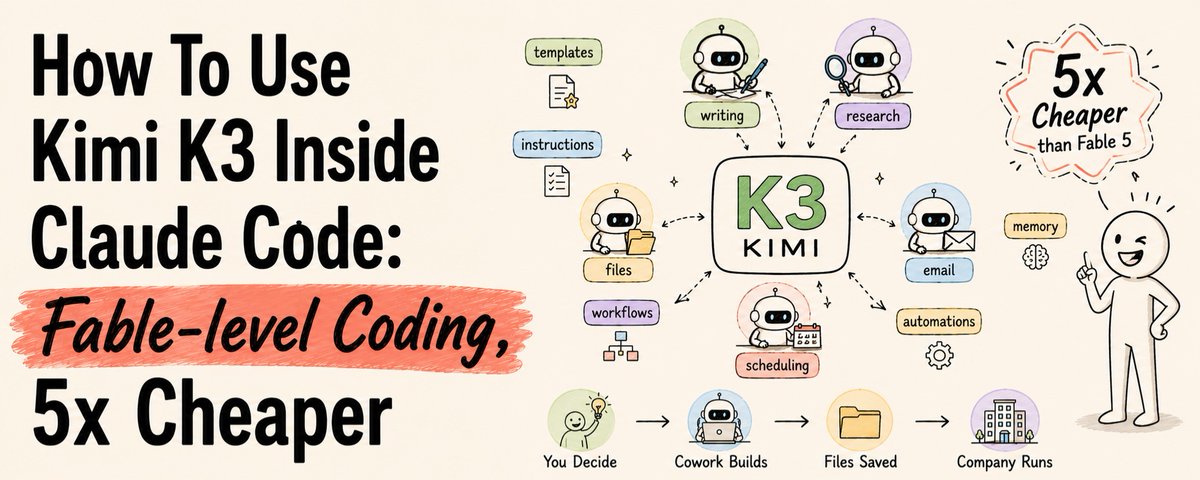 Claude Code is one of the best coding environments ever built. That doesn't mean every request should go to Fable 5. Most people use Claude Code and let every single request hit the most expensive model available. Reading code. Searching files. Writing boilerplate. Running tests. Documentation. None of that needs frontier reasoning. You're paying for a nuclear reactor to boil a kettle. Here's the system I use to run Claude Code at 10x lower cost without touching the harness, the diff engine, or the UX I actually love. ## The problem nobody talks about 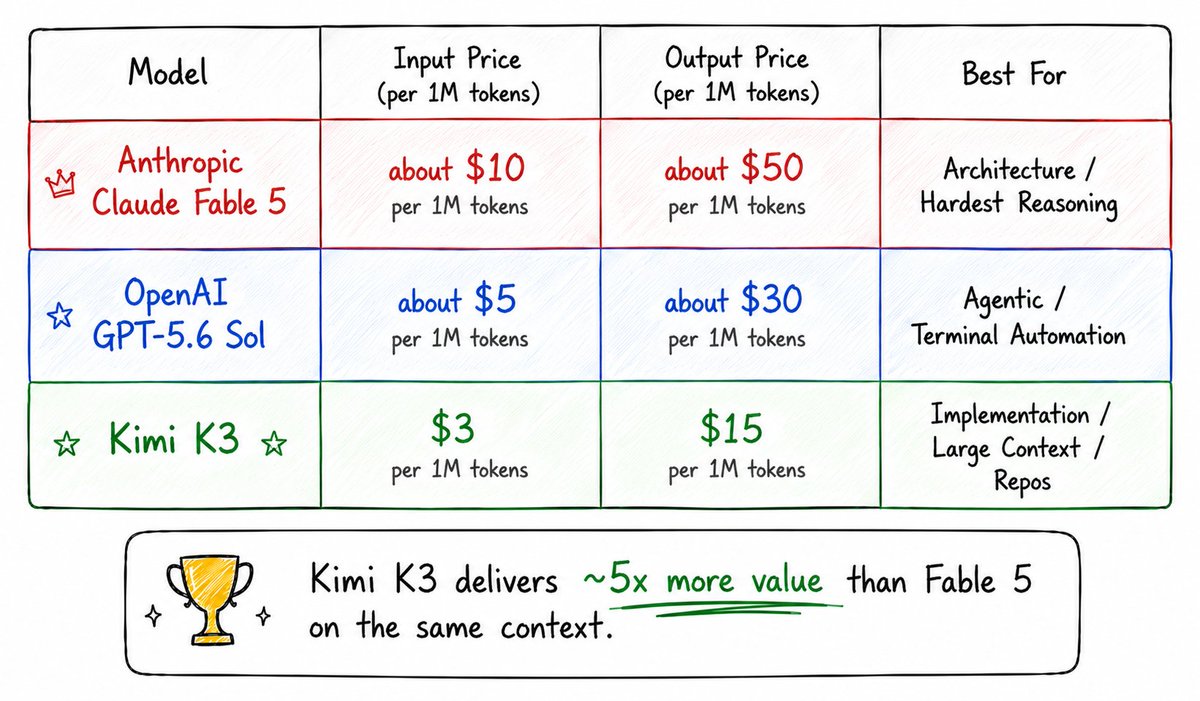 Fable 5 costs $10 input / $50 output per million tokens. Kimi K3 costs $3 input / $15 output per million tokens. That's 5x cheaper on sticker price alone. But the real gap is bigger than that. K3 has a 1 million token context window — flat rate, no long-prompt premium. Fable 5 gets expensive fast when you're dragging large repos through context. K3 also runs at serious throughput. On large codebases and high-volume tasks, K3 costs a fraction because it hits the cache on repeated context at $0.30 per million instead of $3. The math in a real session: 800K stable codebase context + 50K fresh tokens per turn. → K3 with cache: $0.24 + $0.15 = $0.39 per turn → Fable 5 same context: $8.50 per turn Same context. 21x cheaper. This is not about K3 being better than Fable 5. It's about K3 being cheap enough to use everywhere Fable 5 is overkill. ## What you're actually paying for 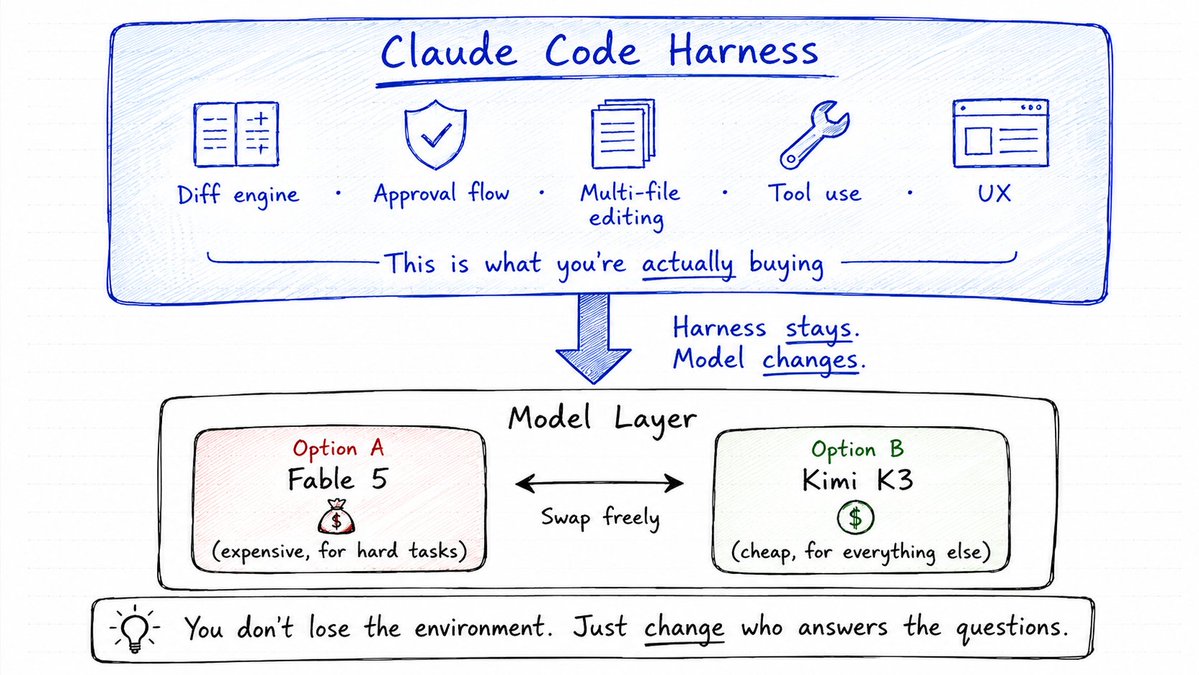 Most developers think they're buying Claude when they pay for Claude Code. They're not. They're buying the harness. The diff engine. The approval flow. The multi-file editing. The tool use. The planning. The session management. The UX that actually makes you 10x faster. All of that lives in Claude Code the environment. Not Claude the model. The model is just the intelligence layer. And the intelligence layer is swappable. You can keep everything that makes Claude Code great and route specific tasks to K3. The harness stays. Only the model behind those tasks changes. ## 3 ways to run K3 inside your Claude Code From easiest to most powerful. ━━━ ## Method 1: Kimi Code (5 minutes, no config) 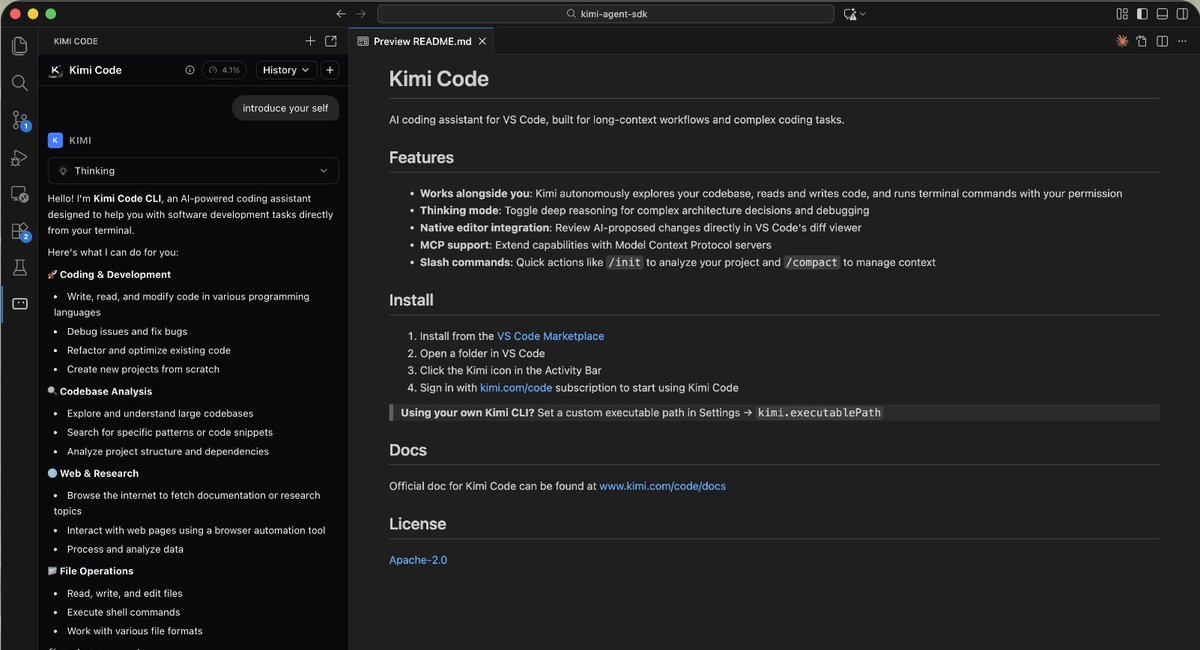 Kimi Code is their own Claude Code-compatible CLI. Same harness feel. K3 under the hood. $19/month subscription. You get a daily quota so you're never watching a token counter. At $0.60 per million input tokens (vs $3 for Claude Code), it's 5x cheaper on raw API. Install: 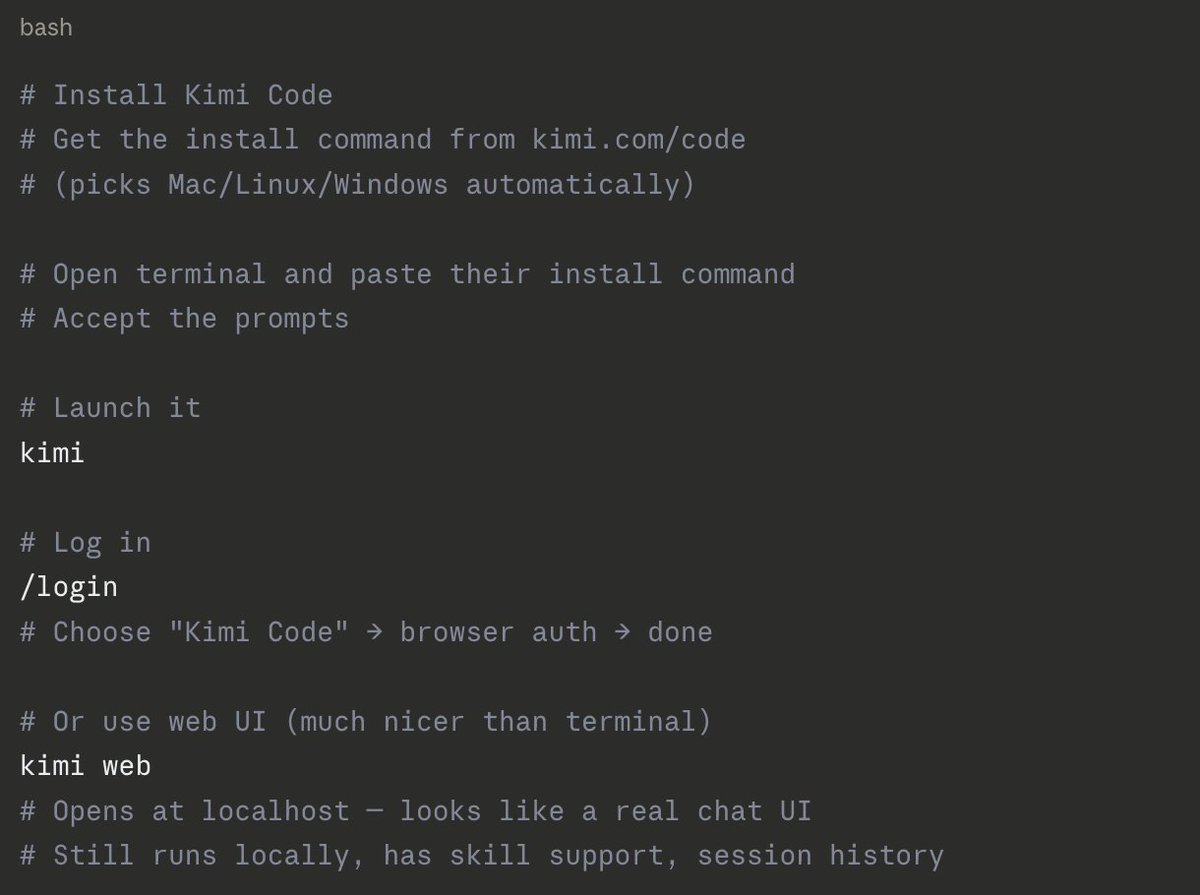 Once running, install the frontend-design skill to stop getting the default ugly vibe-coded output: 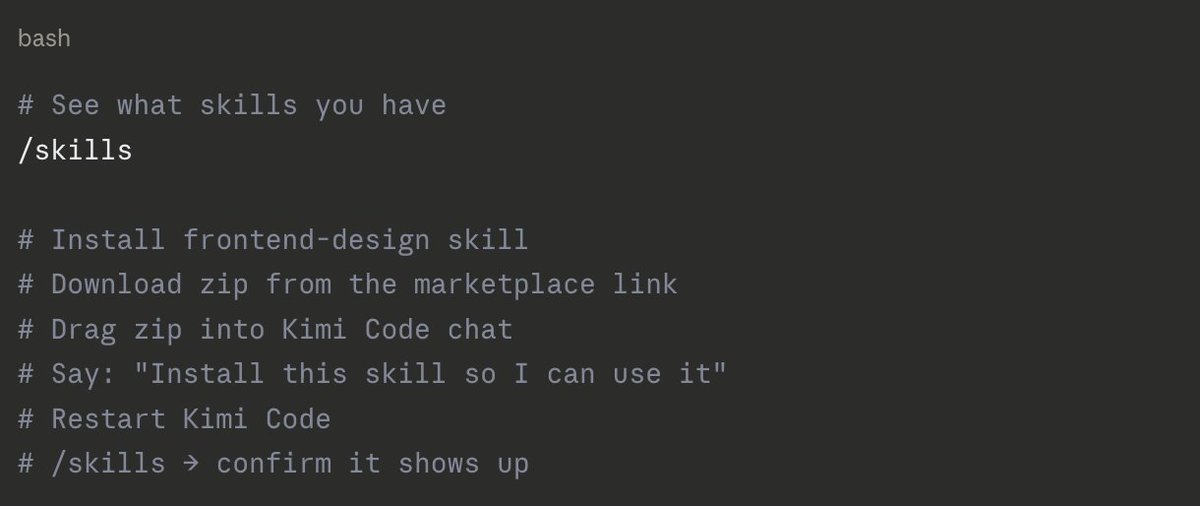 Best for: developers who want to ditch the Claude Code subscription entirely and save 80%+ immediately. ## Method 2: K3 inside Codex via CC Switch (5 minutes, one GUI) 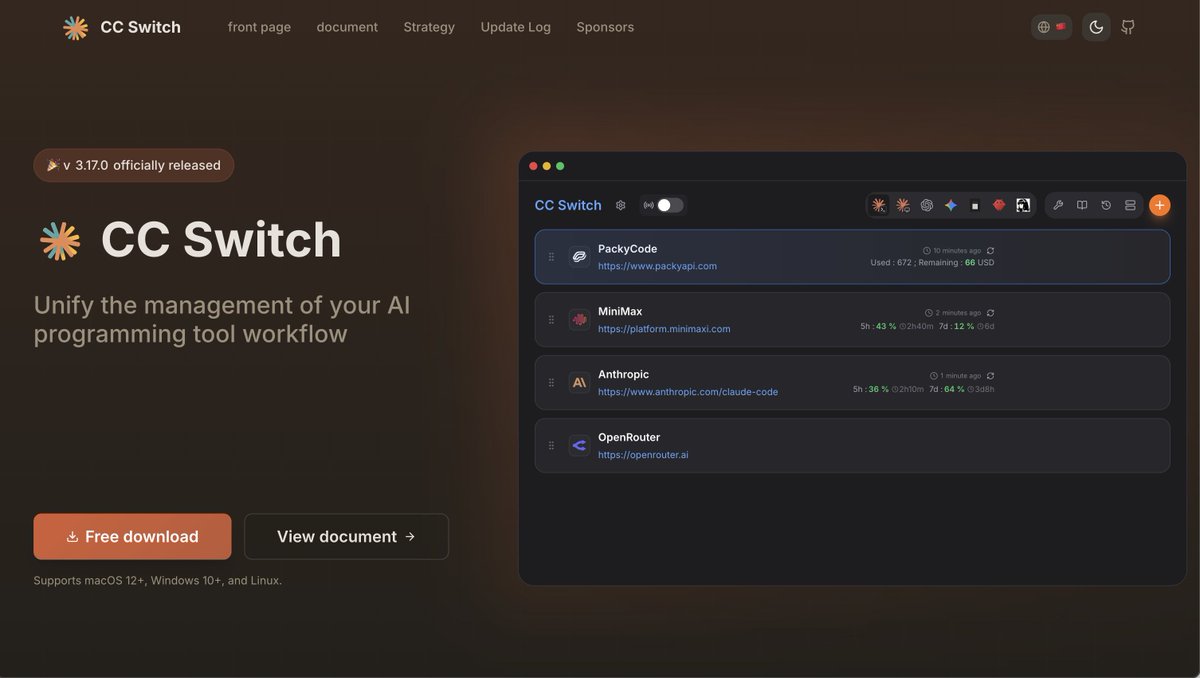 This is the cleanest setup right now. CC Switch is a desktop GUI that manages model configs for Codex and Claude Code without touching config files manually. You add K3 as a provider, flip on local routing, and Codex routes through K3 on every call. Step-by-step: Step 1: Get a Kimi API key → Go to platform.kimi.ai → Create account → Add credit (even $10 gets you started) → Generate API key Step 2: Install CC Switch → ccswitch.io → download for your OS → It's a GUI app, just open it Step 3: Add Kimi as a provider → Open CC Switch → Select: Codex (or Claude Code) → Add Provider → Kimi → Paste your API key → Model: kimi-k3 → Context Window: 1048576 → Upstream Format: Chat Completions (Codex speaks Responses API, Kimi speaks Chat Completions CC Switch handles the translation — this is the key setting) Step 4: Enable routing → Settings → Routing → Local Routing → master switch ON Step 5: Open Codex → Done. Every request now routes through K3. → Model picker shows "Custom" — cosmetic only, works fine Cost difference in practice: Codex default (GPT-5.6 Sol): ~$5 input / $30 output per million tokens K3 via CC Switch: $3 input / $15 output On a typical 800K context session: Sol costs $24+, K3 costs $2.40. 10x cheaper on a single session. ## Method 3: Codex Orchestration Plugin (most powerful) 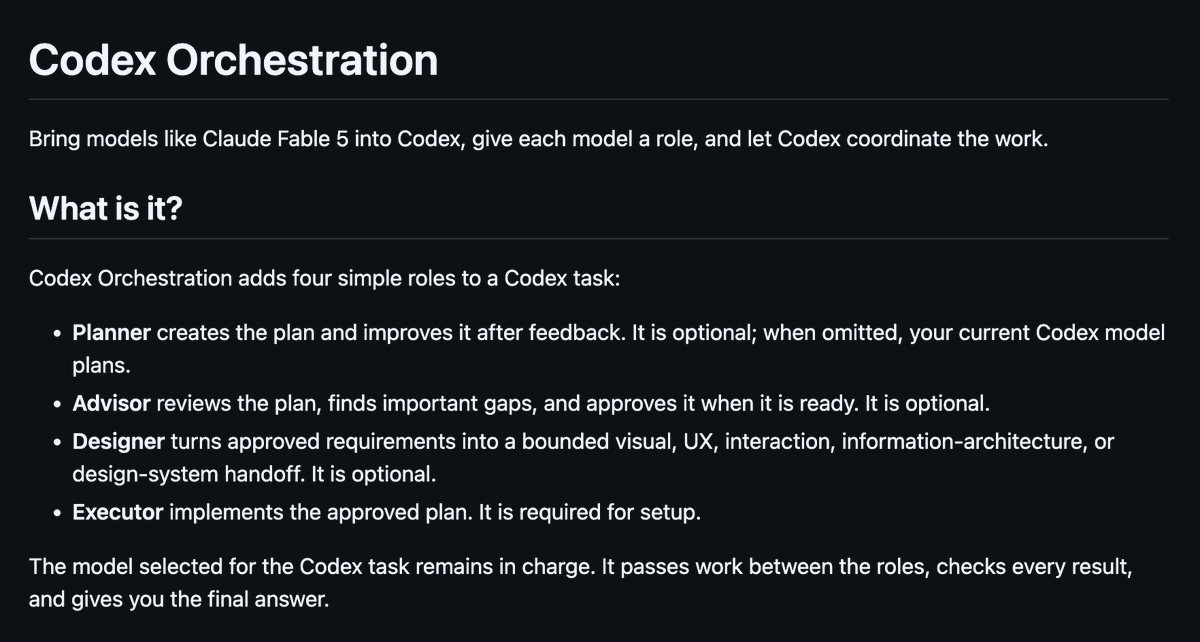 This is where it gets interesting. The Codex Orchestration plugin lets you assign different models to different roles inside a single Codex session. Planner. Advisor. Designer. Executor. Each role gets a different model. You're not just swapping models — you're routing specific types of work to the cheapest capable model for that job. Install: 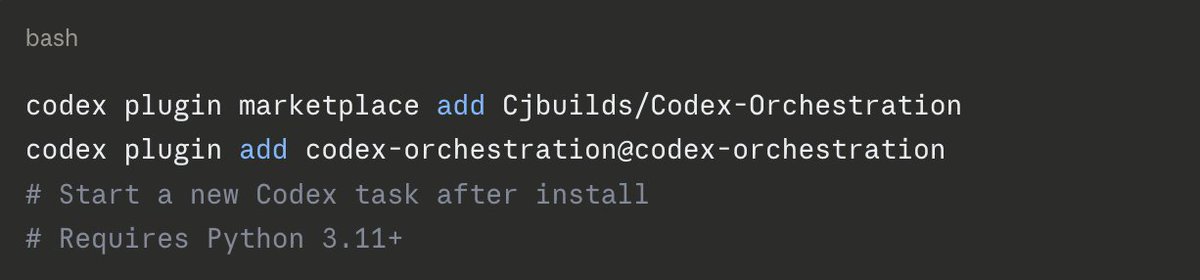 Repo: https://github.com/Cjbuilds/Codex-Orchestration Setup examples: Why K3 as Designer specifically works: K3 has native vision and multimodal input. It reads UI screenshots, understands layout, generates design specs. For frontend work it's genuinely strong — and at $15/M output vs $50/M for Fable 5, it's the obvious executor for anything visual. The workflow: > Fable 5 → understands the problem, creates the plan > K3 → executes implementation, writes the code > Fable 5 → reviews the output before it ships > Planning: expensive model, used once > Implementation: cheap model, used constantly > Review: expensive model, used once > You pay Fable 5 prices for maybe 15% of the session. > K3 handles the other 85%. The routing rules I actually use Not complicated. Simple decision tree. 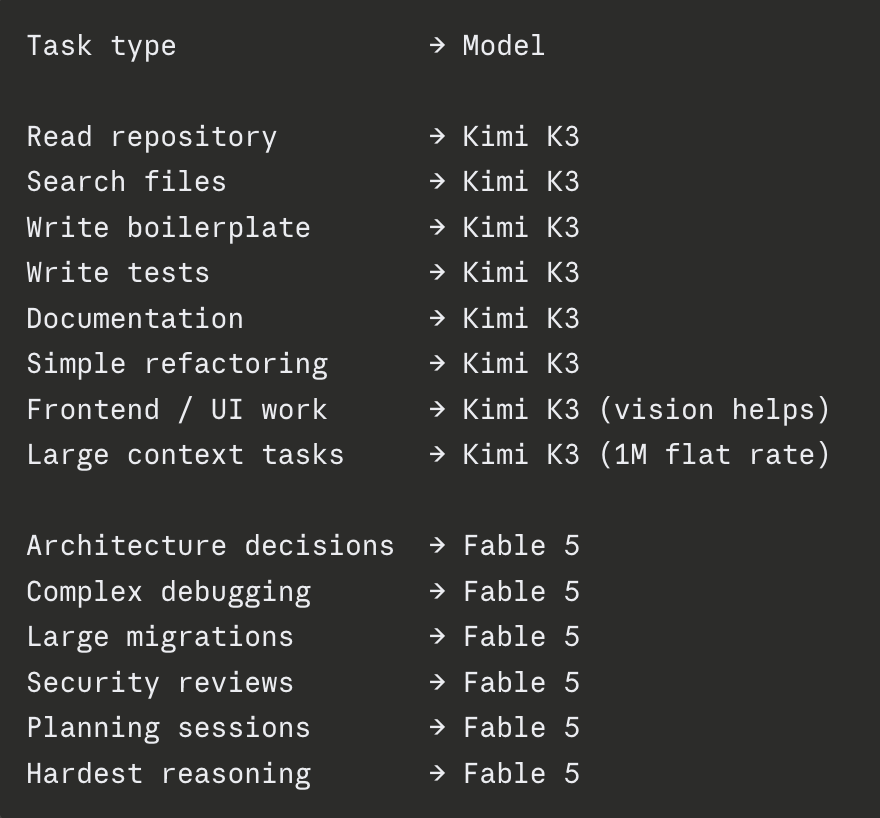 The rule: use K3 until the task genuinely needs Fable 5's ceiling. Most tasks don't. Even 95% of the tasks you think need Fable 5 don't. Test K3 first. Escalate only when you actually hit the limit. ## What to actually do starting today Pick the path that fits where you are. If you want the fastest win (5 minutes): Install Kimi Code. $19/month. Use it for everything non-critical.  If you want K3 inside Codex (also 5 minutes): Install CC Switch. Add K3 as provider. Enable local routing.  If you want full role-based orchestration: Install Codex Orchestration plugin. Assign models to roles. 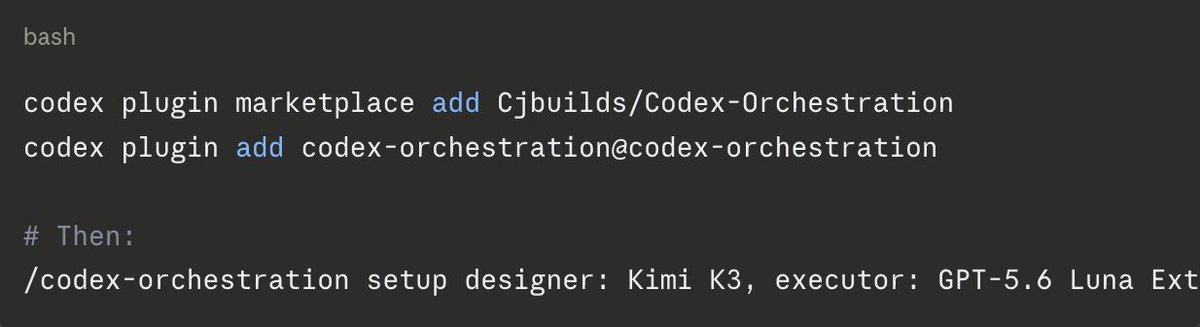 In all three cases — save your routing rules to CLAUDE.md: 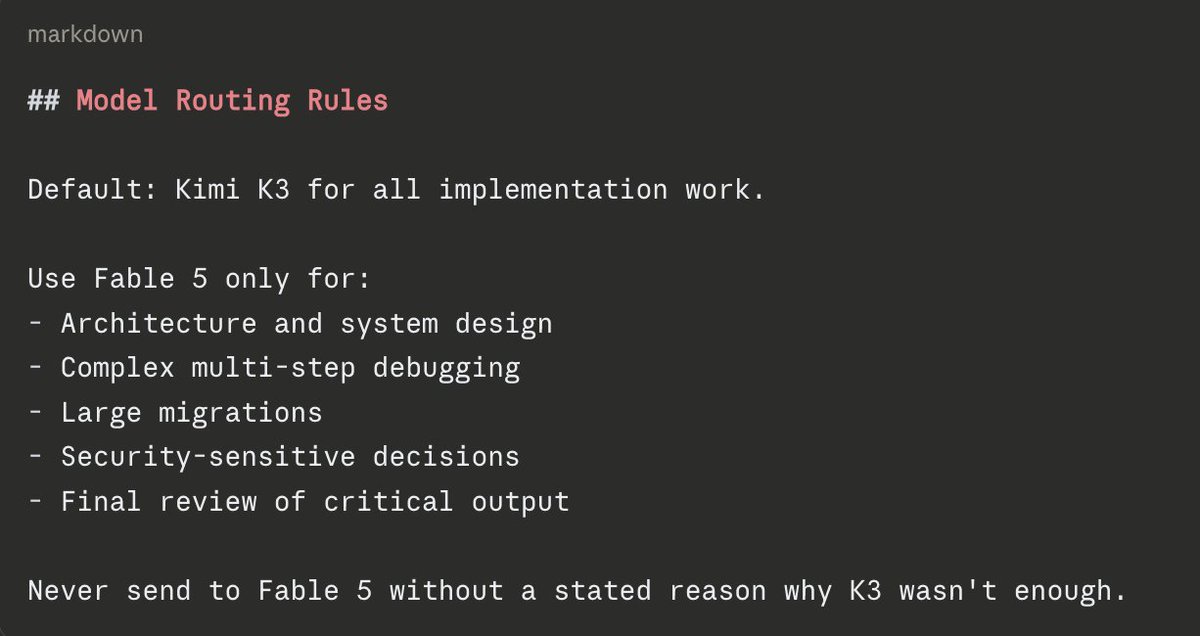 That CLAUDE.md block loads every session. The routing happens automatically. You stop thinking about it. You are not choosing between Claude Code and Kimi. You are choosing between using one expensive model for everything versus routing smart because both are same (sometimes even Kimi works even better than Fable) Claude Code stays. The diff engine stays. The approval flow stays. The UX that makes you 10x faster stays. Only the intelligence layer behind specific tasks changes. Fable 5 for the 10% that genuinely needs it. K3 for the 90% that doesn't. The bill drops by 90%. The output quality stays the same or gets better because the planning stage now gets full attention from the strongest model instead of being burned on boilerplate. That's the whole system. If this was useful: → Repost to share with every developer paying full price for Claude Code → Follow @sairahul1 for more systems that cut cost without cutting output → Bookmark this — all three setup paths are copy-paste ready Subscribe to theaibuilders.co for more such interesting articles I write about AI, building products, and systems that work without you. ━━━━━━━━━━━━━━━━━━ Tools mentioned: → Kimi Code: kimi.com/code → Kimi API: platform.kimi.ai → CC Switch: ccswitch.io → Codex Orchestration: github.com/Cjbuilds/Codex-Orchestration ## 相关链接 - [Rahul](https://x.com/sairahul1) - [@sairahul1](https://x.com/sairahul1) - [76K](https://x.com/sairahul1/status/2079091878482624755/analytics) - [platform.kimi.ai](http://platform.kimi.ai/) - [ccswitch.io](http://ccswitch.io/) - [https://github.com/Cjbuilds/Codex-Orchestration](https://github.com/Cjbuilds/Codex-Orchestration) - [CLAUDE.md](http://claude.md/) - [CLAUDE.md](http://claude.md/) - [@sairahul1](https://x.com/@sairahul1) - [theaibuilders.co](http://theaibuilders.co/) - [kimi.com/code](https://kimi.com/code) - [platform.kimi.ai](http://platform.kimi.ai/) - [ccswitch.io](http://ccswitch.io/) - [github.com/Cjbuilds/Codex-Orchestration](https://github.com/Cjbuilds/Codex-Orchestration) - [Upgrade to Premium](https://x.com/i/premium_sign_up) - [2:31 PM · Jul 20, 2026](https://x.com/sairahul1/status/2079091878482624755) - [76.7K Views](https://x.com/sairahul1/status/2079091878482624755/analytics) - [View quotes](https://x.com/sairahul1/status/2079091878482624755/quotes) --- *导出时间: 2026/7/21 09:21:22* --- ## 中文翻译 # 如何在 Claude Code 中使用 Kimi K3(Fable 级别的代码能力,价格便宜 5 倍) **作者**: Rahul **日期**: 2026-07-20T06:31:46.000Z **来源**: [https://x.com/sairahul1/status/2079091878482624755](https://x.com/sairahul1/status/2079091878482624755) ---  Claude Code 是有史以来构建的最佳编码环境之一。 但这并不意味着每个请求都应该发送给 Fable 5。 大多数人使用 Claude Code 时,让每一个请求都去调用最昂贵的可用模型。 阅读代码。搜索文件。编写样板代码。运行测试。编写文档。 这些都不需要最前沿的推理能力。 你这是在花核反应堆的钱去烧一壶水。 以下是我使用的系统,它能在不触动我真正喜爱的控制机制、差异引擎(diff engine)或用户体验(UX)的情况下,将 Claude Code 的运行成本降低到原来的 1/10。 ## 没人谈论的问题  Fable 5 的成本是每百万 token 输入 $10 / 输出 $50。 Kimi K3 的成本是每百万 token 输入 $3 / 输出 $15。 光是标价就便宜了 5 倍。 但实际的差距比这还要大。 K3 拥有 100 万 token 的上下文窗口——固定费率,没有长提示词溢价。 当你通过上下文拖拽大型代码库时,Fable 5 的成本会迅速飙升。 K3 还具有极高的吞吐量。 在大型代码库和高吞吐量任务中,K3 的成本只是极小的一部分,因为它在处理重复上下文时能命中缓存,每百万 token 只需 $0.30,而不是 $3。 真实会话中的账单计算: 80 万稳定的代码库上下文 + 每轮 5 万新 token。 → K3(使用缓存):$0.24 + $0.15 = 每轮 $0.39 → Fable 5(相同上下文):每轮 $8.50 相同的上下文。便宜了 21 倍。 这不是说 K3 比 Fable 5 更好。 而是说 K3 足够便宜,可以在所有 Fable 5 属于杀鸡用牛刀的地方使用它。 ## 你实际上是在为什么买单  大多数开发者在为 Claude Code 付费时,以为他们买的是 Claude。 其实不是。 他们买的是那套控制系统。 差异引擎。审批流程。多文件编辑。工具调用。规划能力。会话管理。那个真正让你效率提升 10 倍的用户体验。 所有这些都存在于 Claude Code 这个环境中。 而不是 Claude 这个模型里。 模型只是智能层。 而智能层是可以替换的。 你可以保留让 Claude Code 变得精彩的一切,同时将特定任务路由给 K3。 控制系统保留。只有这些任务背后的模型发生了变化。 ## 在你的 Claude Code 中运行 K3 的 3 种方法 从最简单到最强大。 ━━━ ## 方法 1:Kimi Code(5 分钟,无需配置)  Kimi Code 是他们自己推出的、兼容 Claude Code 的命令行工具(CLI)。 同样的控制体验。底层运行 K3。每月 $19 的订阅费。 你会获得每日配额,所以永远不需要盯着 token 计数器看。 每百万输入 token $0.60(相比之下 Claude Code 是 $3),在原始 API 层面上它便宜了 5 倍。 安装:  运行后,安装 frontend-design 技能,以避免获得默认的那种丑陋的“氛围感编码”(vibe-coded)输出:  最适合:那些想完全放弃 Claude Code 订阅并立即节省 80% 以上费用的开发者。 ## 方法 2:通过 CC Switch 在 Codex 中使用 K3(5 分钟,一个图形界面)  这是目前最干净的设置方案。 CC Switch 是一个桌面 GUI 应用,用于管理 Codex 和 Claude Code 的模型配置,无需手动触碰配置文件。 你添加 K3 作为提供商,开启本地路由,Codex 就会在每次调用时通过 K3 进行路由。 分步操作: 第 1 步:获取 Kimi API 密钥 → 访问 platform.kimi.ai → 创建账户 → 充值(即使充 $10 也能开始使用) → 生成 API 密钥 第 2 步:安装 CC Switch → ccswitch.io → 下载适合你操作系统的版本 → 这是一个 GUI 应用,直接打开即可 第 3 步:添加 Kimi 作为提供商 → 打开 CC Switch → 选择:Codex(或 Claude Code) → 添加提供商 → Kimi → 粘贴你的 API 密钥 → 模型:kimi-k3 → 上下文窗口:1048576 → 上游格式:Chat Completions (Codex 使用 Responses API,Kimi 使用 Chat Completions CC Switch 会处理转换——这是关键的设置) 第 4 步:启用路由 → 设置 → 路由 → 本地路由 → 打开主开关 第 5 步:打开 Codex → 完成。现在每个请求都会通过 K3 路由。 → 模型选择器显示“Custom”(自定义)——这仅是显示效果,实际工作正常 实际使用中的成本差异: Codex 默认(GPT-5.6 Sol):每百万 token 输入约 $5 / 输出 $30 通过 CC Switch 使用 K3:输入 $3 / 输出 $15 在一个典型的 80 万上下文的会话中:Sol 的成本是 $24+,K3 的成本是 $2.40。 单次会话便宜了 10 倍。 ## 方法 3:Codex Orchestration 插件(最强大)  这里就有意思了。 Codex Orchestration 插件允许你在单个 Codex 会话内为不同的角色分配不同的模型。 规划者。顾问。设计师。执行者。 每个角色获得不同的模型。 你不仅仅是在替换模型——你是将特定类型的工作路由给该任务中最便宜且能胜任的模型。 安装:  仓库:https://github.com/Cjbuilds/Codex-Orchestration 设置示例: 为什么 K3 特别适合作为设计师: K3 原生支持视觉和多模态输入。 它能阅读 UI 截图,理解布局,生成设计规范。 对于前端工作,它确实很强大——而且每百万输出 token $15 对比 Fable 5 的 $50,它是任何视觉任务显而易见的执行者。 工作流程: > Fable 5 → 理解问题,制定计划 > K3 → 执行实施,编写代码 > Fable 5 → 在交付前审查输出 > 规划:昂贵模型,使用一次 > 实施:廉价模型,持续使用 > 审查:昂贵模型,使用一次 > 你只在约 15% 的会话时间支付 Fable 5 的价格。 > K3 处理其余的 85%。 我实际使用的路由规则 并不复杂。简单的决策树。  规则:一直使用 K3,直到任务真正需要 Fable 5 的上限能力。 大多数任务都不需要。 甚至在你认为需要 Fable 5 的任务中,95% 其实都不需要。 先试用 K3。只有当你真正遇到极限时,再升级到 Fable 5。 ## 从今天开始具体该怎么做 选择适合你当前情况的路径。 如果你想要最快的见效(5 分钟): 安装 Kimi Code。每月 $19。把它用于所有非关键任务。  如果你想在 Codex 中使用 K3(同样 5 分钟): 安装 CC Switch。添加 K3 作为提供商。启用本地路由。  如果你想要完整的基于角色的编排: 安装 Codex Orchestration 插件。为角色分配模型。  在这三种情况下——将你的路由规则保存到 CLAUDE.md 中:  那个 CLAUDE.md 区块会在每次会话时加载。 路由会自动发生。 你不再需要为此操心。 你不是在 Claude Code 和 Kimi 之间做选择。 你是在选择是对所有事情都使用一个昂贵的模型,还是因为两者是一样的(有时甚至 Kimi 比 Fable 效果更好)而进行智能路由。 Claude Code 保留。差异引擎保留。审批流程保留。让你效率提升 10 倍的 UX 保留。 只有特定任务背后的智能层发生了变化。 Fable 5 用于那 10% 真正需要它的地方。 K3 用于那 90% 不需要的地方。 账单减少了 90%。 输出质量保持不变甚至变得更好,因为规划阶段现在得到了最强模型的全心关注,而不是消耗在样板代码上。 这就是整个系统。 如果这篇文章对你有用: → 转发分享给每一个为 Claude Code 支付全价的开发者 → 关注 @sairahul1 获取更多在不降低产出的情况下削减成本的系统 → 收藏本文——所有三种设置路径都可以复制粘贴即用 订阅 theaibuilders.co 以获取更多此类有趣文章 我撰写关于 AI、构建产品以及无需你亲自操劳的系统的文章。 ━━━━━━━━━━━━━━━━━━ 提到的工具: → Kimi Code: kimi.com/code → Kimi API: platform.kimi.ai → CC Switch: ccswitch.io → Codex Orchestration: github.com/Cjbuilds/Codex-Orchestration ## 相关链接 - [Rahul](https://x.com/sairahul1) - [@sairahul1](https://x.com/sairahul1) - [76K](https://x.com/sairahul1/status/2079091878482624755/analytics) - [platform.kimi.ai](http://platform.kimi.ai/) - [ccswitch.io](http://ccswitch.io/) - [https://github.com/Cjbuilds/Codex-Orchestration](https://github.com/Cjbuilds/Codex-Orchestration) - [CLAUDE.md](http://claude.md/) - [CLAUDE.md](http://claude.md/) - [@sairahul1](https://x.com/@sairahul1) - [theaibuilders.co](http://theaibuilders.co/) - [kimi.com/code](https://kimi.com/code) - [platform.kimi.ai](http://platform.kimi.ai/) - [ccswitch.io](http://ccswitch.io/) - [github.com/Cjbuilds/Codex-Orchestration](https://github.com/Cjbuilds/Codex-Orchestration) - [Upgrade to Premium](https://x.com/i/premium_sign_up) - [2:31 PM · Jul 20, 2026](https://x.com/sairahul1/status/2079091878482624755) - [76.7K Views](https://x.com/sairahul1/status/2079091878482624755/analytics) - [View quotes](https://x.com/sairahul1/status/2079091878482624755/quotes) --- *导出时间: 2026/7/21 09:21:22*
2 2026 年 AI 编程三强横评:OpenCode / Claude Code / Codex 本文是对 2026 年主流 AI 编程框架 OpenCode、Claude Code 和 Codex 的深度横评。文章详细介绍了 OpenCode 旗下的 OMO 插件及其多 Agent 编排哲学,并犀利指出了 OpenCode 目前面临的稳定性与性能问题。同时,对比了 Claude Code 的云端重构与 Ultraplan 特性,以及 Codex 的移动端与 Symphony 框架优势。作者认为模型能力差距正在收敛,真正的竞争在于 Agent 的编排与工具链整合,并推荐新手根据稳定性与生态需求选择合适的工具。 技术 › DevOps ✍ AI最严厉的父亲🕐 2026-05-17 AI编程OpenCodeClaude CodeCodexAgentLLM开发工具多Agent编排OMOCC Switch
A Agent Memory Engineering 文章探讨了 AI Agent 的记忆机制,解释了为何不同 Agent(如 Claude Code 和 Codex)之间无法直接通过复制文件来迁移记忆。作者指出,这是因为模型在后期训练时与特定的记忆层“融合”了。文章对比了 Hermes、Codex CLI 和 Claude Code 三种实现,并得出结论:最聪明的架构(如向量数据库、知识图谱)输给了最简单的方案(LLM + Markdown + Bash 工具)。核心在于 Agent 遵循的读写规范,而非数据结构本身。 技术 › Agent ✍ Nicolas Bustamante🕐 2026-05-02 AgentMemoryLLMEngineeringClaude CodeCodexRAGPost TrainingMarkdownHermes
可 可能是全网最全的 Claudian 配置教程: Claude Code + Codex 双模型实战 这是一份详尽的 Claudian 插件配置教程,旨在帮助用户在 Obsidian 中同时接入 Claude Code 和 Codex 两个模型。文章内容涵盖从 Node.js 环境准备、Obsidian 插件安装、BRAT 工具使用,到具体的 API Key 配置与模型切换的全过程。此外,作者还特别提供了一个“白嫖”番外篇,指导如何利用 OpenRouter 的免费模型 Ling 跑通 Claude Code,无需订阅即可体验 AI 辅助编程功能。 技术 › Claude ✍ 阿蔺A-Lin🕐 2026-04-28 ClaudeClaude CodeClaudianCodexObsidian教程配置AI编程OpenRouterLLM
单 单Agent编程是场噩梦:多Agent工作流实战指南 文章指出依赖单个AI Agent进行编程效率低下且容易失败,主要归因于对单一Agent期望过高及任务分解不足。作者通过对比单Agent与多Agent工作流在Codex Spark等平台上的表现,证明多Agent架构能显著提升效率、降低错误率。文章详细介绍了以Orchestrator(主管)和Subagents(执行者)为核心的“后厨”模式,并列出了五个实用模式,如并行执行和分步验证,展示了多Agent系统在扩展上下文窗口、增强流程控制和提升处理速度方面的巨大优势。 技术 › Agent ✍ Sarah Chieng🕐 2026-04-17 Multi-AgentLLMCodexAI编程工作流优化Claude Code架构设计DevOps自动化效率提升
实 实战踩坑:便宜模型执行、贵模型编排?没这么简单! 文章通过三个真实案例,验证了“贵模型编排、便宜模型执行”这一省钱策略。作者发现,虽然便宜模型在文本判定等任务上能打平顶尖模型,但在高复杂度代码和开放式视觉任务上存在局限。关键在于控制模型能力代差和任务可验证性,否则返工成本将抵消节省的 token 费用。 技术 › Agent ✍ WquGuru🕐 2026-07-28 LLMAgent模型编排成本优化Claude Code多模型协作工程实践
K Kimi K3 + 图工程:降低85%成本并提升18%准确率 文章介绍了通过结合 Kimi K3 模型与图工程构建 AI 系统的方法。相比传统 RAG,该架构利用知识图谱存储实体关系,能处理复杂推理,实现成本降低85%和准确率提升18%。文章引用微软 GraphRAG 等研究,详细阐述了如何从零开始构建该系统。 技术 › LLM ✍ Noisy🕐 2026-07-23 Kimi K3图工程GraphRAG知识图谱RAG架构设计LLM成本优化
G Graph Engineering: 在一个窗口构建 1000+ Agent 循环的完整指南 本文介绍了 Graph Engineering 的概念,即从线性的 Agent 循环转向图结构的工作流。文章详细讲解了如何利用 Claude Code 的动态工作流功能,通过五个步骤构建并行处理任务的 Agent 图,以解决上下文限制和执行效率问题,并探讨了在扩展到 1000+ Agent 时可能遇到的挑战及解决方案。 技术 › Agent ✍ codila🕐 2026-07-22 Graph EngineeringClaude CodeWorkflowAgent并行处理动态工作流LLMDevOps
彻 彻底告别Loop Engineering:一文读懂 Graph Engineering 本文介绍了AI Agent工程从Prompt到Loop再到Graph的演进。Graph Engineering通过图结构重新规划任务关系,实现并行处理、明确依赖、隔离失败,从而解决线性流程在复杂任务中效率低、易失控的问题。 技术 › Agent ✍ AI超元域🕐 2026-07-21 Graph EngineeringAgentLLM架构设计Claude Code工作流并行处理Dynamic Workflows
如 如何使用 Kimi K3 构建你的第一个 AI Agent 循环 本文介绍了如何利用 Kimi K3 模型的高性价比缓存机制构建 AI Agent 循环,包含原理图解、Claude Code 配置及原生 API 代码示例。文章详细阐述了目标设定、自动化检查、成本控制(低至 $0.39/轮)及常见避坑指南,帮助开发者实现自动化代码修复任务。 技术 › Agent ✍ darkzodchi🕐 2026-07-20 AI AgentKimi K3Claude Code自动化开发API 教程成本优化编程技巧DevOps大模型应用
A Agent Process, Meet Design Process 文章用通俗语言解释了AI编程代理的核心概念,并将其映射到设计师熟悉的“双钻”设计流程中。作者指出标准Agent设置缺乏批判、客户访谈、交接和验证等关键环节,并介绍了通过Foundry工具实现的改进流程,强调在编写代码前先通过“理解与决策”阶段来确保方向的正确性。 技术 › Agent ✍ Simon Corry🕐 2026-07-16 AgentDesign ProcessAI CodingFoundryClaude Code
L Let's build Claude Code's harness (step-by-step) 本文深入解析了Claude Code的“harness”架构,解释了为何简单的模型调用不足以构建可靠的代码代理。作者通过CrewAI框架逐步重建了包括核心循环、工具管理、规划机制在内的关键组件,揭示了通过工程化手段弥补模型差距的方法。 技术 › Claude Code ✍ Akshay🕐 2026-07-16 Claude CodeAgentCrewAIHarness Engineering代码代理工具调用LLM工程实践架构设计Context Engineering
从 从提示词到Agent工程:构建安全可控的AI工作流 文章指出“提示词工程”并未消失,而是升级为“Agent工程”。随着模型能力增强,工作流重点从单次回答转向安全、稳定的任务控制。作者通过对比传统Prompt与Agent任务,提出了基线检查、小步执行、实时纠偏等优化策略,并分享了实战案例及通用的Agents.md配置模板,强调建立明确的上下文和边界是Agent落地的关键。 技术 › Agent ✍ Chasen🕐 2026-07-15 Prompt工程AI工作流CodexClaude CodeMCP实战指南