# Claude Opus 5 Prompting Masterclass
**作者**: Rahul
**日期**: 2026-07-27T10:02:59.000Z
**来源**: [https://x.com/sairahul1/status/2081681747520209385](https://x.com/sairahul1/status/2081681747520209385)
---
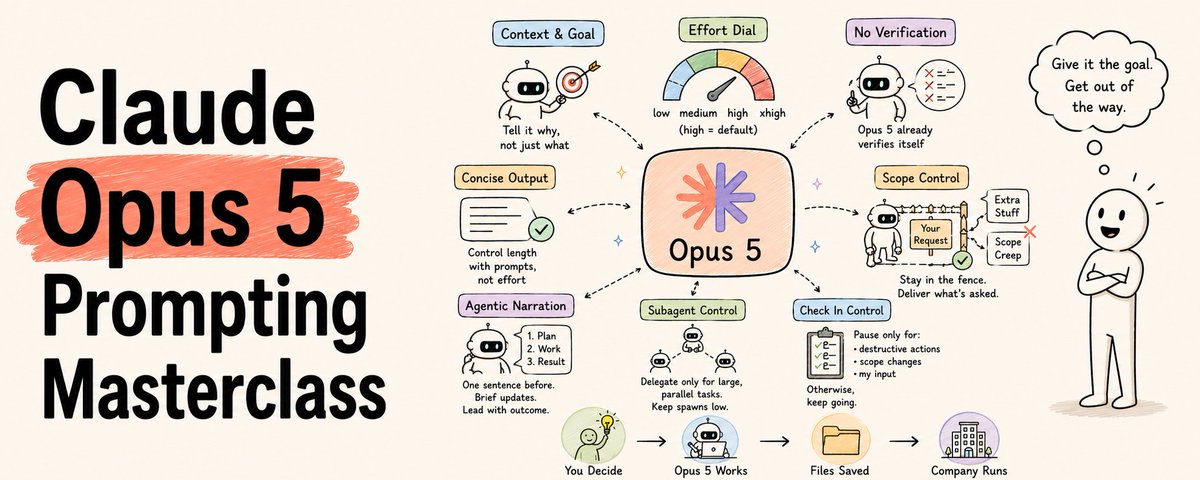
Anthropic released Claude Opus 5 three days ago.
They also published an official prompting guide the same day (https://platform.claude.com/docs/en/build-with-claude/prompt-engineering/prompting-claude-opus-5)
Almost nobody read it.
It's buried in the API docs. Written for developers. Dense enough to make most people bounce in 30 seconds.
I read it so you don't have to.
Here is the full Opus 5 prompting playbook in plain English.
Every trick. Every prompt template. Every mistake to avoid.
Save this. It will change how you use Claude.
## First — what is Claude Opus 5?
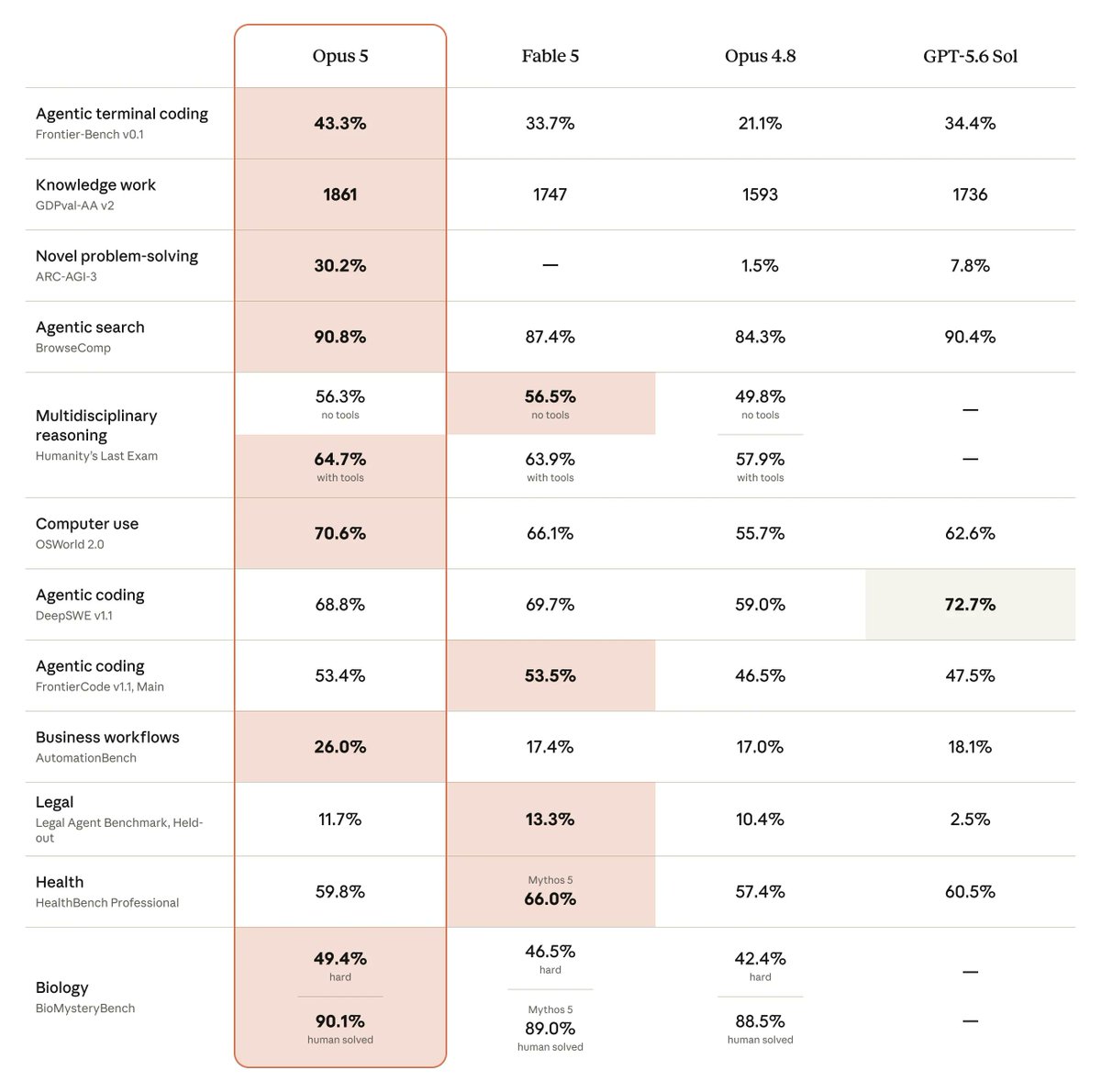
Anthropic just shipped four models in under two months.
Fable 5 (Mythos) → Sonnet 5 → Opus 5.
Opus 5 launched July 24, 2026.
The headline: near-Fable-5 intelligence at half the price.
→ $5 per million input tokens (vs $10 for Fable 5)
→ 1 million token context window
→ Thinking on by default
→ Built for long, complex, agentic work
→ Currently leading the Artificial Analysis leaderboard, above even Fable 5
But here's what matters more than the specs.
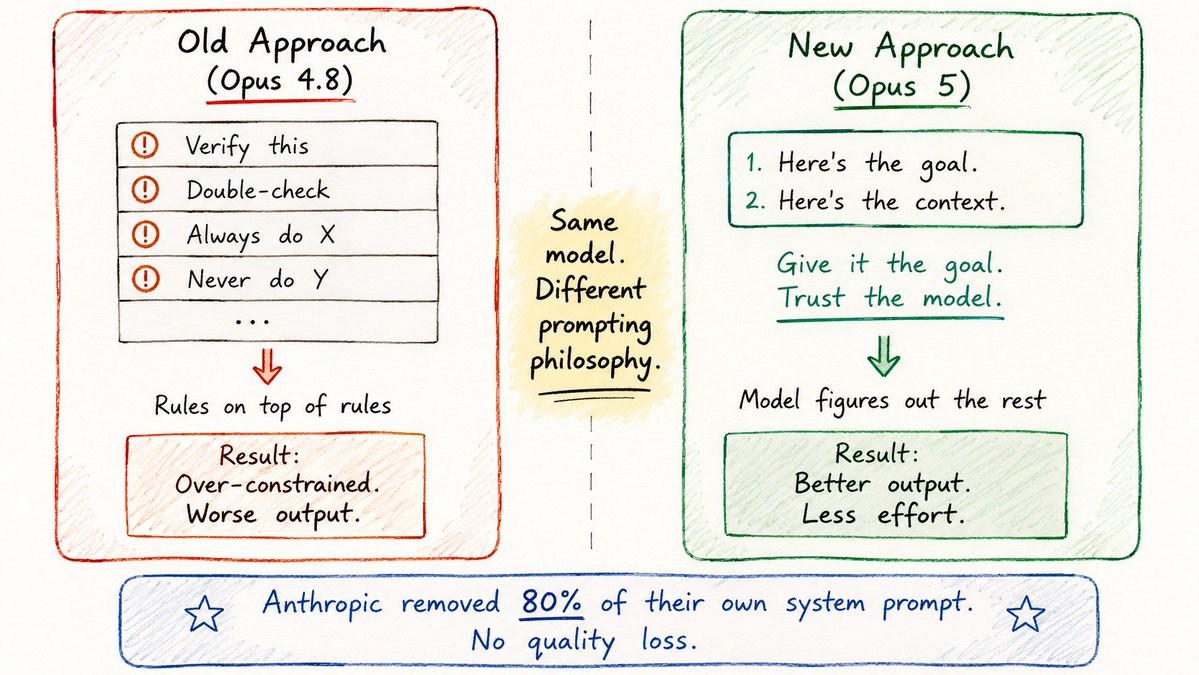
Opus 5 is a fundamentally different model to prompt.
The rules that worked for Opus 4.8 now actively hurt you on Opus 5.
Anthropic removed over 80% of Claude Code's own system prompt when they upgraded to Opus 5.
With zero loss on coding benchmarks.
The guardrails became the problem.
Here's what to do instead.
## The Effort Dial
(The most important control you have)
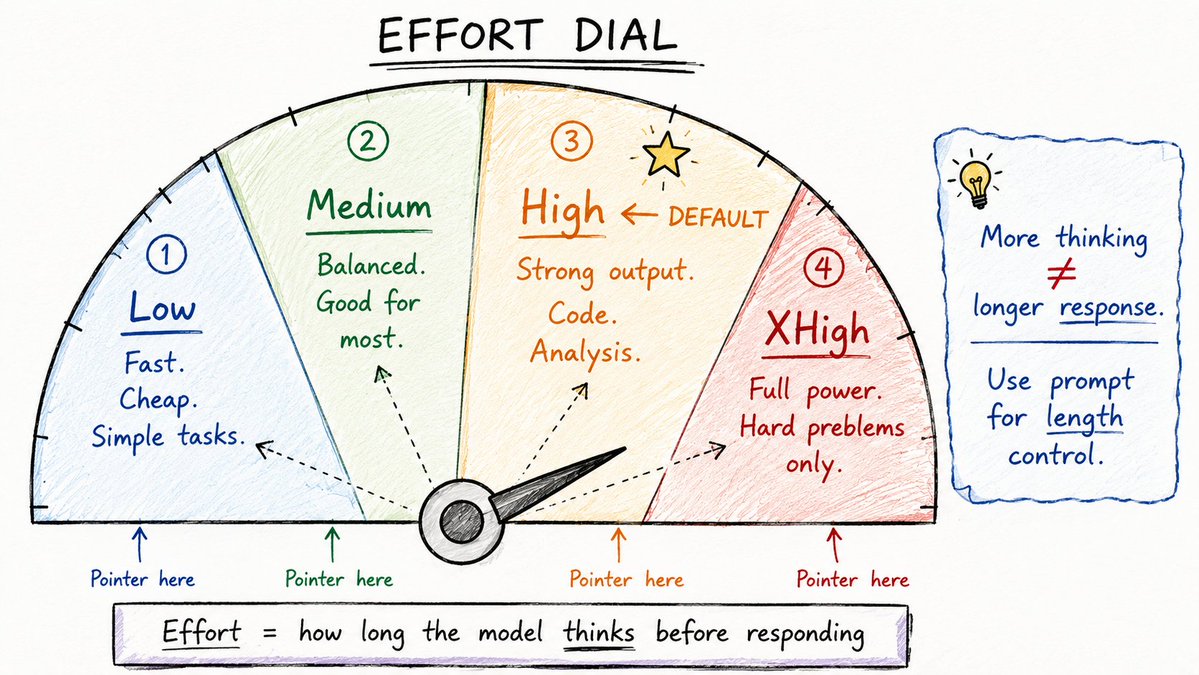
Opus 5 has one dial that changes everything:
Effort.
Four settings:
→ low — fast, cheap, still surprisingly good
→ medium — balanced
→ high — the default. Use this for most things.
→ xhigh — full power. Reserve for your hardest problems.
This is not like temperature or other model parameters.
Effort controls how much the model thinks before responding.
Higher effort = more reasoning time = better output on hard problems.
The practical guide:
```
low/medium:
→ Simple questions
→ Quick rewrites
→ Basic research
→ Conversational replies
→ Fast code review passes
high (default):
→ Most tasks
→ Code generation
→ Analysis
→ Writing
xhigh:
→ Complex multi-file coding
→ Hard reasoning problems
→ Demanding agentic tasks
→ Anything where quality is non-negotiable
```
The mistake everyone makes:
They carry their Opus 4.8 effort settings over to Opus 5 without testing.
Opus 5 is so much better at low/medium that you're probably overpaying for high effort on tasks that don't need it.
Re-run your use cases at lower settings first.
You'll be surprised how often low/medium is enough.
## Tell It Why, Not Just What
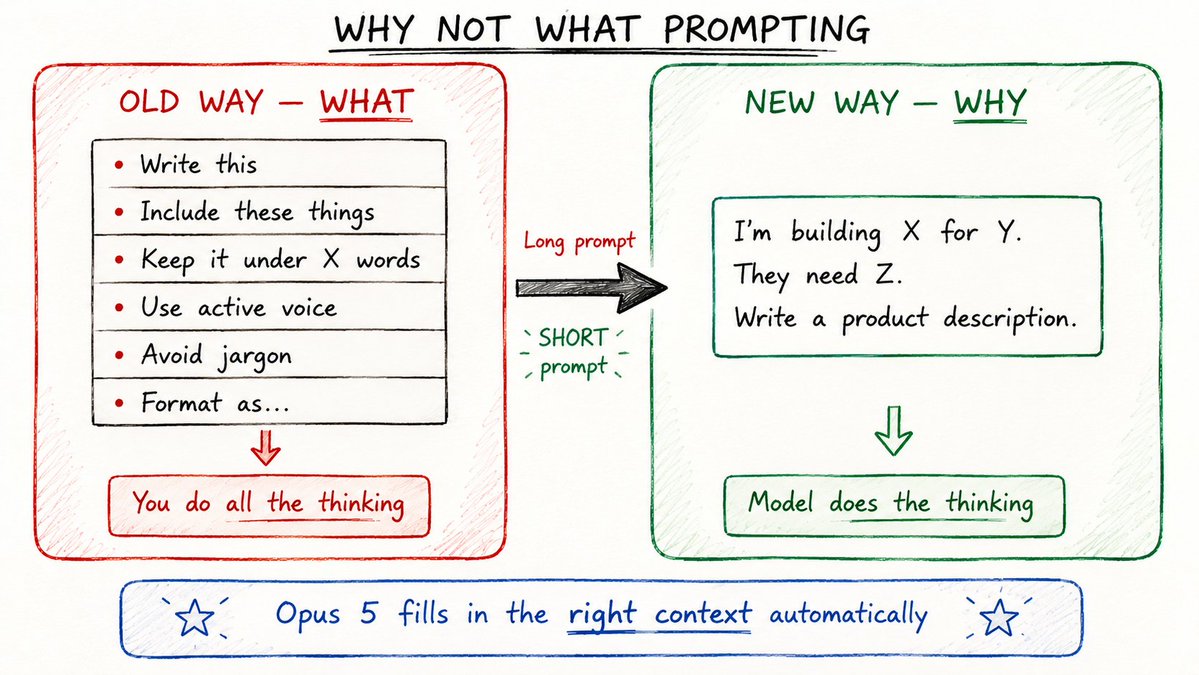
This is the biggest shift when moving to Opus 5.
Old models needed step-by-step instructions.
Opus 5 needs context and goal.
It figures out the steps itself — and usually better than you'd specify them.
The formula Anthropic recommends:
```
"I'm working on [larger task] for [who it's for].
They need [what the output enables].
With that in mind: [your actual request]."
```
Example — before:
"Write a product description for a HVAC calculator app. Include: what it does, key features, benefits, call to action. Keep it under 200 words. Use active voice. Avoid jargon."
Example — after:
"I'm building an iOS calculator app for HVAC contractors. They need to calculate BTU loads, duct sizing, and Manual J heat loss fast on job sites. Write a product description for the App Store."
The second prompt is shorter.
The output is dramatically better.
Because Opus 5 fills in the right context (contractor audience, on-site use, technical credibility) that you forgot to specify in the first prompt.
The rule: Give Opus 5 the goal and the why. It will work out the how.
## Delete Your Verification Instructions
This one will feel wrong.
But Anthropic is explicit about it.
If your prompts or system instructions contain any of these:
→ "Include a final verification step"
→ "Double-check your answer before responding"
→ "Use a subagent to verify your work"
→ "Re-verify before completing"
Delete them all.
On Opus 4.8, these helped.
On Opus 5, they hurt.
Opus 5 already verifies its own work automatically.
Your instructions to verify stack on top of what it's already doing.
The result: wasted tokens, longer responses, no improvement in quality.
Anthropic tested this directly.
Removing all verification instructions from their own Claude Code prompts
→ no loss in quality
→ significant reduction in cost and tokens.
The new rule: don't tell it to check. It already is.
```
REMOVE THESE from your system prompts:
❌ "Before responding, verify your answer"
❌ "Include a final verification step for non-trivial tasks"
❌ "Use a subagent to double-check results"
❌ "Re-read your output for errors before sending"
REPLACE WITH: nothing.
Opus 5 handles this on its own.
```
## Control Verbosity With Prompts, Not Effort
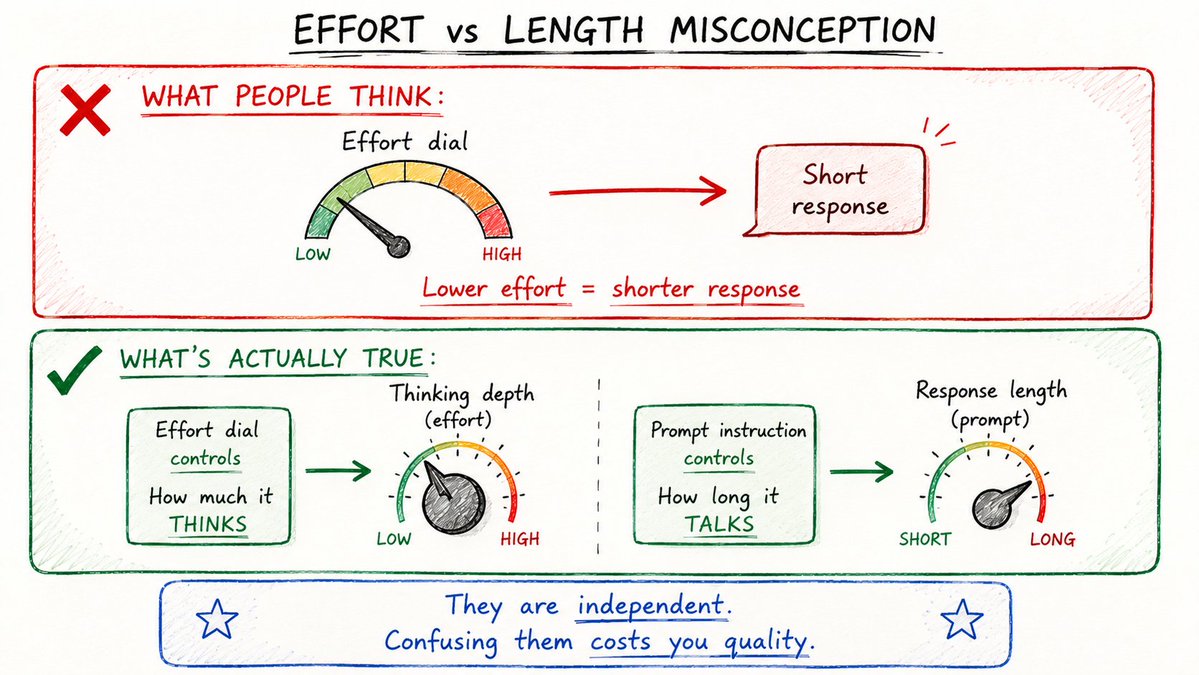
Common mistake: people lower the effort setting to get shorter responses.
That's wrong.
Effort controls how much the model thinks, not how long it talks.
Lowering effort → less reasoning → worse answers.
Same response length.
To control length, use prompts.
Anthropic's exact recommended instruction for user-facing products:
```
Keep responses focused, brief, and concise.
Keep disclaimers and caveats short, and spend
most of the response on the main answer.
When asked to explain something, give a high-level
summary unless an in-depth explanation is
specifically requested.
```
For long system prompts, add a reminder at the end:
```
<tone_preference>
Keep outputs reasonably concise.
</tone_preference>
```
For written documents (reports, markdown files) that Opus 5 saves to disk:
```
Match the length of written documents to what the
task needs: cover the substance, but do not pad
with filler sections, redundant summaries, or
boilerplate.
```
Opus 5 defaults to longer, more thorough responses than Opus 4.8.
That's usually a feature.
But for product use cases, you need to dial it back explicitly.
## Controlling Agentic Narration
Opus 5 talks a lot while it works.
It announces what it's about to do. It reports what it found. It narrates every step.
This is fine for personal use.
For product use cases — where users just want the result — it becomes noise.
Anthropic's recommended narration control instruction:
```
Before your first tool call, say in one sentence
what you're about to do.
While working, give a brief update only when you
find something important or change direction.
When you finish, lead with the outcome: your first
sentence should answer "what happened" or "what did
you find," with supporting detail after it for
readers who want it.
```
The principle: describe the style you want, don't list what you don't want.
Positive examples of communication style work better than "don't do X" instructions.
## Controlling Subagent Spawning
Opus 5 loves to delegate.
It spins up subagents automatically for complex tasks.
That's powerful when the task genuinely needs parallel work.
It's expensive when it doesn't.
Without guidance, Opus 5 will delegate tasks you'd have handled in a handful of tool calls.
The fix — Anthropic's exact recommended prompt:
```
Delegate to a subagent only for large tasks that
are genuinely independent and parallelizable,
such as a wide multi-file investigation.
Do not delegate work you can finish yourself
in a handful of tool calls, and do not use
subagents to verify or double-check your own work.
If one subagent can complete the task, use one
rather than several, and keep spawn counts low.
```
Rule of thumb: if it's one coherent task, Opus 5 should handle it.
Only spawn subagents when the task has truly independent parallel tracks.
## Stop It from Going Beyond the Task
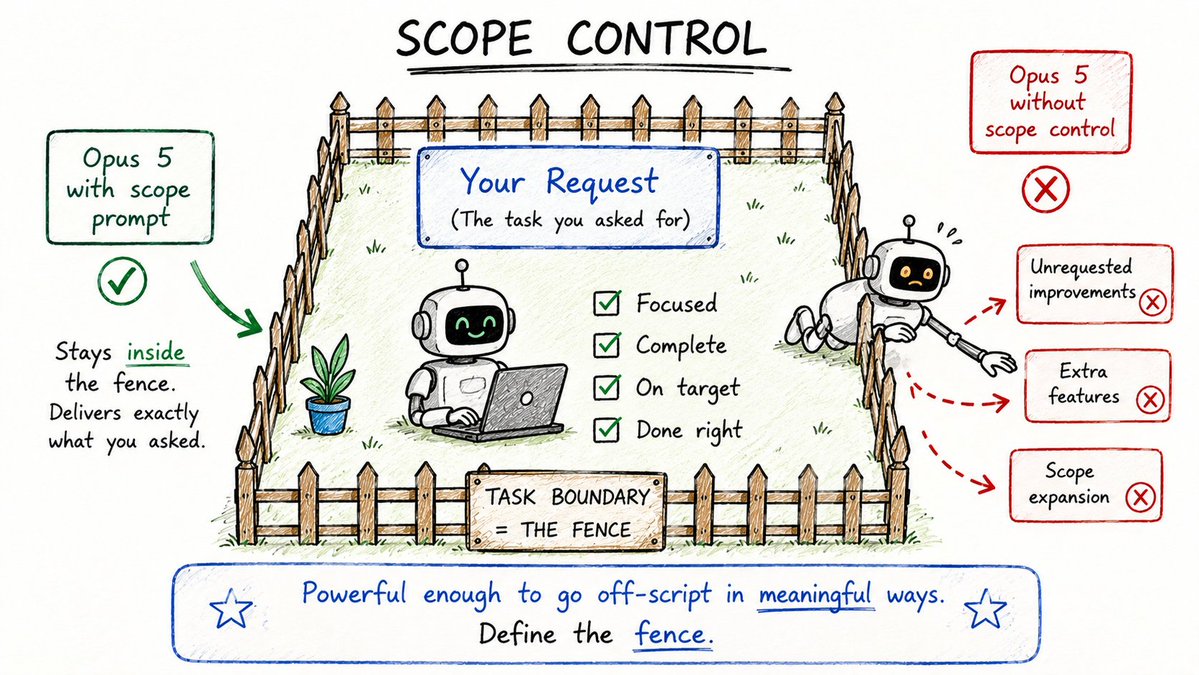
Opus 5 is proactive by design.
It will add steps you didn't ask for. It will expand scope because it thinks it's helping. It will apply its own judgment about what the task should be.
Sometimes great. Often not what you wanted.
The scope control prompt:
```
Deliver what was asked, at the scope intended.
Make routine judgment calls yourself, and check in
only when different readings of the request would
lead to materially different work.
If the request seems mistaken or a better approach
exists, say so in a sentence and continue with the
task as asked — rather than quietly narrowing,
widening, or transforming it.
Finish the whole task, and stop short of actions
that are clearly beyond what was asked.
```
This is the single most important prompt for agentic use cases.
Opus 5 is powerful enough to go off-script in meaningful ways.
You need to define the fence.
## The "Check In" Prompt for Autonomous Runs
Running Opus 5 autonomously on long tasks?
You need to define when it stops and asks.
Otherwise it defines its own checkpoints.
Sometimes fine. For important work — not acceptable.
Anthropic's recommended checkpoint prompt:
```
Pause for me only when the work genuinely requires
my input:
→ A destructive or irreversible action
→ A real scope change
→ Something only I can provide
Otherwise, keep going and report back when done.
```
This gives Opus 5 permission to run without interrupting you constantly.
While ensuring it pauses for the moments that actually need you.
The best of both worlds.
## The Full Optimal Prompt Structure
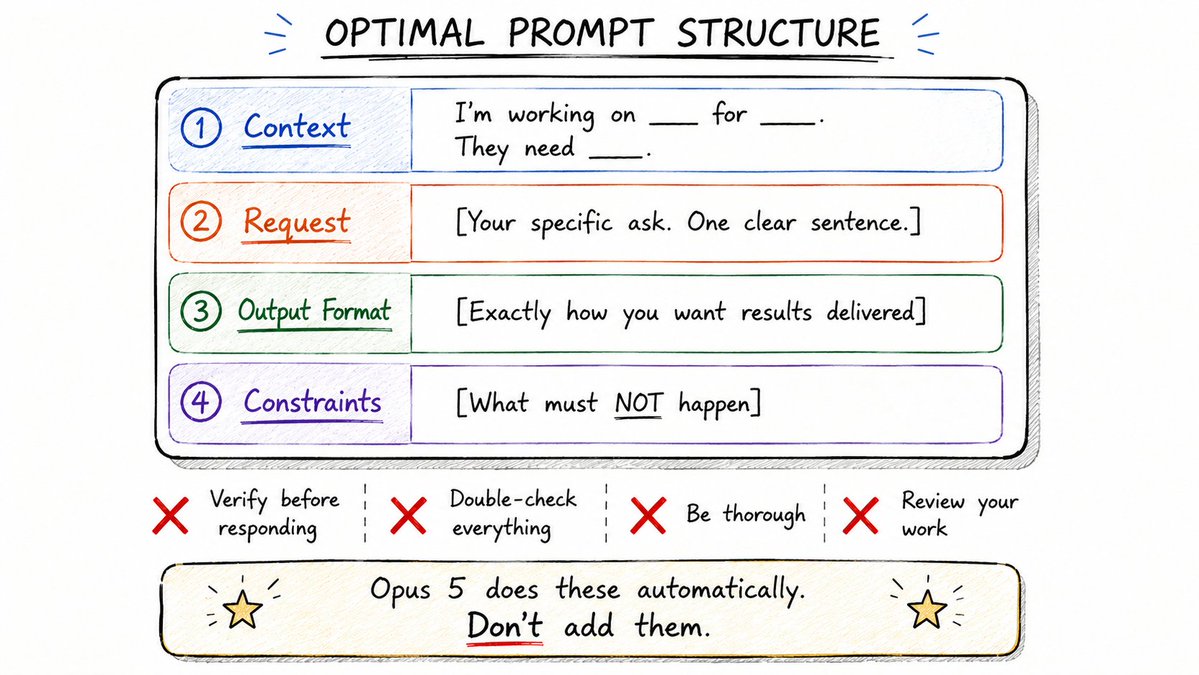
Put everything together.
Every high-quality Opus 5 prompt has four parts:
```
I'm working on [larger task] for [who it's for].
They need [what the output enables].
Request: [your specific ask in one clear sentence]
Output format: [exactly how you want the result
structured and delivered]
Constraints: [what must not happen on the way
to the result]
```
Real example — bad prompt:
"Review this code and find all the bugs. Be thorough. Double-check everything. Report high severity issues first. Verify your findings before responding."
Real example — Opus 5 optimized prompt:
"I'm shipping a HVAC calculator app for iOS this week. The team needs to find real bugs before the App Store submission.
Request: Full code review of the attached file.
Output format: Numbered list, each bug with: location, what's wrong, why it matters.
Constraints: Report everything you find. Don't filter by severity — I'll prioritize separately."
Notice: no verification instruction. No "be thorough." No "double-check."
Opus 5 does all of that automatically.
You just need to get out of the way.
## 6 Things to Watch Out For
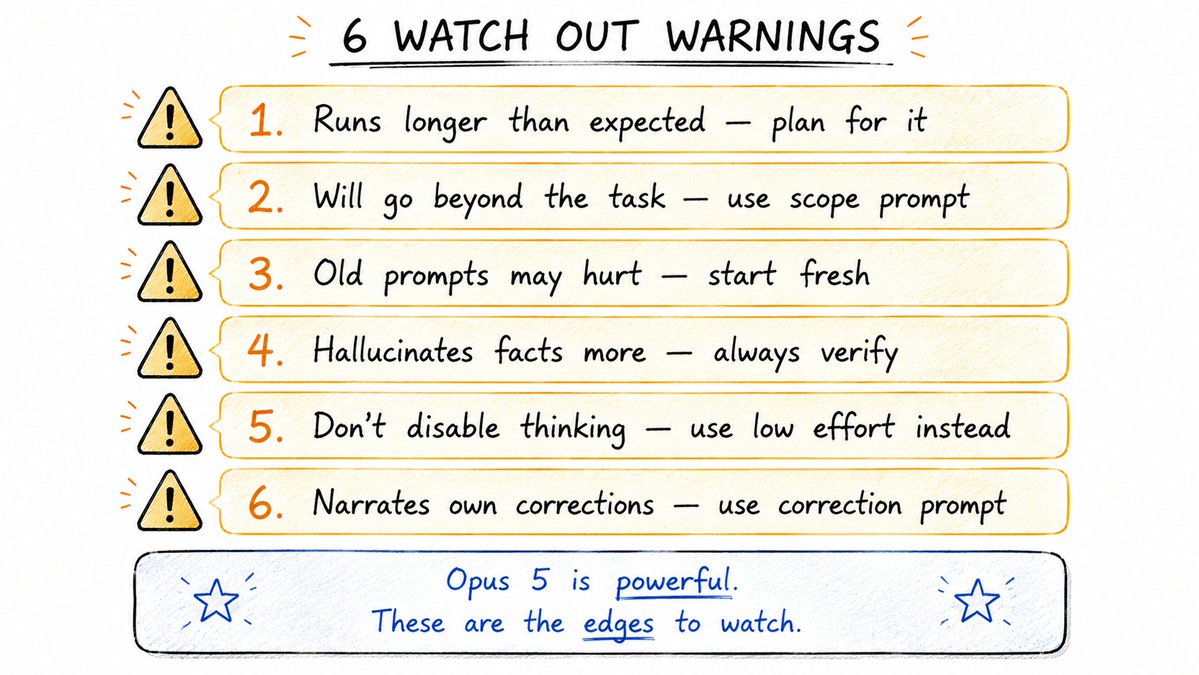
1. It runs longer than you expect.
High-effort tasks can take many minutes.
This is not a bug. It's thinking.
Plan for it on complex agentic work.
2. It will go beyond what you asked.
Opus 5 is proactive by design.
Use the scope control prompt above for anything sensitive.
3. Your old prompts may hurt you.
If you have saved prompts or CLAUDE.md files built for Opus 4.8 or earlier — they may produce worse results on Opus 5 than a fresh simple prompt would.
Start fresh. Then add back only what's needed.
4. It hallucinates facts slightly more than Opus 4.8.
Anthropic's own system card confirms this.
Opus 5 is confidently wrong more often than its predecessor.
Verify anything factual before using it.
5. Disabling thinking makes it weird.
Opus 5 runs with thinking on by default.
If you turn thinking off, the model occasionally writes tool calls as text instead of actual tool calls. And sometimes emits internal XML tags in its output.
Anthropic's recommendation: don't disable thinking.
If you need to control cost — use lower effort settings. Don't kill thinking.
6. Don't correct narration you don't care about.
Opus 5 narrates its own corrections more than Opus 4.8.
It will say "I said X earlier, I should clarify..."
Often for corrections the user doesn't care about.
The fix:
```
Only correct an earlier statement when the error
would change the user's code, conclusions, or
decisions.
State corrections plainly and briefly, then
continue the task.
For slips that change nothing for the user,
make the fix and move on without noting it.
```
## Quick Reference — All Key Prompts
Copy these into your system prompts now.
Conciseness (user-facing products):
> Keep responses focused, brief, and concise.
> Spend most of the response on the main answer.
Narration control (agentic tasks):
> Before your first tool call, say in one sentence
> what you're about to do. Brief updates only when
> something important turns up. Lead with the outcome
> when done.
Scope control (narrow tasks):
> Deliver what was asked, at the scope intended.
> Say so if a better approach exists, then do
> the task as asked.
Checkpoint control (autonomous runs):
> Pause only for: destructive actions, real scope
> changes, or things only I can provide.
> Otherwise keep going.
Subagent control (cost management):
> Delegate only for large genuinely parallel tasks.
> Don't delegate what you can handle in a few
> tool calls. Keep spawn counts low.
Correction narration:
> Only correct earlier statements when the error
> changes the user's conclusions. Make small fixes
> and move on without noting them.
## The core lesson from Anthropic
Most people respond to a misbehaving model by adding more instructions.
Anthropic's engineers did the opposite.
They removed instructions until the model could breathe.
The constraint was the problem.
Opus 5 is smart enough to figure out the right approach itself — if you stop telling it the wrong approach.
Give it the goal. Give it the why. Get out of the way.
That is the entire Opus 5 prompting philosophy.
If this was useful:
→ Repost to share it with every Claude power user you know
→ Follow @sairahul1 for more playbooks like this
→ Bookmark this — the prompt templates work, use them today
Subscribe to theaibuilders.co for more such interesting articles
I write about AI, building products, and systems that work while you sleep.
## 相关链接
- [Rahul](https://x.com/sairahul1)
- [@sairahul1](https://x.com/sairahul1)
- [473K](https://x.com/sairahul1/status/2081681747520209385/analytics)
- [https://platform.claude.com/docs/en/build-with-claude/prompt-engineering/prompting-claude-opus-5](https://platform.claude.com/docs/en/build-with-claude/prompt-engineering/prompting-claude-opus-5)
- [@sairahul1](https://x.com/@sairahul1)
- [theaibuilders.co](https://theaibuilders.co/)
- [Upgrade to Premium](https://x.com/i/premium_sign_up)
- [6:02 PM · Jul 27, 2026](https://x.com/sairahul1/status/2081681747520209385)
- [473.2K Views](https://x.com/sairahul1/status/2081681747520209385/analytics)
- [View quotes](https://x.com/sairahul1/status/2081681747520209385/quotes)
---
*导出时间: 2026/7/28 14:05:12*
---
## 中文翻译
# Claude Opus 5 提示工程大师课
**作者**: Rahul
**日期**: 2026-07-27T10:02:59.000Z
**来源**: [https://x.com/sairahul1/status/2081681747520209385](https://x.com/sairahul1/status/2081681747520209385)
---

Anthropic 三天前发布了 Claude Opus 5。
同一天,他们还发布了官方提示指南 (https://platform.claude.com/docs/en/build-with-claude/prompt-engineering/prompting-claude-opus-5)
几乎没人读过。
它被埋没在 API 文档里。是为开发者写的。内容足够密集,让大多数人在 30 秒内就放弃。
我读了它,这样你就不用读了。
这里有通俗易懂的完整 Opus 5 提示手册。
每一个技巧。每一个提示模板。每一个需要避免的错误。
收藏这篇文章。它会改变你使用 Claude 的方式。
## 首先 —— Claude Opus 5 是什么?

Anthropic 在不到两个月的时间里刚刚发布了四个模型。
Fable 5 (Mythos) → Sonnet 5 → Opus 5。
Opus 5 于 2026 年 7 月 24 日发布。
主要亮点:以半价获得接近 Fable 5 的智能。
→ 每 100 万个输入 token 5 美元(Fable 5 为 10 美元)
→ 100 万 token 上下文窗口
→ 默认开启思考
→ 专为长时、复杂、代理型任务构建
→ 目前在 Artificial Analysis 排行榜上领先,甚至高于 Fable 5
但比规格参数更重要的是这一点。
Opus 5 是一个需要截然不同的提示方式的模型。
那些对 Opus 4.8 有效的规则,现在在 Opus 5 上反而会对你造成伤害。
当 Anthropic 升级到 Opus 5 时,他们删除了 Claude Code 自身系统提示词中超过 80% 的内容。
而在代码基准测试上零损失。
护栏变成了问题所在。
以下是替代方案。

## 努力度旋钮
(你拥有的最重要的控制手段)

Opus 5 有一个可以改变一切的旋钮:
努力度。
四个设置:
→ low — 快速、便宜,依然出奇地好
→ medium — 平衡
→ high — 默认设置。用于大多数任务。
→ xhigh — 全力以赴。保留给你最棘手的问题。
这不像温度或其他模型参数。
努力度控制的是模型在回复前思考的多少。
更高的努力度 = 更多的推理时间 = 针对难题更好的输出。
实用指南:
```
low/medium:
→ 简单的问题
→ 快速重写
→ 基础研究
→ 对话式回复
→ 快速代码审查
high (默认):
→ 大多数任务
→ 代码生成
→ 分析
→ 写作
xhigh:
→ 复杂的多文件代码编写
→ 困难的推理问题
→ 高要求的代理任务
→ 任何质量不可妥协的任务
```
每个人都会犯的错误:
他们不经测试就将 Opus 4.8 的努力度设置直接套用到 Opus 5 上。
Opus 5 在 low/medium 设置下表现如此之好,以至于对于那些不需要高努力度的任务,你可能正在多花钱。
先在较低设置下重新运行你的用例。
你会惊讶于 low/medium 设置竟然经常就足够了。
## 告诉它“为什么”,而不仅仅是“做什么”

这是转向 Opus 5 时最大的变化。
旧模型需要一步步的指示。
Opus 5 需要的是背景和目标。
它会自己弄清楚步骤 —— 而且通常比你自己指定的步骤要好。
Anthropic 推荐的公式:
```
"我正在为 [谁] 做 [更大的任务]。
他们需要 [输出能带来什么]。
考虑到这一点:[你的实际请求]。"
```
示例 —— 之前:
"写一个 HVAC 计算器应用的产品描述。包括:它的功能、关键特性、好处、行动号召。字数控制在 200 字以内。使用主动语态。避免行话。"
示例 —— 之后:
"我正在为 HVAC 承包商构建一个 iOS 计算器应用。他们需要在工作现场快速计算 BTU 负荷、风管尺寸和 Manual J 热损失。为 App Store 写一个产品描述。"
第二个提示更短。
输出质量却显著提升。
因为 Opus 5 补全了你忘记在第一个提示中指定的正确背景(承包商受众、现场使用、技术可信度)。
规则:给 Opus 5 目标和“为什么”。它会自己搞定“怎么做”。
## 删除你的验证指令
这一条可能会让你觉得不对。
但 Anthropic 对此非常明确。
如果你的提示或系统指令包含以下任何内容:
→ "包含一个最终验证步骤"
→ "在回复之前检查你的答案"
→ "使用子代理来验证你的工作"
→ "在完成之前重新验证"
把它们全部删除。
在 Opus 4.8 上,这些指令是有帮助的。
在 Opus 5 上,它们是有害的。
Opus 5 已经会自动验证它自己的工作。
你要求验证的指令会叠加在它已经在做的事情上。
结果:浪费 token,回复变长,质量没有提升。
Anthropic 直接测试了这一点。
从他们自己的 Claude Code 提示中删除所有验证指令
→ 质量无损失
→ 成本和 token 显著降低。
新规则:不要叫它去检查。它已经在检查了。
```
从你的系统提示中删除这些:
❌ "在回复之前,验证你的答案"
❌ "对于非平凡任务,包含一个最终验证步骤"
❌ "使用子代理来复查结果"
❌ "在发送之前重新阅读你的输出以查找错误"
替换为:什么都不写。
Opus 5 会自行处理。
```
## 使用提示词来控制啰嗦程度,而不是努力度

常见错误:人们降低努力度设置以获得更短的回复。
这是错误的。
努力度控制的是模型思考的多少,而不是它说话的长短。
降低努力度 → 更少推理 → 更差的答案。
回复长度不变。
要控制长度,请使用提示词。
Anthropic 针对面向用户产品的确切推荐指令:
```
保持回复专注、简短和精炼。
保持免责声明和警示说明简短,
并将回复的大部分内容用于主要答案。
当被要求解释某事时,给出高层级摘要,
除非明确要求深入解释。
```
对于较长的系统提示,请在末尾添加提醒:
```
<tone_preference>
保持输出合理的简洁。
</tone_preference>
```
对于 Opus 5 保存到磁盘的书面文档(报告、markdown 文件):
```
将书面文档的长度与任务所需相匹配:
涵盖实质内容,但不要用填充部分、
多余的摘要或样板文字来凑数。
```
Opus 5 默认比 Opus 4.8 产生更长、更详尽的回复。
这通常是一个优点。
但对于产品用例,你需要明确地把它调低。
## 控制代理叙述
Opus 5 在工作时话很多。
它会宣布它即将做什么。它会报告它发现了什么。它会叙述每一个步骤。
这对个人使用来说没问题。
对于产品用例 —— 用户只想要结果 —— 这就成了噪音。
Anthropic 推荐的叙述控制指令:
```
在第一次工具调用之前,用一句话说明你即将做什么。
在工作过程中,仅当你发现重要内容或改变方向时,
给出简短更新。
当你完成时,以结果开头:你的第一句话应该回答
"发生了什么"或"你发现了什么",随后为感兴趣的
读者提供支持细节。
```
原则:描述你想要的风格,而不是列出你不想要的内容。
沟通风格的正面示例比“不要做 X”的指令效果更好。
## 控制子代理生成
Opus 5 很喜欢委派任务。
它会自动为复杂任务启动子代理。
当任务真正需要并行工作时,这很强大。
当不需要时,这很昂贵。
如果没有指导,Opus 5 会委派那些你本可以用少量工具调用就处理的任务。
解决方案 —— Anthropic 的确切推荐提示:
```
仅对真正独立且可并行的大型任务委派给子代理,
例如广泛的多文件调查。
不要委派你自己可以在少数工具调用中完成的工作,
也不要使用子代理来验证或复查你自己的工作。
如果一个子代理可以完成任务,请使用一个而不是多个,
并保持生成数量较少。
```
经验法则:如果是一个连贯的任务,Opus 5 应该自行处理。
只有当任务具有真正独立的并行轨道时,才生成子代理。
## 阻止它超出任务范围
Opus 5 在设计上是主动的。
它会添加你没有要求的步骤。它会扩大范围,因为它认为这很有帮助。它会应用自己的判断来决定任务应该是什么。
有时这很棒。通常不是你想要的。
范围控制提示:
```
按要求交付,保持在预期范围内。
自己做常规判断,仅当对请求的不同解读会导致
实质性不同的工作时,再进行确认。
如果请求似乎有误或存在更好的方法,
用一句话说明,然后继续执行被要求的任务 ——
而不是悄悄地缩小、扩大或转换任务。
完成整个任务,不要采取那些明显超出所求内容的行动。
```
这是代理用例中最重要的提示。
Opus 5 足够强大,能够以有意义的方式偏离剧本。
你需要定义围栏。

## 用于自动运行的“检查”提示
让 Opus 5 在长任务上自动运行?
你需要定义它何时停下来询问。
否则它会定义自己的检查点。
有时这没问题。对于重要工作 —— 不可接受。
Anthropic 推荐的检查点提示:
```
仅当工作真正需要我的输入时才为我暂停:
→ 破坏性或不可逆的操作
→ 真正的范围变更
→ 只有我能提供的内容
否则,继续工作,完成后汇报。
```
这给了 Opus 5 在不不断打断你的情况下运行的许可。
同时确保它在真正需要你的时刻暂停。
两全其美。
## 完整的最佳提示结构

把所有内容整合在一起。
每一个高质量的 Opus 5 提示都有四个部分:
```
我正在为 [谁] 做 [更大的任务]。
他们需要 [输出能带来什么]。
请求:[你明确的一句话具体要求]
输出格式:[你希望结果如何构建和交付的确切方式]
约束:[在结果过程中绝不能发生的事情]
```
真实示例 —— 坏提示:
"审查这段代码并找出所有 bug。要彻底。复查所有内容。首先报告高严重程度的问题。在回复之前验证你的发现。"
真实示例 —— Opus 5 优化提示:
"我本周要发布一个 iOS HVAC 计算器应用。团队需要在 App Store 提交之前找到真正的 bug。
请求:对附件文件进行全面代码审查。
输出格式:编号列表,每个 bug 包含:位置、错在哪里、为什么重要。
约束:报告你发现的所有内容。不要按严重程度过滤 —— 我会单独进行优先级排序。"
注意:没有验证指令。没有“要彻底”。没有“复查”。
Opus 5 会自动完成所有这些。
你只需要不要碍事。
## 6 件需要注意的事情

1. 它运行的时间比你预期的要长。
高努力度任务可能需要很多分钟。
这不是 bug。它在思考。
在复杂的代理工作上为此做好规划。
2. 它会超出你的要求。
Opus 5 在设计上是主动的。
对于任何敏感任务,使用上面的范围控制提示。
3. 你的旧提示可能会伤害你。
如果你有针对 Opus 4.8 或更早版本保存的提示或 CLAUDE.md 文件 —— 它们在 Opus 5 上产生的结果可能比全新的简单提示还要差。
重新开始。然后只加回需要的内容。
4. 它产生事实幻觉的频率略高于 Opus 4.8。
Anthropic 自己的系统卡片证实了这一点。
Opus 5 犯错却自信不疑的频率比其前代更高。
在使用之前核实任何事实性内容。
5. 禁用思考会让它变得奇怪。
Opus 5 默认开启思考运行。
如果你关闭思考,模型偶尔会将工具调用作为文本而不是实际工具调用来编写。有时甚至会在输出中发出内部 XML 标签。
Anthropic 的建议:不要禁用思考。
如果你需要控制成本 —— 使用较低的努力度设置。不要扼杀思考。
6. 不要纠正你不关心的叙述。
Opus 5 叙述其自身纠正的频率高于 Opus 4.8。
它会说“我之前说了 X,我应该澄清……”
经常是为了纠正用户根本不关心的错误。
解决方案:
```
仅当错误会改变用户的代码、结论或决定时,
才纠正先前的陈述。
简单扼要地陈述纠正,然后继续任务。
对于对用户没有任何改变的口误,
直接修正并继续,不要注明。
```
## 快速参考 —— 所有关键提示
现在把这些复制到你的系统提示中。
简洁性(面向用户的产品):
> 保持回复专注、简短和精炼。
> 将回复的大部分内容用于主要答案。
叙述控制(代理任务):
> 在第一次工具调用之前,用一句话说明你即将做什么。
> 仅当发现重要内容时才给出简短更新。完成后以结果开头。
范围控制(狭窄任务):
> 按要求交付,保持在预期范围内。
> 如果存在更好的方法请说明,然后按被要求的做任务。
检查点控制(自动运行):
> 仅针对以下情况暂停:破坏性操作、真正的范围变更,
> 或只有我能提供的事情。否则继续进行。
子代理控制(成本管理):
> 仅针对真正的大型并行任务进行委派。
> 不要委派你可以在少数工具调用中处理的工作。
> 保持生成数量较低。
纠正叙述:
> 仅当错误会改变用户的结论时,才纠正先前的陈述。
> 进行微小的修复并继续,不要注明它们。
## 来自 Anthropic 的核心教训
大多数人对模型表现不佳的反应是添加更多指令。
Anthropic 的工程师反其道而行之。
他们删除指令,直到模型能够“呼吸”。
约束本身就是问题。
Opus 5 足够聪明,可以自己找出正确的方法 —— 如果你不再告诉它错误的方法。
给它目标。给它“为什么”。别碍事。
这就是完整的 Opus 5 提示哲学。
如果这对你有帮助:
→ 转发给你认识的每一位 Claude 高级用户
→ 关注 @sairahul1 获取更多此类手册
→ 收藏本文 —— 提示模板很有效,今天就使用它们
订阅 theaibuilders.co 以获取更多此类有趣文章
我撰写关于 AI、产品构建以及在你睡觉时也能运行的系统的文章。
## 相关链接
- [Rahul](https://x.com/sairahul1)
- [@sairahul1](https://x.com/sairahul1)
- [473K](https://x.com/sairahul1/status/2081681747520209385/analytics)
- [https://platform.claude.com/docs/en/build-with-claude/prompt-engineering/prompting-claude-opus-5](https://platform.claude.com/docs/en/build-with-claude/prompt-engineering/prompting-claude-opus-5)
- [@sairahul1](https://x.com/@sairahul1)
- [theaibuilders.co](https://theaibuilders.co/)
- [Upgrade to Premium](https://x.com/i/premium_sign_up)
- [6:02 PM · Jul 27, 2026](https://x.com/sairahul1/status/2081681747520209385)
- [473.2K Views](https://x.com/sairahul1/status/2081681747520209385/analytics)
- [View quotes](https://x.com/sairahul1/status/2081681747520209385/quotes)
---
*导出时间: 2026/7/28 14:05:12*