# Physical AI: The $100B Layer You’re Not Building On
**作者**: Utkarsh
**日期**: 2022-01-19T17:58:45.000Z
**来源**: [https://x.com/utk7arsh/status/2048812835514298739](https://x.com/utk7arsh/status/2048812835514298739)
---
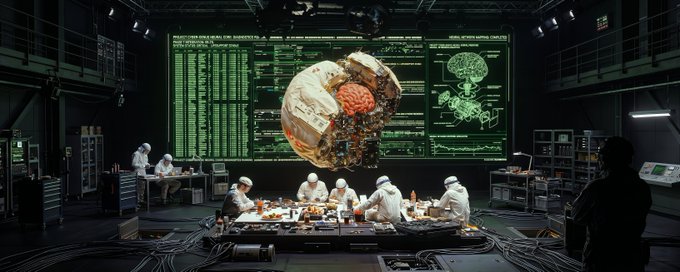
Everyone is watching robots walk.
Boston Dynamics. Figure AI. Tesla Optimus.
The demos are everywhere. The hype is everywhere.
Nobody is watching what the robots are thinking.
And while the world was busy watching the videos, NVIDIA quietly dropped the entire operating system for physical AI. Open source but not tapped by most developers.
That window is closing.
This is everything you need to know, and exactly how to get started today.
## The Stack Nobody Explained
Here is the story most people know:
> NVIDIA makes chips. GPUs go brrr. Blackwell. Trillion dollar company.
Here is the story most people missed:
Over the last 18 months, NVIDIA assembled the complete operating system for the physical world. Not a chip. Not a single model. A full 3-piece stack that each solve a different impossible problem in robotics, and together represent the most important infrastructure shift since the transformer architecture.
The three pieces are Cosmos, GR00T, and Newton.
Each one is massive on its own. Together, they are a paradigm shift.
Piece 1: Cosmos: The Robot's Imagination
The biggest bottleneck in robotics has never been the hardware. It has been data.
To train a robot to do anything useful, like pick up a glass, navigate a warehouse, or sort packages, you need thousands of hours of real-world video showing that task in every possible condition. Different lighting. Different surfaces. Different angles. Different environments.
That data collection used to take months. Sometimes years. And even then it was never diverse enough.
Cosmos solves this at the foundation level.
Cosmos is a world foundation model — a neural network trained on millions of hours of real driving and robotics video that can generate physics-aware simulations of the future. You give it a simulation. It outputs 1,000 photorealistic variations with different lighting, different materials, different weather, and camera angles without you running a single real-world trial.
One simulation becomes a thousand training samples in hours that earlier took months. But that is just Cosmos Predict. The full Cosmos platform has three sub-models:
Cosmos Predict 2.5: generates future-state video predictions from text, image, or existing video input. You describe a scenario. It simulates it. Tapping the Physics accuracy.
Cosmos Transfer 2.5: takes synthetic simulation footage and transforms it into photorealistic scenes. A robot arm moving in a sterile simulation lab becomes the same robot arm moving in a real kitchen with worn countertops and afternoon shadows. The geometry and motion are preserved. The visual domain is completely changed. This is the sim-to-real bridge that has been the holy grail of robotics for a decade.
Cosmos Reason 2: a 7B reasoning vision-language model that can watch video and think about what it sees. Not just classify. Not just detect. Reason. Plan. Predict.
Piece 2: GR00T: The Robot's Brain
In March 2025, NVIDIA released something that should have broken the internet.
Isaac GR00T N1: the world's first open, fully customizable foundation model designed specifically for humanoid robots It is on Hugging Face. Right now. Free to download and fine-tune.
This is the GPT moment for robotics or a predecessor to that moment in my opinion.
What GR00T actually does is give a robot generalized reasoning and motor skill capabilities before you teach it anything domain-specific. Instead of building a robot brain from scratch for every application, you start from GR00T and fine-tune.
Think about what that means. The same way, developers don't train a language model from scratch to build a chatbot. They fine-tune on top of an existing foundation. Robotics developers can now fine-tune on top of GR00T instead of starting from zero every single time.
Companies like AeiROBOT, Franka Robotics, LG Electronics, Lightwheel, Mentee Robotics, Neura Robotics, Solomon, and UCR are already evaluating it.
And it is open. You can start today.
Piece 3: Newton: The Robot's Body Physics
This is the piece that almost nobody is talking about, and it might be the most important.
Before a robot learns anything in the real world, it learns in simulation. The quality of that simulation, especially how accurately it models gravity, friction, contact, mass, inertia, and the way a cardboard box bends when you grip it, directly determines how well the robot performs when it leaves the virtual environment and enters your warehouse.
To understand more of how this works, check out Isaaclab or ManiSkill3 environments in which engines like Newton can be integrated.
Garbage physics in simulation = a robot that breaks things in the real world.
NVIDIA built Newton to fix this. It is a new open-source physics engine purpose-built for robotics. GPU-accelerated, running CUDA-level speed without requiring low-level coding that cuts simulation times from days to minutes.
Newton was built in collaboration with Google DeepMind and Disney Research.
Disney. The company that has been simulating physics for animated films and theme park systems for 30 years. The people who figured out how water moves, how hair falls, how cloth drapes. That same team is now teaching robots how to manipulate objects with their hands.
NVIDIA's VP of Omniverse and simulation technology put the whole picture together in one sentence:
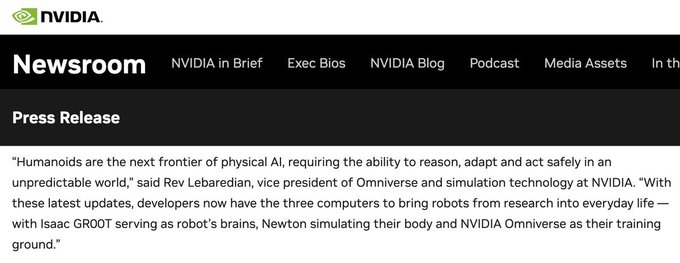
Pic credits: Nvidia newsroom
## The GitHub Repo That Changes Everything
Now here is where it gets real.
NVIDIA did not just release models and documentation. They released a cookbook.
A GitHub repo called the Cosmos Cookbook, containing step-by-step workflows, technical recipes, and complete runnable examples for building, adapting, and deploying world foundation models.
This is not a research paper. This is working code, organized like a recipe book, built for developers who want to build something today and not in two years.
The repo: https://github.com/nvidia-cosmos/cosmos-cookbook
The documentation site: https://nvidia-cosmos.github.io/cosmos-cookbook
You clone it in 30 seconds:
```
git clone https://github.com/nvidia-cosmos/cosmos-cookbook.git
cd cosmos-cookbook
git lfs install # Required — the repo contains video files
```
## What Is Actually Inside
Let me walk you through what is in the cookbook right now, because the recipes are wild.
Recipe 1: Egocentric Social and Physical Reasoning
The recipe uses Cosmos Reason 2 from a first-person robot camera POV. You feed it a video of a human doing something in front of the robot, and you ask it to interpret the scene and predict what happens next.
In a live demo from NVIDIA's own cookbook, researchers showed a person initiating a fist bump at the robot's camera and asked: "Is this person doing a fist bump at me? Can you predict what is the most likely position her fist will be in the next 2 seconds?"
Cosmos Reason 2 answered: Yes, the person is fist-bumping. Her fist will likely remain in a fistbump position, maintaining contact with the viewer's fist as she holds the gesture.
A competing model thought it was a pointing gesture. A commanding, assertive motion. Not an interaction.
That gap between a robot that understands intent and a robot that just sees motion is the entire game in human-robot interaction. Cosmos Reason 2 gets it right. And it is 8 billion parameters. It runs on a single GPU.
Recipe 2: Sim-to-Real Transfer for Robotic Navigation Task
The cookbook includes a full walkthrough of taking synthetic robot simulation footage of a robot arm working in a sterile, fake kitchen environment. Using Cosmos Transfer 2.5, it is able to generate photorealistic variations with different cabinet styles, surface materials, lighting conditions, and kitchen layouts.
The robot's geometry and motion paths are preserved exactly. But the visual domain changes completely. You end up with training data that looks real, without any real-world data collection.
Robotics engineers can now generate diverse training data from a single simulation. One simulation run becomes ten visual domains. One environment becomes fifty. The data flywheel that used to require field operations now runs in the cloud overnight.
Recipe 3: Physical Plausibility Prediction
This one is quieter but just as important.
Synthetic data generation is a cheat code until you accidentally train your robot on physically impossible scenarios. If your synthetic video shows a cup sliding through a table instead of bouncing off it, your robot learns the wrong physics.
This recipe is a quality filter. Cosmos Reason 2 evaluates generated video frames for physical plausibility before they enter the training pipeline. It flags footage where the physics are wrong and removes it automatically.
It is a QA layer for reality itself. And it runs before your training loop ever sees the data.
## What People Are Already Building
Real deployments are running right now.
Agriculture: A company called Aigen is training autonomous rovers to distinguish crops from weeds across millions of simulated farm scenarios using Cosmos and Isaac Sim. Every field is different because of different crops, different soil, different growth stages. Cosmos generates the variety across all those scenarios in simulation. Each rover then deploys on an NVIDIA Jetson Orin edge AI module and makes real-time weed detection decisions in the field. The thing that would have required 10,000 hours of field data collection now happens in a simulation pipeline.
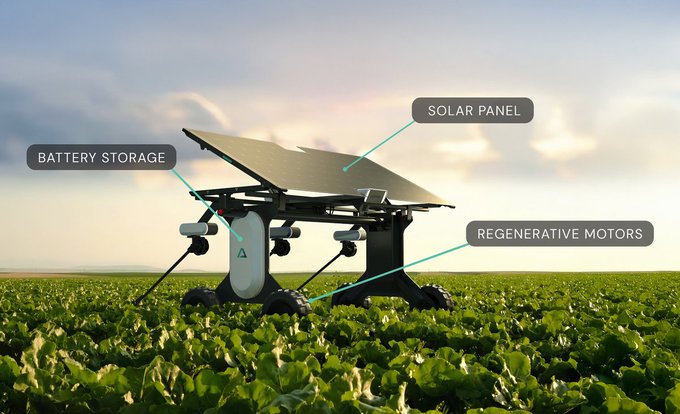
Pic credits:aigen.io
> **TechCrunch@TechCrunch**: [原文链接](https://x.com/TechCrunch/status/1483861501765165057)
>
> Aigen's swarm of agtech robots want to make agriculture carbon negative
> https://techcrunch.com/2022/01/18/aigen-fund-round/… by @Haje
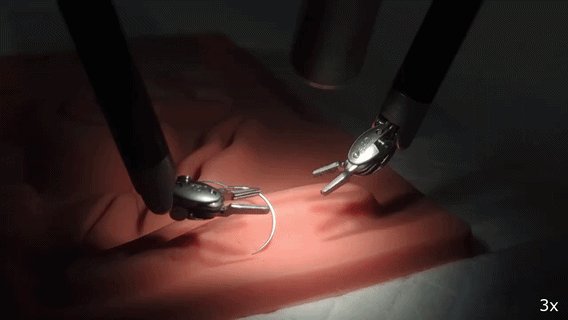
Surgical Robotics: One of the newer recipes fine-tunes Cosmos Predict 2.5 as an action-conditioned surgical simulator. The result, Cosmos-H-Surgical-Simulator, is a collaboration between NVIDIA, Johns Hopkins, and 35 institutions. The efficiency gain alone tells the story: 600 policy rollouts in 40 minutes versus 2 days of real-world benchtop testing. A prototype of GR00T-H has already completed a full end-to-end suture on the SutureBot benchmark.
Sources: Hugging Face · Open-H-Embodiment · GitHub
> **NVIDIA Healthcare@NVIDIAHealth**: [原文链接](https://x.com/NVIDIAHealth/status/2034038372495167495)
>
> Imagine a robot that can suture tissue as skillfully as a surgeon - turning AI from perception into precise, life‑saving action.
> Explore the three breakthroughs powering this leap:
> Open‑H‑Embodiment - the first open, community‑driven dataset delivering standardized
>
> 
Industrial Safety: The Cookoff competition drew over 1,600 participants. The first-place winner, Zenith, built an explainable visual reasoning system for mixed palletizing, where a robot reasons out loud about how it's sorting packages. Second place built ResQ-AI, an autonomous disaster response drone. Source: NVIDIA Developer Forums — Cookoff Winners
## How a Complete Beginner Gets Started Today
You do not need a robot. You do not need a warehouse. You do not need a PhD in robotics.
You need a GPU and a Hugging Face account. If you do not have a local GPU, you can spin up a cloud instance on Nebius or Brev. Both have ready-to-launch Cosmos environments.
Here is the exact path.
Step 1: Set Up the Environment (discussed before)
before cloning.If you are on Mac or Windows, check the official Git LFS installation guide atgit-lfs.com
For cloud deployment, the cookbook documentation lists ready-to-go GPU instances on Nebius and Brev that come pre-configured. You can skip the local setup entirely.
Step 2: Run Your First Cosmos Reason 2 Inference
This is the fastest way to feel what the stack can actually do.
The Cosmos Reason 2 model comes in two sizes: 2B parameters and 8B parameters. The 2B model runs on a consumer GPU. Both are on Hugging Face.
```
from transformers import AutoProcessor, AutoModelForVision2Seq
import torch
# Load the 2B model — runs on a single consumer GPU
model_id = "nvidia/Cosmos-Reason2-2B"
processor = AutoProcessor.from_pretrained(model_id)
model = AutoModelForVision2Seq.from_pretrained(
model_id,
torch_dtype=torch.bfloat16,
device_map="auto"
)
# Ask it a physics question about a video
prompt = """Watch this video carefully.
Think step by step about what is physically happening.
<think>
your reasoning
</think>
<answer>
your answer
</answer>
Question: What action is being performed and what will happen next?"""
```
The chain-of-thought output (the <think> block) is where the magic is. Watch it reason about physics, spatial relationships, and likely outcomes. That is not a classifier. That is a model building a world model in real time.
Step 3: Try the Egocentric Reasoning Recipe
This is the most immediately mind-bending entry point.
Record a short video from a first-person perspective (even works from your phone camera) of someone doing something with their hands. Handing you an object. Waving. Picking something up.
Feed it to Cosmos Reason 2 and ask: "What is this person doing? What are they about to do? What should I do in response?"
The model will chain-of-thought through its answer invoking spatial understanding, temporal reasoning, and physical sense. This will not only give you not just a description but a prediction and a recommended action.
That is the brain of a robot. And you just ran it.
The full recipe is documented here:
https://nvidia-cosmos.github.io/cosmos-cookbook/recipes/inference/reason2/intbot_showcase/inference.html
Step 4: Generate Your First Synthetic Training Data
If you have access to Isaac Sim, or even just a simple 3D simulation environment, you can use Cosmos Transfer 2.5 to generate domain-adapted training data.
The workflow:
1. Run a simulation of any robotic task. Even something simple like a robotic arm reaching for an object works.
2. Export the video and depth maps from your simulation
3. Feed into Cosmos Transfer 2.5 with edge control enabled
4. Specify a target visual domain — "industrial warehouse, fluorescent lighting, concrete floor" or "home kitchen, morning light, granite countertop"
Cosmos Transfer preserves the robot's geometry and motion exactly. It changes the visual environment completely. You now have training data that looks like it was captured in a real deployment environment.
The sim-to-real gallery in the cookbook shows the output quality visually: https://nvidia-cosmos.github.io/cosmos-cookbook/gallery/robotics_inference.html
Step 5: Go Deeper and build the end-to-end Recipe
When you are ready to go from individual recipes to a full pipeline, the cookbook includes an end-to-end recipe called GR00T Dreams that chains Cosmos Predict 2.5 and Cosmos Reason 2 together.
Setup guide: https://nvidia-cosmos.github.io/cosmos-cookbook/recipes/end2end/gr00t-dreams/setup.html
This is the recipe that takes you from "I understand what this stack does" to "I am building a physical AI pipeline."
It requires Ampere-architecture NVIDIA GPUs (RTX Pro 6000, A100, H100) or newer, with CUDA 12.8+. If you do not have that locally, use the cloud instances.
## What You Should Build
Here are five concrete project ideas you can start this week without any robotics background.
1. A workplace safety monitor: Use the VSS blueprint to analyze camera footage from any environment — your office, a construction site, a kitchen — and have Cosmos Reason 2 describe what is happening, flag potential hazards, and generate a daily safety report. Zero labeled data. Zero custom training. Just prompting.
2. A sim-to-real data augmentation pipeline: Take any 3D environment you can simulate (even a simple Blender scene) and run it through Cosmos Transfer to generate photorealistic variants. Build a dataset generator that produces visual diversity on demand.
3. A physical plausibility filter: Build a data curation tool that takes generated video from any source (not just Cosmos) and runs it through Cosmos Reason 2 to check whether the physics make sense. Pipe it into any robotics training workflow as a quality gate.
4. An egocentric reasoning API: Wrap Cosmos Reason 2 in a simple FastAPI endpoint. Accept video uploads. Return chain-of-thought reasoning about what is happening and what should happen next. Sell it as an inference endpoint to robotics teams that do not want to host the model themselves.
5. An agricultural monitoring proof of concept: Point a camera at any outdoor environment with plants and objects. Ask Cosmos Reason 2 to identify, classify, and track objects over time. The Aigen story shows this scales to industrial farming. It starts with a camera and a prompt.
## Why Right Now Is The Moment
Let me be direct about the timing.
The Cosmos Cookbook launched publicly in late 2025. The Cookoff hackathon ran January through March of this year. Cosmos Reason 2 dropped in December 2025. GR00T N1.5 followed. Newton 1.0 just went general availability last week.
This stack is weeks old in its current form. The community is tiny. The number of people who have actually cloned this repo and run the recipes is a rounding error compared to the number of people who will be using it in 18 months.
In software, the ChatGPT moment created the LLM developer wave in early 2023. The people who built on top of GPT-3.5 in January 2023 were a year ahead of the market. Most developers caught it late.
This is the same inflection. Except this time the entire stack is open including the models, the physics engine, the simulation framework, the cookbook. NVIDIA is not gating access. They are actively trying to democratize it.
There is a version of this moment where you are the person who figured it out early.
That version requires cloning the repo today.
## The Resources, All In One Place
Main Cookbook GitHub: https://github.com/nvidia-cosmos/cosmos-cookbook
Full Cosmos GitHub Organization (all repos): https://github.com/nvidia-cosmos
Cosmos Reason 2 GitHub: https://github.com/nvidia-cosmos/cosmos-reason2
Cosmos Cookbook Documentation Site: https://nvidia-cosmos.github.io/cosmos-cookbook
Cosmos Reason 2 on Hugging Face (2B model): https://huggingface.co/nvidia/Cosmos-Reason2-2B
Cosmos Reason 2 on Hugging Face (8B model): https://huggingface.co/nvidia/Cosmos-Reason1-7B (search Cosmos Reason 2)
Try Cosmos Reason 2 Without Any Setup: https://build.nvidia.com
Egocentric Reasoning Recipe: https://nvidia-cosmos.github.io/cosmos-cookbook/recipes/inference/reason2/intbot_showcase/inference.html
Sim-to-Real Robotics Gallery: https://nvidia-cosmos.github.io/cosmos-cookbook/gallery/robotics_inference.html
GR00T Dreams End-to-End Recipe: https://nvidia-cosmos.github.io/cosmos-cookbook/recipes/end2end/gr00t-dreams/setup.html
Newton Physics Engine: https://developer.nvidia.com/newton-physics
NVIDIA Cosmos Platform Overview: https://www.nvidia.com/en-us/ai/cosmos/
The ChatGPT moment for robotics is happening right now.
The entire stack is open.
Go build something.
## 相关链接
- [Utkarsh](https://x.com/utk7arsh)
- [@utk7arsh](https://x.com/utk7arsh)
- [63K](https://x.com/utk7arsh/status/2048812835514298739/analytics)
- [https://github.com/nvidia-cosmos/cosmos-cookbook](https://github.com/nvidia-cosmos/cosmos-cookbook)
- [https://nvidia-cosmos.github.io/cosmos-cookbook](https://nvidia-cosmos.github.io/cosmos-cookbook)
- [Recipe 1](https://nvidia-cosmos.github.io/cosmos-cookbook/recipes/inference/reason2/intbot_showcase/inference.html)
- [Recipe 2](https://nvidia-cosmos.github.io/cosmos-cookbook/recipes/inference/transfer1/inference-x-mobility/inference.html)
- [Recipe 3](https://nvidia-cosmos.github.io/cosmos-cookbook/recipes/post_training/reason2/physical-plausibility-check/post_training.html)
- [aigen.io](https://aigen.io/)
- [Jan 20, 2022](https://x.com/TechCrunch/status/1483861501765165057)
- [@Haje](https://x.com/Haje)
- [Hugging Face](https://huggingface.co/nvidia/Cosmos-H-Surgical-Simulator)
- [Open-H-Embodiment](https://huggingface.co/blog/nvidia/physical-ai-for-healthcare-robotics)
- [GitHub](https://github.com/NVIDIA-Medtech/Cosmos-H-Surgical)
- [Mar 18](https://x.com/NVIDIAHealth/status/2034038372495167495)
- [7.4K](https://x.com/NVIDIAHealth/status/2034038372495167495/analytics)
- [NVIDIA Developer Forums — Cookoff Winners](https://forums.developer.nvidia.com/t/the-results-are-in-meet-the-nvidia-cosmos-cookoff-winners-see-them-live-on-april-16/366130)
- [git-lfs.com](https://git-lfs.com/)
- [https://nvidia-cosmos.github.io/cosmos-cookbook/recipes/inference/reason2/intbot_showcase/inference.html](https://nvidia-cosmos.github.io/cosmos-cookbook/recipes/inference/reason2/intbot_showcase/inference.html)
- [https://nvidia-cosmos.github.io/cosmos-cookbook/gallery/robotics_inference.html](https://nvidia-cosmos.github.io/cosmos-cookbook/gallery/robotics_inference.html)
- [https://nvidia-cosmos.github.io/cosmos-cookbook/recipes/end2end/gr00t-dreams/setup.html](https://nvidia-cosmos.github.io/cosmos-cookbook/recipes/end2end/gr00t-dreams/setup.html)
- [https://github.com/nvidia-cosmos/cosmos-cookbook](https://github.com/nvidia-cosmos/cosmos-cookbook)
- [https://github.com/nvidia-cosmos](https://github.com/nvidia-cosmos)
- [https://github.com/nvidia-cosmos/cosmos-reason2](https://github.com/nvidia-cosmos/cosmos-reason2)
- [https://nvidia-cosmos.github.io/cosmos-cookbook](https://nvidia-cosmos.github.io/cosmos-cookbook)
- [https://huggingface.co/nvidia/Cosmos-Reason2-2B](https://huggingface.co/nvidia/Cosmos-Reason2-2B)
- [https://huggingface.co/nvidia/Cosmos-Reason1-7B](https://huggingface.co/nvidia/Cosmos-Reason1-7B)
- [https://build.nvidia.com](https://build.nvidia.com/)
- [https://nvidia-cosmos.github.io/cosmos-cookbook/recipes/inference/reason2/intbot_showcase/inference.html](https://nvidia-cosmos.github.io/cosmos-cookbook/recipes/inference/reason2/intbot_showcase/inference.html)
- [https://nvidia-cosmos.github.io/cosmos-cookbook/gallery/robotics_inference.html](https://nvidia-cosmos.github.io/cosmos-cookbook/gallery/robotics_inference.html)
- [https://nvidia-cosmos.github.io/cosmos-cookbook/recipes/end2end/gr00t-dreams/setup.html](https://nvidia-cosmos.github.io/cosmos-cookbook/recipes/end2end/gr00t-dreams/setup.html)
- [https://developer.nvidia.com/newton-physics](https://developer.nvidia.com/newton-physics)
- [https://www.nvidia.com/en-us/ai/cosmos/](https://www.nvidia.com/en-us/ai/cosmos/)
- [Upgrade to Premium](https://x.com/i/premium_sign_up)
- [1:13 AM · Apr 28, 2026](https://x.com/utk7arsh/status/2048812835514298739)
- [63.4K Views](https://x.com/utk7arsh/status/2048812835514298739/analytics)
- [View quotes](https://x.com/utk7arsh/status/2048812835514298739/quotes)
---
*导出时间: 2026/4/28 17:41:24*