# How to choose between single and multi-agent solutions
**作者**: AlphaSignal AI
**日期**: 2026-05-06T14:00:27.000Z
**来源**: [https://x.com/AlphaSignalAI/status/2052025703999131818](https://x.com/AlphaSignalAI/status/2052025703999131818)
---
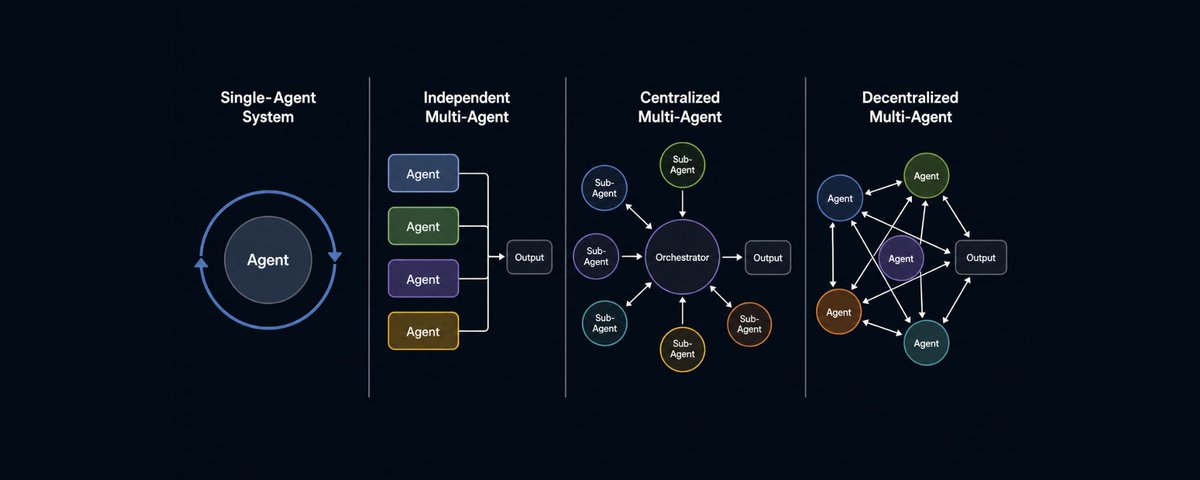
Advances in large language models have passed a certain threshold that it is now possible to build complex multi-agent systems to solve difficult problems. However, not every problem needs a complex solution.
While orchestrating multiple agents feels like the cutting edge of artificial intelligence, it introduces significant hidden costs. As teams rush to deploy multi-agent systems, they are finding themselves burning through API budgets, battling latency, and dealing with the overhead of orchestration.
In fact, in many cases (if not most), optimizing a single-agent system will match or outperform a multi-agent system. Here’s your guide to choosing single- and multi-agent systems.
## Why orchestration is not free
A recent study from Stanford University reveals that many multi-agent benchmarks look impressive simply because they are secretly burning more compute. When the researchers controlled these systems for “thinking budget” (i.e., ensuring both systems use the exact same amount of tokens for reasoning), single-agent systems consistently match or beat multi-agent variants on multi-hop reasoning tasks.
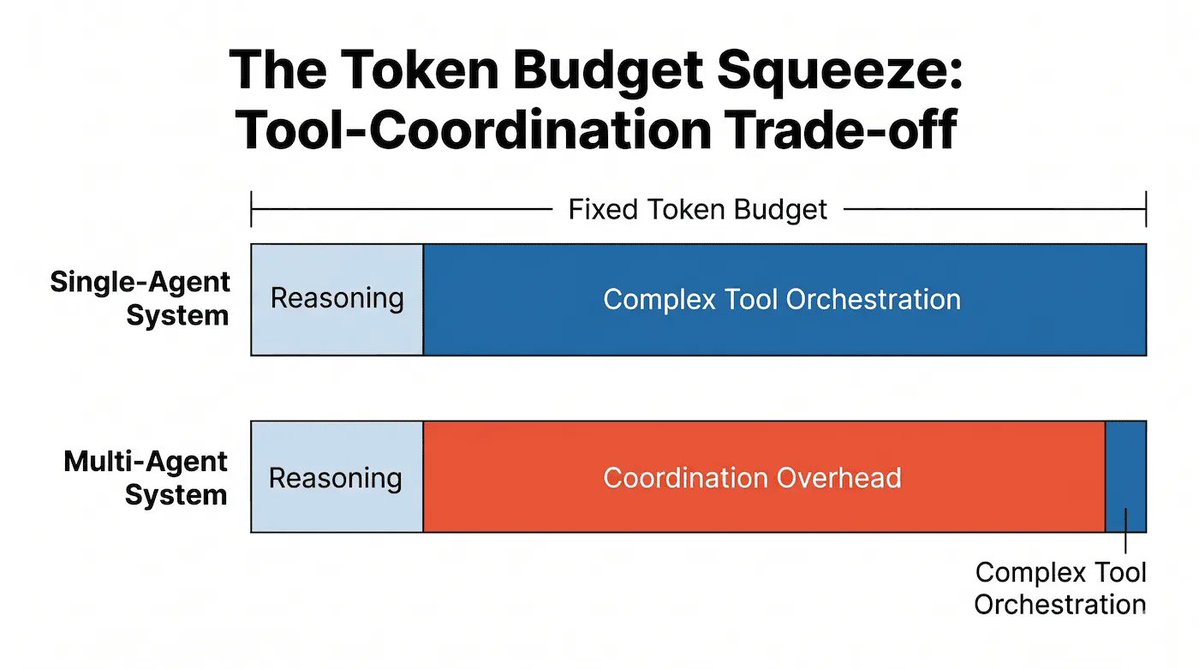
This happens because passing information between agents creates lossy summarization and compounds errors rather than fixing them. The Stanford researchers note that every additional agent introduces communication overhead, more intermediate text, and more places for failures to multiply.
A separate study from Google and MIT provides hard numbers to back this up. Their research shows that independent agent swarms can amplify baseline errors by up to 17.2x.
The Google and MIT researchers also found that “tool-heavy tasks suffer disproportionately from multi-agent coordination overhead.” Their experiments show that in integration setups with 16 tools, single agents achieved a coordination efficiency of 0.466, while multi-agent systems dropped to between 0.074 and 0.234, representing a 2x to 6x efficiency penalty.
Thanks for reading AlphaSignal! Subscribe for free to receive new posts and support my work.
## Engineering the single agent
With the effective context windows of LLMs steadily increasing, single agents are becoming more effective at handling long-context tasks that span across multiple interactions, documents, and tools.
As the Stanford study recommends, “Stay single-agent when the task can be handled within one coherent context window and when the model can reliably use that context.”
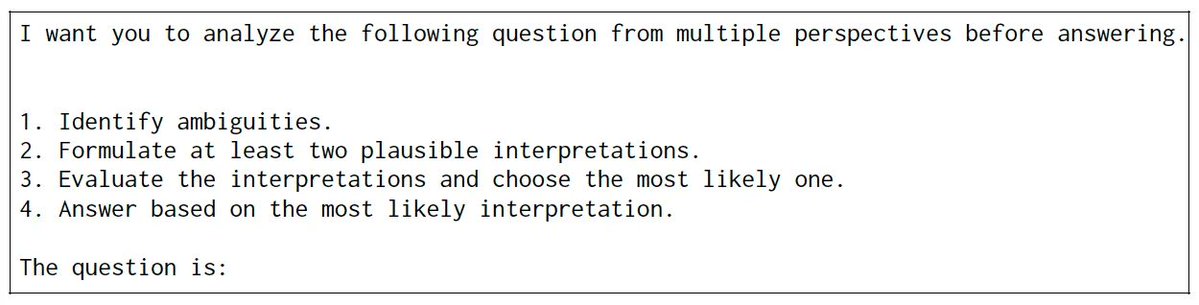
However, the Stanford Study found that single agents often fail on complex tasks because they return an answer without reasoning long enough on the task. When this happens, you should not jump to multi-agent orchestration. Instead, you can restructure the prompt to force the model to spend its budget on pre-answer analysis.
This technique involves prompting the model to explicitly identify ambiguities, list candidate interpretations, and test alternatives before committing to a final response. This forces the model to think longer in a single context. The Stanford research states that “some benefits attributed to collaboration can be recovered inside a single-agent setup when the thinking channel is used more effectively.”
## When you actually need multiple agents
Single-agent systems hit a wall when effective context usage drops. If a workload involves massive, noisy, or partially contradictory retrieval-augmented generation (RAG) data that breaks a coherent context window, a multi-agent system is justified to filter and structure the noise.
The Google and MIT study also identified a “capability saturation” effect. Multi-agent systems can prove useful when a single agent struggles with the task. As a rule of thumb, they found that as long as the accuracy of a single agent on a task is below 45%, using multiple agents can boost performance.
However, if a task is highly decomposable into independent sub-tasks, such as a finance agent splitting revenue analysis and market comparison, multi-agent coordination continues to provide substantial value.
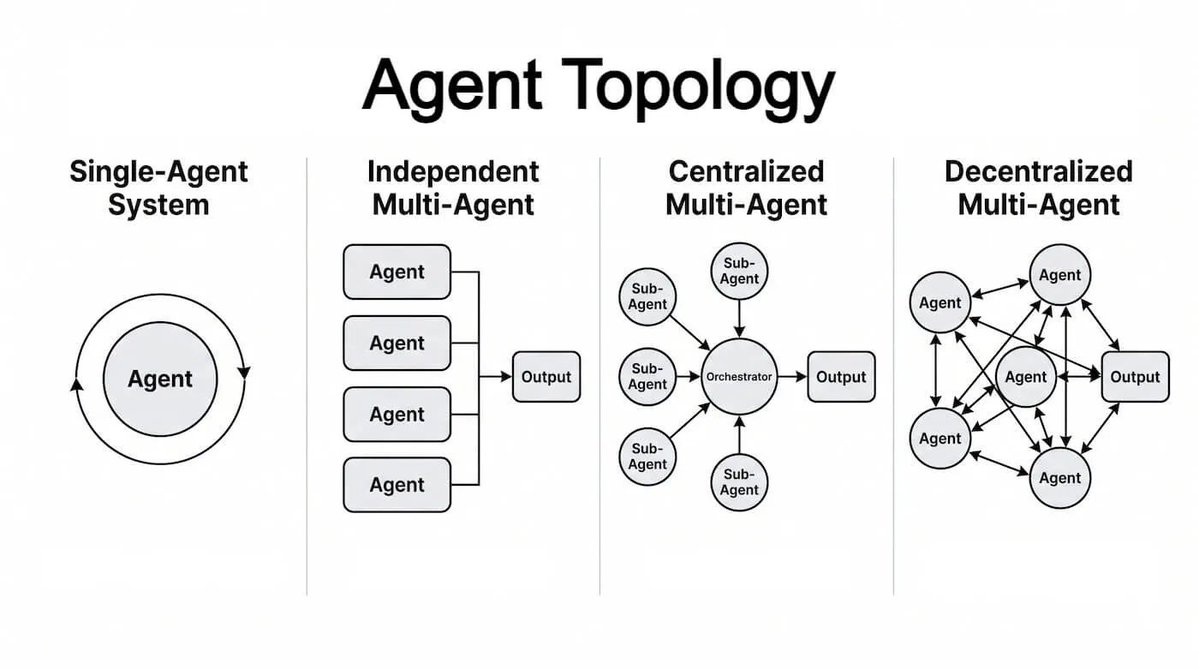
For tasks that are heavily dependent on tools (more than 10) but strictly require a multi-agent setup, developers should default to a decentralized architecture, where agents debate their answers among themselves.
The experiments from the Google/MIT study show that despite the higher overhead, decentralized setups offer superior parallel efficiency with a 66.4% success rate compared to 62.1% for centralized multi-agent systems.
On the other hand, in highly regulated industries like healthcare or finance where strict verification is required, centralized multi-agent architectures offer the best error containment. In this setup, an orchestrator agent controls all sub-agents and cross-checks their reasoning and output before emitting the final response.
“The key differentiator is having a dedicated validation bottleneck that intercepts errors before they propagate to the final output,” the Google/MIT study states.
Developers building these centralized systems must explicitly program the orchestrator to intercept specific failures. Experiments show that cross-checking reduces logical contradictions by 36.4%, and synthesis by the orchestrator reduces context omissions by 66.8%.
Thanks for reading AlphaSignal! Subscribe for free to receive new posts and support my work.
## The architecture decision matrix
The core principle for developing agentic systems is to treat a strong single-agent baseline as the default starting point, not a weak baseline to be replaced. Developers should only scale complexity when the workload characteristics demand it.
To test architectures internally, developers need to implement a strict evaluation discipline. With open source models, it is easier to measure reasoning traces and control token budgets. With closed models, you have to use workarounds and proxies such as costs and response times. Overall, having a thorough logging system helps keep tabs on the cost/accuracy tradeoffs of your agentic architecture.
Here is how you can map your architecture choices to your workload properties:
- Is the integration tool-heavy (>10 tools)? Build a single-agent system. If a multi-agent system is strictly required, use a decentralized topology for better parallel efficiency.
- Is the system failing due to reasoning depth? Stick to a single-agent architecture, but implement pre-answer scaffolding in your prompts to force the model to compute longer.
- Is the system failing due to context degradation? If you are passing massive, noisy, or contradictory inputs that break a coherent context window, move to a multi-agent system for filtering and structuring.
- Are there natural decomposition boundaries? If sub-tasks can be processed entirely independently, move to a multi-agent system. If tasks need to be accomplished sequentially, stay with a single-agent design.
- Does the output require strict regulatory verification? Move to a centralized multi-agent system and program the orchestrator to aggressively check for logical contradictions and context omissions before aggregating the final output.
Follow @AlphaSignalAI for more content like this.
Subscribe at AlphaSignal.ai for daily AI signals. Read by 280,000+ developers.
## 相关链接
- [AlphaSignal AI](https://x.com/AlphaSignalAI)
- [@AlphaSignalAI](https://x.com/AlphaSignalAI)
- [1.9K](https://x.com/AlphaSignalAI/status/2052025703999131818/analytics)
- [recent study](https://app.alphasignal.ai/c?uid=34c8FaDCpqXjJcUD&cid=3261529b8743f95c&lid=S5UgHcP8eDnBooJ7&mid=df1d39b7-26e6-419f-883f-201dfcfe2052)
- [separate study](https://app.alphasignal.ai/c?uid=34c8FaDCpqXjJcUD&cid=3261529b8743f95c&lid=42cHkuow20dQy0BW&mid=df1d39b7-26e6-419f-883f-201dfcfe2052)
- [@AlphaSignalAI](https://x.com/@AlphaSignalAI)
- [AlphaSignal.ai](https://alphasignal.ai/)
- [Upgrade to Premium](https://x.com/i/premium_sign_up)
- [10:00 PM · May 6, 2026](https://x.com/AlphaSignalAI/status/2052025703999131818)
- [1,948 Views](https://x.com/AlphaSignalAI/status/2052025703999131818/analytics)
---
*导出时间: 2026/5/7 09:02:56*
---
## 中文翻译
# 如何在单智能体与多智能体解决方案之间做出选择
**作者**: AlphaSignal AI
**日期**: 2026-05-06T14:00:27.000Z
**来源**: [https://x.com/AlphaSignalAI/status/2052025703999131818](https://x.com/AlphaSignalAI/status/2052025703999131818)
---

大语言模型(LLM)的进步已经跨越了某个临界点,如今构建复杂的多智能体系统以解决难题已成为可能。然而,并非每个问题都需要复杂的解决方案。
尽管编排多个智能体感觉像是人工智能的最前沿,但它引入了巨大的隐性成本。随着团队急于部署多智能体系统,他们发现自己在消耗 API 预算、对抗延迟以及处理编排开销方面焦头烂额。
事实上,在许多情况下(甚至可能是大多数情况),优化单智能体系统将与多智能体系统持平或表现更佳。以下是关于选择单智能体和多智能体系统的指南。
## 为什么编排不是免费的
斯坦福大学最近的一项研究揭示,许多多智能体基准测试看起来令人印象深刻,仅仅是因为它们在暗中消耗更多的算力。当研究人员控制这些系统的“思考预算”(即确保两个系统使用完全相同数量的 token 进行推理)时,在多跳推理任务中,单智能体系统始终能与多智能体变体相媲美甚至超越它们。

这种情况的发生是因为智能体之间的信息传递会导致有损摘要,并且会累积错误而不是修复它们。斯坦福大学的研究人员指出,每一个额外的智能体都会引入通信开销、更多的中间文本,以及更多导致故障倍增的环节。
谷歌和 MIT 的另一项研究为这一观点提供了确凿的数据支持。他们的研究表明,独立的智能体群可以将基线错误放大高达 17.2 倍。
谷歌和 MIT 的研究人员还发现,“重度依赖工具的任务受多智能体协调开销的影响不成比例。”他们的实验表明,在集成 16 个工具的设置中,单智能体的协调效率达到了 0.466,而多智能体系统下降到 0.074 到 0.234 之间,代表了 2 倍到 6 倍的效率损失。
感谢阅读 AlphaSignal!免费订阅以接收新帖子并支持我的工作。
## 打造单智能体
随着 LLM 有效上下文窗口的稳步增加,单智能体在处理跨越多次交互、文档和工具的长上下文任务方面正变得越来越有效。
正如斯坦福大学的研究建议的那样,“当任务可以在一个连贯的上下文窗口内处理,并且模型能够可靠地使用该上下文时,请保持单智能体。”

然而,斯坦福大学的研究发现,单智能体经常在复杂任务上失败,因为它们返回的答案没有经过足够长时间的任务推理。当这种情况发生时,你不应该直接跳转到多智能体编排。相反,你可以重构提示词,迫使模型将其预算用于回答前的分析。
这种技术涉及提示模型明确识别歧义,列出候选解释,并在做出最终响应之前测试替代方案。这迫使模型在单个上下文中思考更长的时间。斯坦福大学的研究指出,“当思考通道被更有效地利用时,一些归因于协作的好处可以在单智能体设置中恢复。”
## 何时真正需要多智能体
当有效上下文使用率下降时,单智能体系统就会碰壁。如果工作负载涉及大规模、嘈杂或部分矛盾的检索增强生成(RAG)数据,且这些数据破坏了连贯的上下文窗口,那么多智能体系统对于过滤和结构化这些噪声是合理的。
谷歌和 MIT 的研究也确定了一种“能力饱和”效应。当单个智能体在任务上遇到困难时,多智能体系统可能会被证明是有用的。根据经验,他们发现,只要单个智能体在任务上的准确率低于 45%,使用多个智能体就可以提高性能。
此外,如果一个任务可以高度分解为独立的子任务,例如金融智能体将收入分析和市场比较分开,那么多智能体协调仍然能提供实质性的价值。

对于严重依赖工具(超过 10 个)但严格要求多智能体设置的任务,开发人员应默认采用去中心化架构,让智能体之间相互辩论答案。
谷歌/MIT 研究的实验表明,尽管开销较高,但去中心化设置提供了卓越的并行效率,成功率为 66.4%,而集中式多智能体系统为 62.1%。
另一方面,在医疗保健或金融等受到严格监管的行业,需要严格的验证,集中式多智能体架构提供了最好的错误遏制。在这种设置中,一个编排器智能体控制所有子智能体,并在发出最终响应之前交叉检查它们的推理和输出。
“关键的区别在于拥有一个专门的验证瓶颈,在错误传播到最终输出之前拦截它们,”谷歌/MIT 的研究指出。
构建这些集中式系统的开发人员必须显式编程,让编排器拦截特定的故障。实验表明,交叉检查将逻辑矛盾减少了 36.4%,编排器的综合处理将上下文遗漏减少了 66.8%。
感谢阅读 AlphaSignal!免费订阅以接收新帖子并支持我的工作。
## 架构决策矩阵
开发智能体系统的核心原则是将强大的单智能体基线视为默认的起点,而不是要被替换的弱基线。只有当工作负载特征需要时,开发人员才应增加复杂性。
为了在内部测试架构,开发人员需要实施严格的评估纪律。对于开源模型,更容易测量推理轨迹和控制 token 预算。对于封闭模型,你必须使用变通方法和代理指标,如成本和响应时间。总的来说,拥有一个完善的日志系统有助于监控智能体架构的成本/准确性权衡。
以下是如何将架构选择映射到工作负载属性的方法:
- 集成是否重度依赖工具(>10 个工具)?构建单智能体系统。如果严格要求多智能体系统,请使用去中心化拓扑以获得更好的并行效率。
- 系统是否因推理深度而失败?坚持单智能体架构,但在提示词中实施回答前的脚手架(Scaffolding),以迫使模型计算更长时间。
- 系统是否因上下文退化而失败?如果你传递的是大规模、嘈杂或矛盾的输入,且这些输入破坏了连贯的上下文窗口,请转向多智能体系统进行过滤和结构化。
- 是否存在自然的分解边界?如果子任务可以完全独立处理,请转向多智能体系统。如果任务需要按顺序完成,请保持单智能体设计。
- 输出是否需要严格的监管验证?转向集中式多智能体系统,并编排编排器程序,在聚合最终输出之前积极检查逻辑矛盾和上下文遗漏。
关注 @AlphaSignalAI 以获取更多此类内容。
在 AlphaSignal.ai 订阅以获取每日 AI 信号。超过 280,000 名开发者正在阅读。