Inside Kimi: 100 Hours of Observation ✍ Liu Mo🕐 2026-07-22📦 41.6 KB 🟢 已读 𝕏 文章列表 本文讲述了作者深入 AI 独角兽 Moonshot AI(Kimi 母公司)内部进行 100 小时的观察记录。文章回顾了公司从早期的营销挣扎到面对竞争对手 DeepSeek 突围时的战略调整,展现了这家年轻、高估值且充满内向天才员工的神秘企业文化。 KimiDeepSeekLLM人物企业文化创业人工智能月之暗面观察报道 # 100 Hours Inside Kimi **作者**: Rui Ma **日期**: 2026-04-01T07:38:24.000Z **来源**: [https://x.com/ruima/status/2039245985520681257](https://x.com/ruima/status/2039245985520681257) --- 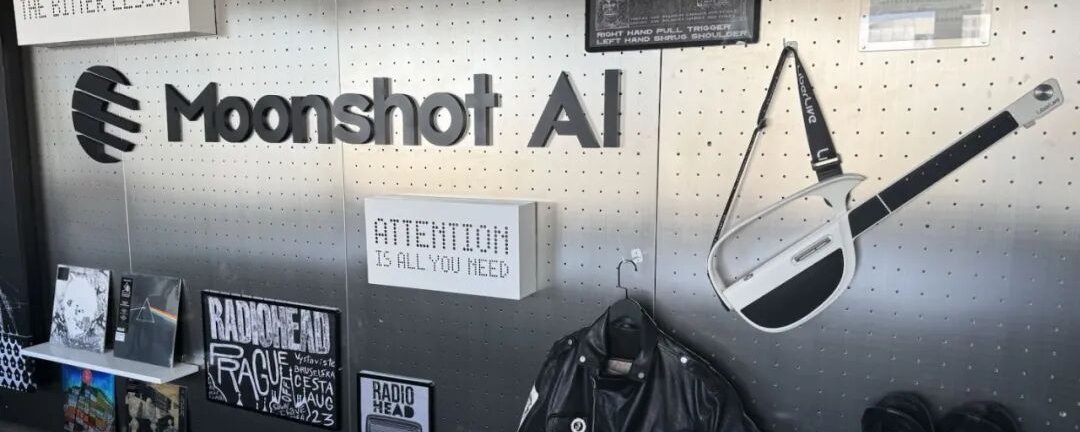 This is a translated article from Chinese, originally published by Renwu, a respected Chinese magazine known for reported features and profile writing. It has been adapted for readers who may not know the Chinese context, company culture, or references. I’ve made it more readable, added brief context where needed, and smoothed some phrases that would sound strange if translated directly. By Liu Mo Edited by Jin Zha Originally published in Chinese by Renwu (人物) on March 31, 2026 Spring 2026 has been unusually kind to Kimi. In just a few months, the company behind Kimi seemed to hit one milestone after another. Its revenue, fundraising, and valuation all kept breaking records. A research paper co-authored by a 17-year-old high school intern received praise from Silicon Valley figures including Elon Musk. And Cursor, the U.S. coding startup valued at around $50 billion, was accused by Chinese observers of essentially “wrapping” or heavily relying on Kimi’s model as part of its own product experience. In other words, Kimi suddenly seemed to be winning on all three fronts at once: capital, technology, and commercial traction. This startup is only three years old. Its valuation has already surpassed RMB 120 billion, or roughly $16 billion. It is becoming impossible to ignore in the global AI story. And yet Moonshot AI, the company behind Kimi, remains deeply mysterious. I was given permission to spend 100 hours observing the company from the inside. As an independent writer, I was allowed to interview any employee willing to talk, sit in on any meeting that did not involve trade secrets, and write freely afterward. No one would edit my work. I would not be paid. That, it turns out, is very much in character for this company. Inside the office, it feels like standing in the eye of a storm. At the center, everything is strangely still. The desks are quiet. Only scattered keyboard sounds break the silence. Occasionally you hear someone laugh. But the noise outside, the rumors, arguments, hype, imitation, and endless commentary, seems to leave no trace here. There are just over 300 employees. Their average age is under 30. Each person, if you divide the company valuation by headcount, is effectively carrying close to RMB 400 million in enterprise value on their shoulders. About 80% of the staff are what Chinese internet slang calls “I people,” meaning introverts, borrowing from MBTI language. People sit side by side, but they are more comfortable typing than talking. Here, introversion is not treated as a flaw. It is almost an operating protocol. I thought back to my first visit in 2024, on a night when the storm was only beginning to gather. At the time, I did not come away with a particularly positive first impression. ## “DeepSeek saved us”  The night of December 24, 2024, was Christmas Eve, though for most people in China it was not a holiday that mattered much. For Julian, it became one of the darkest nights of her life. She was 26, had graduated from Peking University only two years earlier, and had no prior industry experience. Yet she was already one of the earliest employees at Kimi. That night, this very young yet already “senior” employee sat at the long table in a conference room called Radiohead, crying in front of more than 30 colleagues. She still had not delivered a holiday marketing plan that met the standards of the co-founders. Chinese New Year was only a month away. The latest plan had already been revised six times, and now it needed to be upgraded again, perhaps even scrapped entirely. The odds of rebuilding it from scratch and then coordinating product and engineering to execute it in time were slim. But the company had high hopes for growth during the 2025 Lunar New Year period. That mattered because the previous Lunar New Year had been a breakthrough moment for Kimi. It had gone viral in China thanks to its branding around handling “2 million Chinese characters of long-context input,” which was unusually advanced at the time. Consumer users surged, and in the Chinese stock market people even started talking about “Kimi concept stocks,” meaning public companies loosely associated with the trend. That weekly meeting was long and brutal. Around 20 young employees, most as inexperienced as Julian, took turns reporting on everything: social media ads, user operations, PR in China, overseas marketing, all the details. The group discussed everything collectively, and the co-founders made the final calls. Kimi at that point felt like an adolescent: talented, full of potential, but not yet fully in control of itself. Even with a monthly advertising budget of tens of millions of RMB, it still looked clumsy in the face of fast-rising competitors. The meeting ended around 4 a.m. No one knows whether Julian’s final plan would have succeeded. A month later, it no longer mattered. That was when the world first heard the name DeepSeek. Hayley, who worked on growth, went home to Wenzhou for the holiday and found that relatives and friends all asked the same question: “Have you heard of DeepSeek?” It was as if Kimi had suddenly become yesterday’s news. She says that was the hardest Lunar New Year of her life. The silence inside the company was deafening. The annual company meeting is usually held in March, after the holiday. Employees are allowed to challenge management directly. That year, almost every question revolved around DeepSeek. The sharpest question came from the HR team. With complete sincerity, they said the uncomfortable thing out loud: “How are we supposed to answer candidates when they ask: DeepSeek also gave me an offer. Why should I join Kimi instead?” But not everyone reacted the same way. Alex from the algorithm team says that if he felt any strong emotion during the “DeepSeek moment,” it was not fear. It was excitement. That feeling was not just personal. It reflected the mood of much of the algorithm team. DeepSeek had shown that there might be another way: lower-cost strategies, open-source approaches, and a truth many people had doubted before. A little-known Chinese startup, if its technology was strong enough and its model was good enough, could still earn global respect. The product team was not especially anxious either. Kevin, one of the earliest product employees, believed that DeepSeek had broken out because of its model. Once Kimi’s own model capabilities caught up, he believed the product team would have even more room to build useful features on top. No outsider knows exactly what discussions the co-founders had. But the company moved quickly. It adjusted strategy, narrowed focus, and reached something close to full internal alignment. Ask almost anyone inside the company what matters most now, and they will answer without hesitation: the model. From then on, you could feel a growing respect for DeepSeek inside Kimi. Part of it was professional admiration. Part of it was something else. As Alex put it: “In a way, DeepSeek saved us.” ## Taste is all you need “Why are you wearing shoes like that?” After Ezra asked me that, I was more surprised than she was. On her floor of the office, almost everyone keeps a pair of slippers under the desk. Comfortable clothes and shoes, people believe, make you more relaxed, more focused, and more creative. This is the dress code of smart people. I have met many high-achieving students in my life. But the “good students” here are a very different species. When Ezra was in elementary school, she tried to hack the family computer because her parents would not tell her the password. In middle school she became interested in Bitcoin, when one coin cost only a few hundred RMB. She asked her mother for spending money to invest; her mother told her it was a scam. In high school, the first time she ever took a taxi, she sketched out a ride-hailing product concept. Had today’s AI tools existed back then, she says, maybe she could have launched it. Once she finally had some money of her own in college, she put it into the Chinese stock market and lost 90%. That disaster taught her something about the limits of human judgment, and pushed her toward AI. Her view of AGI, or artificial general intelligence, is simple: create “N Einsteins” and use them to solve humanity’s hardest problems. From that point on, she became determined to find a company that would truly push the limits of AGI. This was despite the fact that she had already made her investment losses back in the stock market. Because of her strong academic background, she received offers from many companies. She chose Kimi for one reason: during the interview, she was deeply impressed by founder Yang Zhilin’s understanding of technology and his seriousness about details. She felt he genuinely cared about models. He did not have the restlessness often seen in smart people, nor the utilitarian instinct common in businesspeople. In fact, by the end of the interview, she still did not know he was the founder. Karen’s personality is different but leads to a similar place. He was rebellious from childhood. He argued with teachers. He never listened to his parents. As a student, he insisted on going abroad. After graduating, he insisted on starting a business. The comfortable and stable life offered by a big Chinese tech company made him despair. He did not want a life whose ending was visible from the beginning. I asked him: if given the choice between a guaranteed 60 out of 100, and a 1% chance at 100 out of 100, which would you choose? He chose the latter without hesitation. It was not that he could not tolerate a score of 60. He just hated the certainty of that 100% path. That founder-like DNA forms part of the company’s underlying texture. By rough internal count, at least 50 people at Moonshot AI have founded or joined startups before. Kimi, apparently, likes hiring CEOs. A more accurate way to put it is this: the company shelters a rotating population of gifted drifters. A genius is not necessarily a top student or model employee. What matters is that in some dimension, they can see through time. At a company where around 80% of employees come from China’s elite “985” and “211” universities, Yannis’s résumé does not look especially impressive. Yet as early as 2023, he had already predicted in engineering communities that both DeepSeek and Kimi would rise, at a time when model companies barely had products at all. Another employee, himself born after 2000, noticed Yannis’s insight and recommended him internally. Karen says too many smart people get trapped by systems. First the family, then school, then the workplace. They obey group expectations without realizing it and lose sight of what they actually want. Only a small number try to escape, and even they often go unseen. One of Kimi’s missions, he says, is to see them. Without that instinct, a 17-year-old high school student would never have been brought in as a Kimi intern, collaborated with the team, and published a paper that later drew praise from Elon Musk. The person who put that student’s name first on the paper was Bob, the mentor who first spotted him. There is only a thin line between genius and madness. When an “ununderstood madman” arrives at Moonshot AI, he may suddenly become a world-changing genius. Or perhaps some still-hidden genius can only truly bloom in a place like this. Bob told me that, to some extent, having a big ego is not a problem. It may even be a good sign. If that ego functions as inner drive, if someone believes they must be part of a great mission, that may be exactly the sort of person the company cannot afford to miss. Geniuses are obsessive. Inside this team, training a top AI model is jokingly called “alchemy,” a common Chinese tech term for the mysterious, half-scientific, half-artistic process of model training. But in practice, alchemy means constantly fixing bugs. Once a flagship training run begins, Bob and his teammates fall into the same ritual. The first thing they do every morning is refresh the company’s massive set of internal monitoring dashboards. Hundreds of thousands of metrics. If even one curve spikes abnormally, alarms go off in their heads. Was there a problem in optimization? A flaw in the architecture? A mismatch in numerical precision? They react with almost animal sensitivity. Some people even inspect training data token by token, printing out those that produced extreme gradients and interrogating them like suspects: why did you jump so violently? Everyone who has ever truly participated in “delivering” one of these models has lived through this kind of sleepless tension. It is not really anxiety. It is curiosity driving obsession. That obsessive vigilance is part of what pushed the model toward top-tier performance. Geniuses cluster. Over the past year, more than 100 of Kimi’s hires came through referrals, friends or friends of friends. Inside the company, this is jokingly called “human-to-human transmission.” Trust, because of these dense networks, becomes a natural organizational asset. In essence, Kimi shifts the hardest part of management onto recruiting. If people are brought in by trusted peers, they are more likely to share the same instincts. This is why one word comes up over and over inside the company: Taste. One night in September 2025, several engineers casually launched a small internal project and named it Ensoul. They wanted code sleeping inside files to “come alive” and become a conversational assistant inside the command line. This sensitivity to naming is not accidental. They once had a framework called YAMAHA, short for “Yet Another Moonshot Agent.” Their deepest infrastructure layer was called Kosong, which means “empty” in Malay, inspired by the Buddhist phrase “emptiness is form.” It was meant to suggest a blank sheet of paper with no pre-assigned function, but infinite potential. Taste, in other words, shapes the product itself. While many other companies were shoving chat windows into the command line, Kimi’s engineers thought that was ugly. Real programmers open a terminal to issue commands, not to chat. So Kimi CLI was designed to feel more like a smart shell than a chat interface. It understands commands, but does not force itself into the shape of a conversation box. This minimalism is visible in the code too. The core logic is only about 400 lines of Python, stripped of all unnecessary ornament. The modules are cleanly decoupled. Users can customize functions themselves, or take Kimi apart and reassemble it into their own applications. Even Kimi Agent was once internally associated with the phrase OK Computer, a Radiohead reference, though that name was later changed because it was too obscure for wider adoption. The people who chose names like that did not seem especially interested in maximizing internet traffic. They obeyed their own musical taste and linguistic standards instead. Someone joked that if you measured AI companies by the share of employees who play musical instruments, Kimi might rank first. Taste has become the highest hiring standard, and also the hardest to define. It cannot be quantified, but it is everywhere. ## Generalize, then evolve You may never fully understand what each person at Kimi actually does. The company likes using the word “team” instead of department. At a high level, the main areas are clear enough: algorithms, product and engineering, growth, strategy, operations. But once you try to zoom in and map actual departments or fixed responsibilities, things start to blur. That is because this is an organization with no formal departments, no hierarchy, no titles, no OKRs, and no KPIs. Reporting lines are so simple that they feel almost unreal. For Brandon, this made no sense at all. He had studied at Tsinghua, held management roles at Silicon Valley giants and major Chinese tech firms, and helped build a startup worth around $1 billion. He had spent years in the industry and excelled at technical management. He had led teams of nearly 1,000 people. He hoped to enter AI and apply that experience at scale. Instead, co-founder Zhang Yutong told him that the company did not work that way. The number of people he would likely manage, if he joined, was about two. Still, something about the future pulled him in, and he wanted one more conversation. So in January 2025, during a period of internal doubt and unrest, Brandon met Yang Zhilin, his younger schoolmate from Tsinghua. At the time, Brandon had no idea that Yang’s name would eventually be mentioned in media stories alongside Elon Musk and Jensen Huang. What he remembers most is the very first sentence Yang said after basic greetings: “Reinforcement learning is the future.” The rest of the conversation felt almost like Yang thinking out loud. He was so immersed in his own line of thought that Brandon could not understand much of what he was saying, even though it was all in Chinese. But one thing was unmistakable: for the first time, Brandon felt the knowledge structure and mental models he had built over the past 20 years starting to collapse. Along with them went his ego. When I asked why he eventually joined, he replied in a slightly mysterious tone: Yang Zhilin might become a great prophet, because he is both far-sighted and pure. Later, when the company hesitated because it did not really know how to define his role in such a title-light system, Brandon replied firmly: “Even if you make me clean toilets, I’ll come. And I’ll clean them better than anyone.” Not every former big-tech manager or expert thrives in this environment. Phoebe, born after 2000, moved from the growth team into product and engineering. She describes herself jokingly as “a clueless little girl,” but says something important: in this company, deep experience and strong credentials can actually become a burden. AI is too new. The field is changing too fast. A highly experienced expert may not learn and adapt as fast as a younger person with fewer assumptions. She has seen at least three mid-level or senior big-tech hires fail to “land” after joining. One eventually chose to leave the industry altogether, saying the people around him were just too young and too smart. After being repeatedly outperformed, he gave up. This, he decided, was no longer his era or his industry. After the DeepSeek shock, Phoebe also felt a deep sense of crisis. She decided to abandon ad-buying work and instead try to help the company through product and engineering. She began an intense period of self-study, even streaming herself learning on Bilibili for hundreds of hours. What surprised her most was that the company, from the start, gave her the chance to switch roles without much hesitation. In fact, among the thirty employees I interviewed, more than half had changed responsibilities multiple times. Compared with their previous jobs, perhaps 80% were now doing something completely different. Kimi likes people with generalization ability. In AI, generalization means a model can perform well in new scenarios beyond its training data. It has not merely memorized answers; it has learned underlying structures. The company applies this idea to people too. Mid-level and senior employees from giant firms may have spent too long optimizing for a particular KPI system, a particular reporting language, a particular internal political game. Their “algorithm” becomes overfit to one local optimum. When the environment changes completely, they may fail to adapt. If traditional big-tech workers are like specialized models, then the people Moonshot AI wants are more like base models. First they learn basic rules through supervised fine-tuning. Then, through reinforcement learning and repeated self-play across many tasks, they acquire the ability to transfer across domains. James, a returnee from Silicon Valley, is 26 and says his dream is “to give money to young people.” As a devout believer in AI, he sees his own body as little more than a sensor for an agent to collect information. When playing League of Legends with friends, he records voice and collects physiological data like heart rate and pulse, then analyzes which teammate’s comments affected his emotional state and game performance. His views are so sharp they verge on extreme. He says: if a person starts learning a truly new language after age 14, they will never master it at a native level. AI, he argues, works similarly. Dan, who joined the company right after graduation, says that for the first time in his life he felt true knowledge anxiety. At school, he had only ever worked on “toy models,” around 7 billion parameters, which could be trained in a few days on 32 GPUs. Now he was handling enormous Mixture-of-Experts models with tens of billions of parameters and training datasets measured in trillions of tokens. It felt like jumping straight from a small pond into the Pacific Ocean. To keep up, he threw himself into near self-abusive study. His schedule collapsed. Beijing daytime became Silicon Valley nighttime, then reversed. He stared at training dashboards for hundreds of hours, like a stock trader watching markets with no room to blink. The real challenge was not just workload. He had to do three jobs at once. He had to be an algorithm architect, designing the best plan through a maze of model choices. He had to be a systems engineer, debugging distributed computing problems like a mechanic repairing a pipeline stretched across the globe. He had to be a data curator, performing “alchemy” on giant datasets so the model would score well on benchmarks while also feeling natural and soft in actual conversation. Sometimes that meant emergency surgery mid-training. At one point, key parameters stored in bf16 precision started behaving dangerously. The team made a snap decision to switch to fp32 precision halfway through training, just to stabilize the run. Dan says that if all you can do is write algorithms, or build systems, or clean data, you will never produce a top model. There is no excuse here of “I only handle this part.” The company expects you to integrate algorithm, engineering, and data work across multiple worlds. It is like doing several jobs at once. But that kind of intense cross-training can give you years’ worth of growth in a very short time. So anyone trying to join Kimi faces a brutal test. There are no OKRs, no KPIs, no office politics, no manipulative managers, not even clock-in attendance. But if you are not AI-native, if you cannot generalize, if you cannot continuously reinforce and adapt, then you may struggle to find meaning for your existence here. ## “There’s no bureaucrat smell here” Most brands want a story. But nearly every Kimi employee gently warned me: don’t write about Pink Floyd, or the piano near the office entrance. Their view is that people who get it, get it. People who don’t, don’t need to. The names Moonshot and Kimi have nothing directly to do with AI or technology. But if the company talked too much about its connection to rock music or art, it would start to feel self-conscious and pretentious. Better, they seem to think, to be beautiful without trying to explain the beauty. Win, another post-2000s employee who had escaped from a giant tech company, told me this place is bizarre because people can actually get work done without endless meetings. At his former employer, daytime was for meetings and nighttime was for work. He learned a simple lesson: if your energy goes mainly into coordinating relationships around production, there is very little room left to improve actual productivity. This is part of what an AI-native organization looks like. More than ten employees told me explicitly that they increasingly prefer dealing with AI over dealing with humans. AI feels more reliable and simpler. That tendency also fits the company’s broader introverted character. One person used a gentler word: shy. In group chats, everyone can be lively and expressive. In person, many are quiet. Kimi does not organize many cultural activities. Aside from the annual meeting, the most recent group event had simply been massages in the office. Introversion does not mean a lack of communication or energy. Even though no one was required to talk to me, not a single person said no. In group chats, information flies constantly, along with all kinds of abstract emoji. No one’s messages are left hanging in silence. And if you need help from someone else to get work done, the process is simple: ask them directly. No need to go through a manager. No need for approval. No need for a coordination meeting. No need to break through departmental walls. Kimi has no departmental walls. In some sense, it does not even have departments. Yang Zhilin’s status message is just four words: Communicate directly. Still, everyone acknowledges that the company has changed continuously since its founding. Some changes were proactive, some reactive, and some even seemed like reversals. The company moved from heavy ad spending to model focus, from insisting on closed source to embracing open source, from chatbot products to Kimi Agent, Kimi Code, and Kimi Claw, from consumer to enterprise and back again. Not every shift stands up perfectly to scrutiny. Yet in Ezra’s mind, one thing has remained constant: respect for facts. All those changes, she believes, had only one cause and one purpose: to make the company align better with objective reality. The company tolerates ego, but it does not like hiring people who place themselves above facts. From the co-founders down, people are relatively easy to persuade, as long as the facts are clear enough. That willingness, employees say, comes from an intense commitment to truth, reality, and what is real. Truly smart people are not wounded by honest feedback. Another condition for this level of honesty is that the company has no horse-race system, no zero-sum competition, no major internal conflicts of interest. People willingly share research findings and technical detail without expecting payment or credit. Early on the company had its own community; today it still promotes a community culture. Shared information and shared knowledge speed up everyone’s learning, which in the end benefits everyone. Win says toxic culture is contagious. Good culture is contagious too. Someone used the word “solidarity” to describe the atmosphere, a word that sounds almost old-fashioned when applied to a startup. But the company operates in a harsh environment. Outside are giant competitors. Inside are the pressures of being squeezed by established tech firms. Compute resources are limited. Those constraints, if anything, seem to increase cohesion. At the root of it all, people are the only truly important asset in an organization. Recently, Florence was approached by a competing company offering double her salary. She rejected it immediately. Her reason was simple: “There’s no ‘officialdom smell’ here.” That phrase is hard to translate directly. In Chinese internet slang, it refers to the stale, hierarchical, self-important atmosphere associated with bureaucracy, performative authority, and status games. 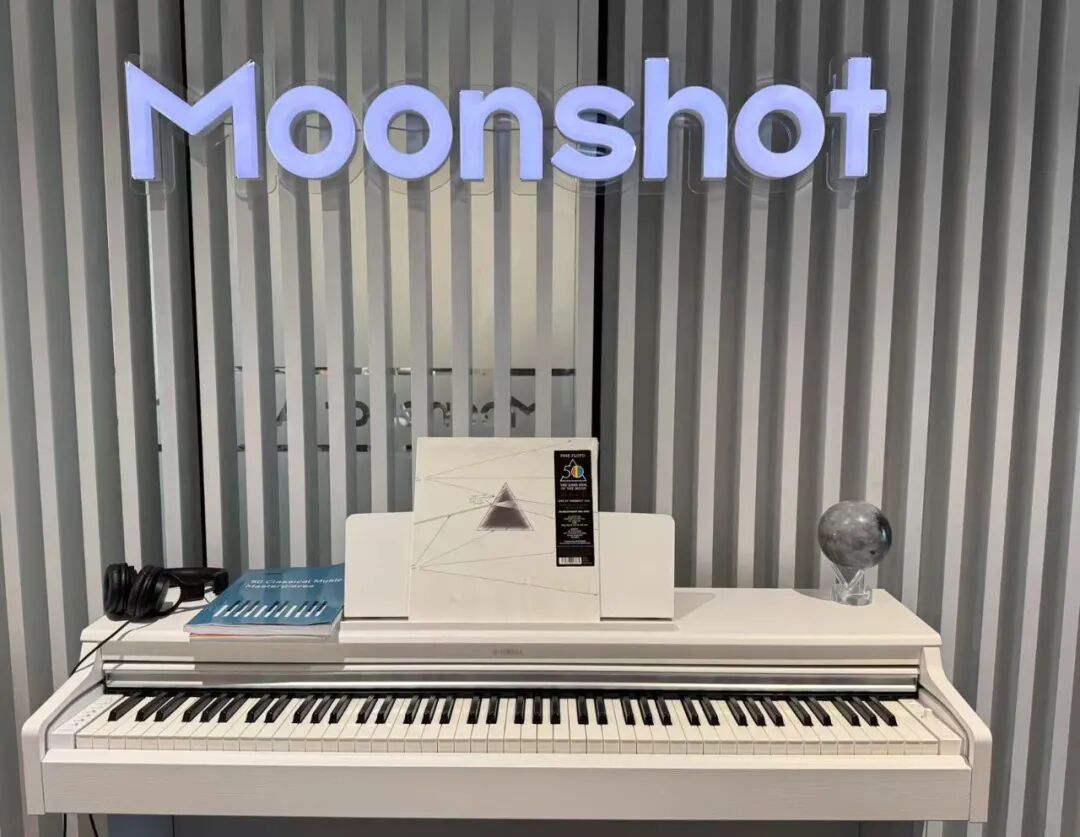 The company's new office. ## “I don’t know how she endured it” At the beginning of this reporting process, I was extremely nervous. I was about to interview some of the smartest AI people in the world. I am a humanities person. I have never worked in tech. My knowledge of AI is limited. But when I actually started talking with young experts from the algorithm and product-engineering teams, I realized they were the ones who seemed nervous. They were afraid I would feel awkward if I did not understand their terminology. So first they would translate English into Chinese, and then translate that Chinese into a second, even simpler Chinese I could understand. That instinct to protect was moving. Before I started the interviews, the company gave me only one instruction: protect everyone. So I tried to avoid questions that were too sensitive or likely to hurt people. Even so, Ty, during a phone interview, could not fully hide a small emotional tremor. When he first joined the company and was going through the difficult onboarding process, he struggled badly. At one point he felt he could not continue and even thought about resigning. Then one week, at the company meeting, he watched Annie, a woman who had graduated only two years earlier, finally push a difficult project forward after countless setbacks and internal doubts. Seeing that, he felt he could not give up either. He was older than she was, had more life experience, yet in terms of sheer stamina and willpower, he felt weaker. He said: “I don’t know how she endured it.” In fact, Ty was not the only one who had thought about leaving. Annie had too. For a long time, she was trying to build a business line overseas from zero to one and made no real breakthrough. To make things worse, colleagues from other teams, with good intentions, directly told her to abandon what they viewed as a meaningless effort. She says she cried more at Kimi than for any other company, or for any ex-boyfriend she had ever had. It was not as though she lacked alternatives. She already had a better-paying offer elsewhere. But she says she simply could not persuade herself to go work for someone else. She wanted one more conversation with Zhang Yutong. Afterward, she decided to stay. She did not tell me what was said in that conversation. She only said: Yutong is the strongest boss I have ever seen, the fastest at iterating, with the highest ceiling. Following her is how I can raise my own ceiling. Then Annie repeated the same line: “I don’t know how she endured it.” Once you gather enough material, you notice certain sentences recurring. And the most repeated phrases often reveal the deepest common qualities of a team. Bob, who had been pulled back to China by Yang Zhilin and gave up the chance to pursue a PhD in the United States, joined the company on day one. If anyone understands the company deeply, he does. When I asked him the same question I asked everyone else, what is the team’s most important quality, he thought for about two minutes and answered with one word: Resilience. For a company only three years old, talking about resilience may sound like a luxury. But he means it sincerely. Smart and brave, he says, are sometimes opposites. The smarter you are, the more clearly you see the risks, and the easier it becomes to walk away. Foolish persistence will not succeed either. So only those who see the truth, calculate the odds of failure, and still continue deserve to be called resilient. Inside the company, there is a story known as “three trips to the cliff of reflection.” In May 2023, Freddie and his colleagues were given a task that seemed impossible: make AI read and understand 128K context in a single pass, meaning hundreds of book pages, at a time when the industry standard was closer to 4K. He quickly designed a solution called MoBA v0.5, but it required rewriting the underlying training framework while the main model was already halfway through training. The cost was too high, so the idea was shelved. That was the first trip to the “cliff of reflection.” Half a year later he returned with version 1, now designed to continue training from the existing model. It worked on small models, but when tested on the large one it hit a loss spike and kept failing. The project was forced back to the cliff a second time, for another six months. It even missed the company’s 200,000-character product milestone. But the team was not disbanded. Instead, the company launched what it called a “saturation rescue,” gathering technical experts from everywhere to attack the problem together. They rewrote core logic and finally got version 2 to pass the classic long-context “needle in a haystack” test. Just when launch seemed close, a third blow arrived. During supervised fine-tuning, the model performed poorly on long-summary tasks because the training signals were too sparse. By then huge resources had already been invested. Still, the engineers went back to the cliff again, searched for a solution, and eventually fixed the issue by changing the attention mechanism in the final layers. Three retreats. Three returns. At the end of the interview, I asked Freddie the ultimate question: how would you describe this company? He answered in two words: Moon landing. Why moon landing? He quoted the famous line from John F. Kennedy: > We choose to go to the moon in this decade and do the other things, not because they are easy, but because they are hard. 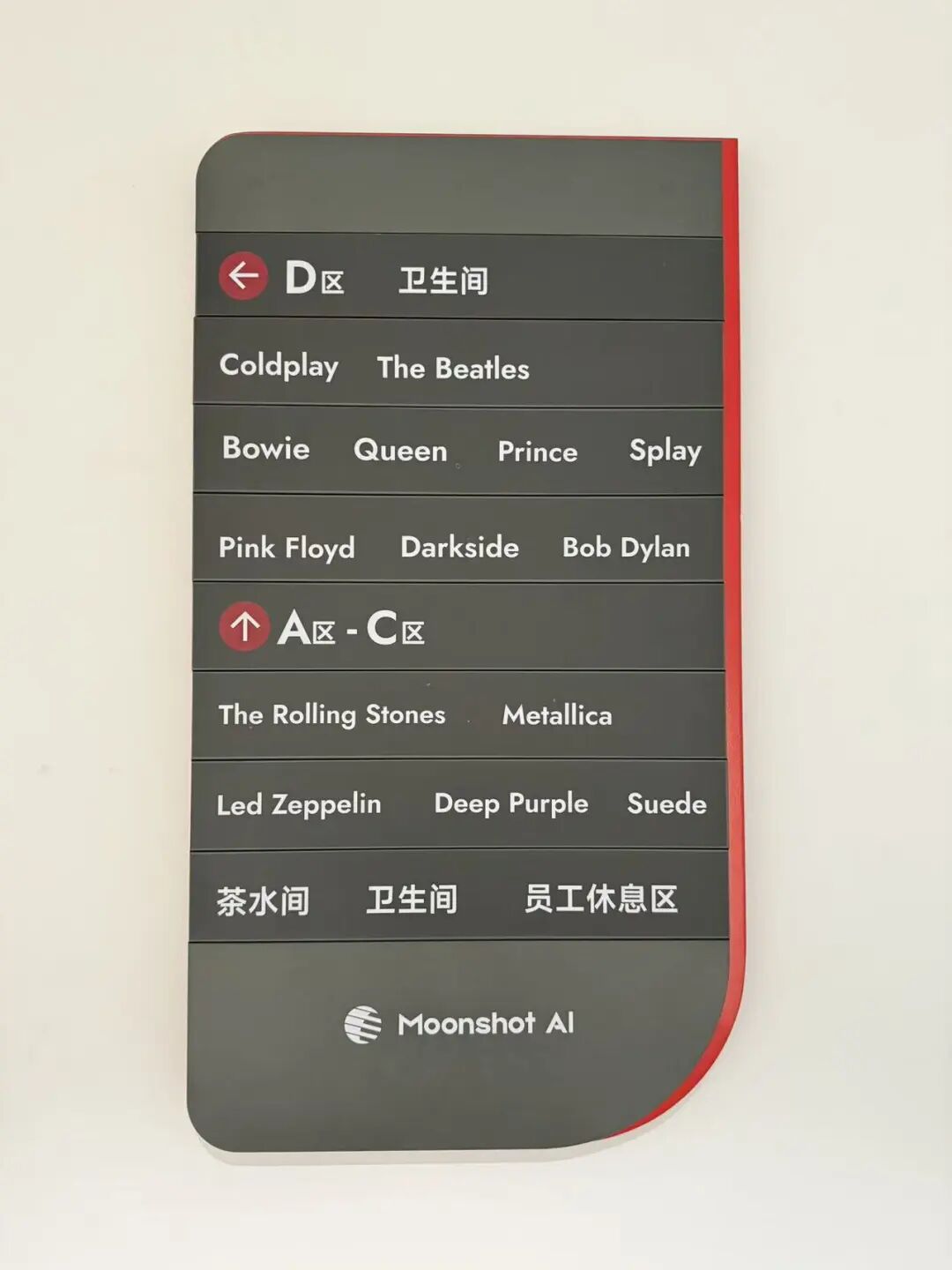 All the company meeting rooms are named after musical acts. ## Genius Swarm In the end, I did not disturb or attempt to probe the co-founders themselves. Externally, they remain almost invisible. They dislike interviews and have no interest in personal fame. Internally, though, they are everywhere. In an extremely flat organization, you need superbrains at the center. Otherwise vitality turns into chaos. Because there is little middle management, each co-founder interfaces directly with around 40 to 50 employees and stays close to both the technical and business front lines. That is how the company keeps decision-making and execution aligned. All five co-founders came from Tsinghua University. But biological limits still exist. Human attention spans are finite. Management range is finite. Once the company reached a RMB 120 billion valuation and grew past 300 people, even these superbrains began to strain under the load. And it is not just the founders. This is an infinite game driven by self-motivation. If every member is effectively carrying RMB 400 million of valuation, then each person is expected to create an extraordinary amount of value. The revolutionary variable is the toolset. Kimi does not actually run on extreme working hours. Employees are allowed to wake naturally. They are not required to stay in the office until dawn every night. Leo from the product team says he commands “an army” now, meaning AI agents. Imagine this scenario: Leo wakes up at 10 a.m. and walks into the office. His task is to analyze user feedback from five global markets over the past 24 hours and decide this week’s product priorities. In the past, that would have taken three people two days. Now he launches three agents. A strategy agent scans 3,000 feedback items and filters for high-priority requests related to long-context interruption. A translation agent interprets Japanese dialect and Korean honorifics in real time and marks true emotional intensity. A competitor agent monitors updates from Cursor and ChatGPT and produces a technical comparison. Leo does only three things himself. He rejects one sarcastic comment that the system had misread as sincere. He flags a screenshot containing an unreleased UI. He confirms the top three needs recommended by the agents. By 11:30 a.m., the product requirements document is already finished. Meanwhile, a coding agent has generated about 70% of the base implementation, leaving only the more creative design work for afternoon discussion with human engineers. Humans set the rules. Silicon-based systems execute them. The organization becomes a container for algorithms. In an AI-native company, using agents skillfully and embedding them deeply into workflows is not optional. It is part of the job. The model is not only the goal. It is also the tool. Whether by directly improving productivity or by fundamentally changing management structure, AI’s logic has already entered the bones of this company. Just as the company builds an Agent Swarm, the team itself begins to resemble a Genius Swarm: many independent geniuses working in parallel, coordinating seamlessly. Still, such a flat structure has built-in fragility. When I asked whether this model would remain sustainable if the company grew from 300 people to 3,000, most people answered cautiously. History is not encouraging. Similar experiments in extreme flatness, like holacracy or Haier’s internal contract-cell structures, often hit decision bottlenecks once they pass around 500 people. When there are too many information nodes, “direct communication” starts turning into information overload. A more immediate pain point is the personal experience of weightlessness. Without hierarchy to buffer uncertainty, confusion about direction is felt directly by each individual. One former employee who eventually returned to big tech put it bluntly: without top-down OKRs and KPIs, some mornings you walk into the office not knowing what you should do. No one necessarily tells you whether you are doing well. That lack of feedback creates insecurity. It can make people nostalgic for the clear reporting lines, review points, and measurable outputs of giant tech companies. Those cumbersome structures, after all, do provide one essential thing: a baseline of certainty. Where is the goal? What counts as completion? How will performance be judged? In a large firm, all that is visible. That is not Stockholm syndrome, the person said. It is basic organizational physics. If Alibaba is like a finely calibrated promotion conveyor belt, ByteDance like a ruthless battle corps with strong objectives, and Tencent like a more forgiving professional academy, then Moonshot AI is like a primeval forest. Geniuses may find a hunting path. Ordinary people may just wander in the fog. ## The necessary “two-dimensional foil” No departments. No titles. No evaluations. The AI-native organizational model is anti-bureaucratic and intentionally unstructured. Large companies can no longer pivot toward it easily. Small companies often miss the window because they expand into traditional structures too quickly. This is an asymmetric war. Here the author turns to a famous science-fiction reference from The Three-Body Problem. In that story, an advanced civilization casually uses a weapon called a two-dimensional foil, which collapses the solar system from three dimensions into two. Planets, stars, and humans all become a flat image without thickness. Moonshot AI, the author argues, is deliberately throwing such a “two-dimensional foil” at itself. Not to destroy an opponent, but to flatten the organization in pursuit of maximum efficiency. No vertical depth of hierarchy. No horizontal walls of departments. No three-dimensional tangles of office politics. Only “model” and “intelligence” facing each other directly in the simplest possible form. In the age of AI, every startup, the author argues, is being forced to throw such a foil at itself. The rise of one-person companies reflects the same generational explosion of AI-native talent. If technology can compress organizational capability into the individual, then many of the middle layers of management simply evaporate. The organization gets flattened. There is no depth left for detours. Everyone is forced to face the problem itself. That may be the hard rule governing the evolution of organizations in the business world. Everyone, eventually, will be folded. Once people are exposed on the same plane, one person radiating influence over fifty others no longer looks like a managerial miracle. It becomes normal. The distance from center to edge is redefined. People who depend on titles and OKRs as coordinates may suffocate instantly. But geniuses, on this exposed flat surface, can violently dismantle intelligence itself, while the “guardians” clear away noise and entropy, seeing themselves, not without humility, as pioneers widening the boundary of human civilization. And yet the transition from three dimensions to two cannot be reversed. That means Kimi cannot go backward. Every strategic adjustment becomes a chaotic iteration with high stakes. Competitors can still turn slowly inside a maze. But if Moonshot AI tries to expand recklessly in size, it may tear itself apart structurally. This act of self-flattening is only acceptable because it is in service of something more radical. The endpoint of lowering the organization’s dimension is raising the dimension of intelligence. Only if model intelligence crosses the critical threshold, rising high enough to escape the gravity well of all carbon-based organizations, can Moonshot AI truly crush the organizational advantages of its competitors and justify this irreversible gamble. At that point, debates over management span or org charts no longer matter. It would be like asking what dimension the Three-Body Problem civilization inhabits, when the real point is that its dimensional weapon has already rewritten the rules of war. Then “Moonshot AI” would stop being a metaphor. It would become a higher-dimensional light source, illuminating the dark side of the intelligence universe. All the organizational pain that came before would be no more than the heat shield burning off as the lunar module passed through the atmosphere. Either they become godlike through ascent. Or they are sealed away in collapse. There is no third path. All of the English names used are pseudonyms. ## 相关链接 - [Rui Ma](https://x.com/ruima) - [@ruima](https://x.com/ruima) - [589K](https://x.com/ruima/status/2039245985520681257/analytics) - [Upgrade to Premium](https://x.com/i/premium_sign_up) - [3:38 PM · Apr 1, 2026](https://x.com/ruima/status/2039245985520681257) - [589.4K Views](https://x.com/ruima/status/2039245985520681257/analytics) - [View quotes](https://x.com/ruima/status/2039245985520681257/quotes) --- *导出时间: 2026/7/22 09:40:16* --- ## 中文翻译 # 在 Kimi 内部的一百个小时 **作者**: Rui Ma **日期**: 2026-04-01T07:38:24.000Z **来源**: [https://x.com/ruima/status/2039245985520681257](https://x.com/ruima/status/2039245985520681257) ---  这是一篇译自中文的文章,原文由《人物》——一家以特稿和人物报道著称的中国杂志——发表。本文针对可能不了解中国背景、公司文化或相关典故的读者进行了改编。我优化了可读性,在必要时添加了简短的背景说明,并润色了一些直接翻译会显得生硬的词句。 作者:刘莫 编辑:金扎 中文原版于 2026 年 3 月 31 日由《人物》发布 2026 年的春天对 Kimi 来说格外仁慈。 仅仅几个月,Kimi 背后的公司似乎接连达成一个又一个里程碑。营收、融资和估值不断刷新纪录。一名 17 岁的高中实习生肖名的论文获得了包括埃隆·马斯克在内的硅谷人士的称赞。而估值约 500 亿美元的美国编程初创公司 Cursor,被中国观察者指责基本上是“包装”了,或高度依赖 Kimi 的模型作为其产品体验的一部分。换句话说,Kimi 似乎突然同时在资本、技术和商业落地这三个战线上取得了胜利。 这家初创公司仅有三岁。其估值已超过 1200 亿元人民币,约合 160 亿美元。在全球 AI 的叙事中,它已不容忽视。 然而,Kimi 背后的公司月之暗面仍然保持着深深的神秘感。 我获准花 100 个小时从内部观察这家公司。作为一名独立撰稿人,我可以采访任何愿意交谈的员工,旁听任何不涉及商业秘密的会议,并在事后自由写作。没有人会审阅我的稿子。我也不会获得报酬。事实证明,这非常符合这家公司的性格。 在办公室里,感觉就像是站在风暴的中心。 在中心,一切异乎寻常地平静。办公桌很安静,只有零星的键盘声打破沉默。偶尔你会听到有人笑。但外界的喧嚣——谣言、争论、炒作、模仿和无穷无尽的评论——似乎在这里没有留下任何痕迹。 公司只有 300 多名员工。平均年龄不到 30 岁。如果将公司估值除以人数,每个人肩上实际上承担着接近 4 亿元人民币的企业价值。 约 80% 的员工是中国网络流行语中的“I 人”,即内向者,借用了 MBTI 的术语。人们并肩而坐,但他们更习惯打字而不是交谈。在这里,内向不被视为缺陷。它几乎是一种运行协议。 我回想起 2024 年我第一次访问的那个夜晚,那时风暴才刚刚开始聚集。当时,我对这家公司的第一印象并不怎么好。 ## “DeepSeek 救了我们”  2024 年 12 月 24 日晚是平安夜,尽管对大多数中国人来说,这并不是一个很重要的节日。对于 Julian 来说,这成了她生命中最黑暗的一夜。 她 26 岁,两年前刚从北京大学毕业,没有任何行业经验。但她已经是 Kimi 最早期的员工之一。那天晚上,这位非常年轻却已经是“资深”的员工,坐在一间名为“Radiohead(收音机头)”的会议室的长桌前,在 30 多位同事面前哭泣。 她仍然没能拿出一套达到联合创始人标准的节日营销方案。 春节只剩下一个月了。最新的方案已经改了六版,现在又要升级,甚至可能彻底废弃。从零开始重建,并协调产品和工程部门按时执行,几率微乎其微。但公司对 2025 年春节期间的增长寄予厚望。 这之所以重要,是因为上一个春节曾是 Kimi 的突破时刻。凭借其“支持 200 万汉字长上下文输入”的定位,它在中国爆火,这在当时是相当先进的技术。C 端用户激增,在中国股市上,人们甚至开始谈论“Kimi 概念股”,指的是那些与该趋势沾边的上市公司。 那周的例会漫长而残酷。 大约 20 名年轻员工,大多数像 Julian 一样缺乏经验,轮流汇报一切:社交媒体广告、用户运营、国内的公关、海外营销,事无巨细。团队集体讨论一切,由联合创始人做最终决定。 那时的 Kimi 就像一个青少年:有天赋,充满潜力,但还未完全掌控自己。即使拥有每月数千万元人民币的广告预算,在面对快速崛起的竞争对手时,它仍然显得笨拙。 会议在凌晨 4 点左右结束。 没有人知道 Julian 的最终方案是否会成功。一个月后,这已经不再重要了。 那是世界第一次听到 DeepSeek 这个名字的时候。 负责增长的 Hayley 回温州过年,发现亲戚朋友都问同一个问题:“你听说过 DeepSeek 吗?”仿佛 Kimi 突然成了旧闻。 她说那是她一生中最难熬的一个春节。公司内部的寂静震耳欲聋。 年会通常在春节后的三月举行。员工被允许直接向管理层提问。那一年,几乎每个问题都围绕着 DeepSeek。 最尖锐的问题来自 HR 团队。他们非常诚恳地,把这件令人不舒服的事情说了出来: “当候选人问:DeepSeek 也给了我 Offer,我为什么要加入 Kimi?我们该怎么回答?” 但并非所有人的反应都一样。 算法团队的 Alex 说,如果在“DeepSeek 时刻”他有什么强烈情绪的话,那不是恐惧。是兴奋。 这种感觉不仅是个人的。它反映了算法团队大部分人的情绪。DeepSeek 展示了另一种可能:更低成本的策略、开源的方法,以及许多人曾经怀疑的一个真理——一家不知名的中国初创公司,只要技术足够强、模型足够好,依然能赢得全球的尊重。 产品团队也并不特别焦虑。最早期的产品员工之一 Kevin 认为,DeepSeek 之所以爆发是因为它的模型。一旦 Kimi 自身的模型能力追上来,他认为产品团队将有更大的空间在其之上构建有用的功能。 外界无人知晓联合创始人之间究竟进行了怎样的讨论。但公司行动迅速。它调整了战略,收缩了焦点,并达成了近乎完全的内部一致。 如今问公司里任何一个人什么最重要,他们都会毫不犹豫地回答:模型。 从那时起,你可以感觉到 Kimi 内部对 DeepSeek 产生了一种日益增长的尊重。部分原因是职业上的敬佩。部分原因是别的东西。 正如 Alex 所说: “在某种程度上,DeepSeek 救了我们。” ## 唯有品味 “你为什么要穿那样的鞋?” Ezra 这么问我时,我比她还惊讶。在她那一层的办公室里,几乎每个人的桌子底下都放着一双拖鞋。人们认为,舒适的衣服和鞋子能让你更放松、更专注、更有创造力。 这是聪明人的着装规范。 我一生中见过许多优等生。但这里的“好学生”是完全不同的物种。 Ezra 上小学时,因为父母不肯告诉她密码,她试图黑进家里的电脑。上中学时她对比特币产生了兴趣,那时一枚币只值几百元人民币。她找母亲要零花钱投资;母亲告诉她那是骗局。高中时,她第一次打车,就勾勒出了一个打车产品的概念。她说,如果当时有今天的 AI 工具,也许她就能把它做出来。等到大学终于有了自己的钱,她投入了中国股市,结果亏了 90%。 那场灾难让她明白了人类判断的局限性,并推动她走向 AI。 她对 AGI(通用人工智能)的看法很简单:创造“N 个爱因斯坦”,用他们来解决人类最困难的问题。从那时起,她决心找到一家真正能突破 AGI 极限的公司。尽管她已经在股市里把投资亏的钱赚了回来。 因为她的学术背景很强,她收到了许多公司的 Offer。她选择 Kimi 只有一个原因:面试中,创始人杨植麟对技术的理解和他对细节的认真给她留下了深刻印象。她觉得他是真心在乎模型。他没有聪明人身上常有的那种浮躁,也没有生意人身上常见的功利本能。事实上,直到面试结束,她都不知道他是创始人。 Karen 的性格不同,但殊途同归。 他从小叛逆。和老师顶嘴。从不听父母的话。做学生时,坚持要出国。毕业后,坚持要创业。中国大科技公司提供的舒适稳定生活让他绝望。他不想过那种一眼就能望到尽头的生活。 我问他:如果让你选择,要么保证拿 60 分,要么只有 1% 的机会拿 100 分,你选哪个? 他毫不犹豫地选择了后者。 并不是他不能忍受 60 分。他只是痛恨那条 100% 确定的路径。 这种类似创始人的 DNA 构成了公司质地的一部分。据内部粗略统计,月之暗面至少有 50 人曾经创办过或加入过初创公司。 显然,Kimi 喜欢招聘 CEO。 更准确的说法是:这家公司庇护着一批轮流的、才华横溢的漂泊者。天才不一定是优等生或模范员工。重要的是,在某种维度上,他们能看穿时间。 在这家约 80% 的员工都来自中国顶尖“985”和“211”高校的公司里,Yannis 的简历看起来并不特别出众。然而早在 2023 年,当模型公司几乎还没有产品时,他就在工程社区预测 DeepSeek 和 Kimi 都会崛起。另一名 00 后员工注意到了他的洞察力,并在内部推荐了他。 Karen 说,太多聪明人被系统困住了。先是家庭,然后是学校,接着是职场。他们下意识地服从群体的期望,失去了对自己真正想要的东西的视野。只有少数人试图逃离,而即便这些人,往往也无人看见。 他说,Kimi 的使命之一,就是看见他们。 如果没有这种本能,一名 17 岁的高中生绝不可能被招为 Kimi 实习生,与团队协作,并在后来发表了一篇获得埃隆·马斯克称赞的论文。把那个学生的名字放在论文第一位的人,是 Bob,他是最早发现这名学生的导师。 天才与疯子之间只有一线之隔。当一个“不被理解的疯子”来到月之暗面,他可能会突然成为改变世界的天才。又或者,某些尚未被发现的天才,只有在这样的地方才能真正绽放。 Bob 告诉我,在某种程度上,自我中心(大我)并不是问题。它甚至可能是一个好兆头。如果这种自我意识能成为内在驱动力,如果一个人相信他必须参与一项伟大的使命,那可能正是公司不能错过的那类人。 天才是执着的。 在这个团队里,训练顶级 AI 模型被戏称为“炼丹”,这是中国科技圈对模型训练那种神秘、半科学半艺术过程的常用称呼。但在实践中,炼丹意味着不断地修 Bug。 一旦旗舰模型训练开始,Bob 和他的队友们就会陷入同样的仪式。他们每天早上做的第一件事,就是刷新公司巨大的内部监控仪表盘。几十万个指标。哪怕只有一条曲线异常飙升,他们脑中就会警铃大作。是优化出了问题?架构有缺陷?数值精度不匹配? 他们的反应几乎像动物一样敏锐。 有些人甚至会逐个检查训练数据,打印出产生极端梯度的 Token,像审讯嫌疑人一样盘问它们:你为什么跳得这么剧烈? 每一个真正参与过“交付”这种模型的人,都经历过这种不眠不休的紧张。这并不是焦虑。是好奇心驱动着执念。那种执着的警惕性,正是推动模型走向顶尖表现的部分原因。 天才会聚集。 在过去一年里,Kimi 超过 100 名新员工是通过推荐入职的,朋友或朋友的朋友。在公司内部,这被戏称为“人传人”。 因为这种紧密的网络,信任变成了一种天然的组织资产。 本质上,Kimi 将管理中最难的部分转移到了招聘上。如果人是由受信任的同行引进的,他们更有可能分享同样的直觉。这就是为什么有一个词在公司内部反复出现: 品味。 2025 年 9 月的一个晚上,几位工程师随手发起了一个小型的内部项目,并命名为 Ensoul。他们想让沉睡在文件里的代码“活过来”,成为命令行里的对话助手。 这种对命名的敏感性并非偶然。 他们曾经有一个框架叫 YAMAHA,是“Yet Another Moonshot Agent”的缩写。他们最深的基础设施层叫 Kosong,这是马来语中“空”的意思,灵感来自佛教短语“色即是空”。它意在暗示一张没有预设功能、但拥有无限潜力的白纸。 换句话说,品味塑造了产品本身。 当许多其他公司正把聊天窗口硬塞进命令行时,Kimi 的工程师认为那样很丑。真正的程序员打开终端是为了发指令,而不是聊天。所以 Kimi CLI 的设计初衷是让它感觉更像一个智能 Shell,而不是聊天界面。它理解命令,但不强迫自己变成对话框的样子。 这种极简主义在代码中也可见一斑。核心逻辑只有大约 400 行 Python,剔除了所有不必要的装饰。模块解耦得很干净。用户可以自己定制功能,或者把 Kimi 拆开,重新组装成自己的应用。 甚至 Kimi Agent 也曾与“OK Computer”这个短语联系在一起,这是 Radiohead 的一首歌,尽管后来因为名字太晦涩不利于大众普及而改了名。选择这些名字的人,似乎并不特别在意最大化流量。他们服从的是自己的音乐品味和语言标准。 有人开玩笑说,如果以演奏乐器的员工比例来衡量 AI 公司,Kimi 可能排名第一。 品味已成为最高的招聘标准,也是最难以定义的。 它无法量化,却无处不在。 ## 泛化,然后进化 你可能永远无法完全理解 Kimi 的每个人到底在做什么。 公司喜欢用“团队”这个词,而不是部门。在高层面上,主要领域足够清晰:算法、产品工程、增长、战略、运营。但一旦你试图放大并描绘具体的部门或固定职责,事情就开始变得模糊。 那是因为 t
1 100 小时深入基米:揭秘 Moonshot AI 的极客文化与生存法则 本文通过100小时的内部观察,深入剖析了Moonshot AI(Kimi)独特的企业文化与生存状态。文章记录了公司如何在DeepSeek崛起的压力下调整战略,强调了“模型能力”至上的原则。作者揭示了该公司偏爱具有“概括能力”和“品味”的天才型员工,实行无KPI、无层级的扁平化管理,并详细描述了年轻员工在高强度跨领域工作中的成长与焦虑。这不仅是一家初创公司的生存侧写,也是对AI时代人才组织模式的深刻探讨。 技术 › LLM ✍ Rui Ma🕐 2026-04-01 Moonshot AIKimi公司文化DeepSeek人工智能职场AGI访谈创业模型训练
2 2026年普通人都能上车的AI风口:DeepSeek 创始人梁文锋3小时演讲精华提炼 文章提炼了DeepSeek创始人梁文锋关于AI未来的演讲精华,强调“克制”的重要性。梁文锋指出,想拿得多的人会被想拿得少的人打败。他为AI发展制定了清晰的路径,并建议普通人不要盲目追逐风口,而应注重提升“把话说清楚”和“长期沉淀”的能力,通过行业深耕和AI应用找到属于自己的机会。 技术 › LLM ✍ Gloria🕐 2026-07-24 DeepSeek梁文锋人工智能职业发展创业思维链智能体Coding AgentAI应用克制
与 与杨植麟的第二次对话:站在无限的开端 本文是张小珺对月之暗面创始人杨植麟的第二次深度访谈,发生在Kimi K2模型发布后。文章深入探讨了AI如何通过编码能力突破“缸中之脑”,走向Agent与自我进化,以及杨植麟对技术挑战与创业心境的思考。 技术 › LLM ✍ 张小珺🕐 2026-07-22 杨植麟Kimi访谈Agent技术哲学DeepSeek自我进化创业MoEThe Beginning of Infinity
A A Conversation with Yang Zhilin of Kimi: Advancing Toward the Endless, Unknown Snow Mountains 本文是对月之暗面创始人杨植麟的专访,回顾了他从硅谷回国创业、专注AGI的历程。文章探讨了基础模型公司面临的资本、人才竞争压力,以及Kimi在商业化与理想主义之间的平衡。 技术 › LLM ✍ 张小珺 Xiaojun Zhang🕐 2026-07-19 杨植麟Kimi月之暗面AGI访谈创业基础模型商业化资本技术理想主义
D DeepSeek新论文解读:用“手指着图片思考”的多模态推理框架 DeepSeek发布新论文,提出一种名为“视觉原语”的多模态推理框架。不同于业界卷分辨率的趋势,该模型通过在思维链中嵌入边界框和坐标点,模拟人类用手指着图片思考的过程,有效解决了语言在空间指代上的局限。DeepSeek-ViT配合LLM将视觉Token压缩至竞品的十分之一,但在空间推理、计数和迷宫导航等任务上性能超越GPT-5.4等顶尖模型。 技术 › LLM ✍ 向阳乔木🕐 2026-05-01 DeepSeek多模态视觉推理论文解读Transformer人工智能计算机视觉LLM
L LMArena 最新排名:文心 5.1 预览版国产登顶,文本能力仍是核心 本文基于 LMArena 最新文本排行榜更新,探讨了文心 5.1 Preview 凭借 1476 分拿下国内第一、全球第 13 的成绩。作者分析了为何在 DeepSeek V4 和 GPT-5.5 主导的时代,文本能力依然是大模型代码生成与逻辑推理的“基本盘”。文章指出文心通过「多维弹性预训练」技术实现了高性价比与高性能,验证了夯实文本底座的重要性。 技术 › LLM ✍ huangserva🕐 2026-05-01 LLM文心一言DeepSeekLMArena模型排名文本生成百度人工智能
D DeepSeek新论文解读:让AI像人一样“用手指着图片思考” 文章详细解读了 DeepSeek 关于多模态推理的新论文。该研究提出一种“视觉原语”框架,让模型在推理过程中直接输出坐标和框,像人类用手指指物一样进行空间思考。这种方法仅用传统模型十分之一的视觉 Token,就在计数、拓扑推理等任务上达到了超越 GPT-5.4 和 Claude-Sonnet-4.6 的效果。文章还深入分析了模型在迷宫导航和路径追踪等任务上的数据合成与训练策略。 技术 › LLM ✍ 向阳乔木🕐 2026-05-01 DeepSeek多模态视觉推理论文解读空间推理视觉TokenLLMAgent人工智能模型架构
人 人类最后的职位:上下文耕作 文章探讨了 AI 时代企业与人类角色的根本性转变。随着“代理微公司(AMC)”的兴起,传统的层级制企业将被拥有“公司大脑”的小型团队取代。人类的核心工作不再是执行或决策,而是作为“上下文耕作者”,为 AI 提供高质量的信息环境。文章指出,构建可组合的全球性上下文基础设施将是未来的万亿美元级机会。 技术 › Agent ✍ brett goldstein🕐 2026-04-25 AgentAMC公司大脑上下文未来工作创业组织架构LLM人工智能行业趋势
B BestBlogs 早报|实现周期骤缩后,创业者如何重选问题 本期早报探讨了 AI 智能体缩短实现周期后,创业者的机遇与挑战。文章涵盖 Sam Altman 对创业窗口的判断、GPT-5.6 的效率工程实践,以及如何通过 Skill Harness 将模型能力封装为可维护的产品功能。 技术 › Skill ✍ ginobefun🕐 2026-07-30 GPT-5.6Agent创业效率工程ProductHarnessSkillLLMOpenAI
对 对话姚颂:不想 boring,那就继续开心地 suffering 本文专访了正行创新创始人姚颂,回顾了他从清华本科毕业创立深鉴科技,到3亿美元卖掉公司,再到投身商业航天和物理 AI 的十年创业历程。姚颂分享了对技术创业、战略取舍、人生状态以及硬科技发展的深刻思考。 职场 › 职业发展 ✍ 晚点 LatePost🕐 2026-07-24 姚颂创业深鉴科技人工智能职业发展清华商业航天访谈
杨 杨植麟 GTC 2026 演讲:如何扩展 Kimi K2.5 杨植麟在 GTC 2026 演讲中,详细阐述了月之暗面如何通过重构优化器、注意力机制和残差连接这三大基础组件来提升模型性能。他提出了 MuonClip、Kimi Linear 和 Agent Swarm 等技术方案,旨在让 Token 更值钱、长上下文更有效,并实现多 Agent 协作,从而推动开源模型逼近闭源前沿。 技术 › LLM ✍ 宝玉🕐 2026-07-19 Kimi杨植麟月之暗面优化器长上下文Agent Swarm架构优化开源模型
中 中国四大头部大模型创始人信息 文章梳理了DeepSeek、Kimi、智谱和MiniMax四家中国头部大模型公司的创始人信息,包括年龄、学历背景及身家估值,并探讨了学历与家庭背景对成功的影响。 技术 › LLM ✍ 0x鸣人🕐 2026-07-19 大模型创始人DeepSeekKimi智谱MiniMaxAI人物背景