# How to Build & Sell AI Automations That Generate $10K Per Month (Full Course)
**作者**: Khairallah AL-Awady
**日期**: 2026-05-02T09:21:11.000Z
**来源**: [https://x.com/eng_khairallah1/status/2050505874125529592](https://x.com/eng_khairallah1/status/2050505874125529592)
---
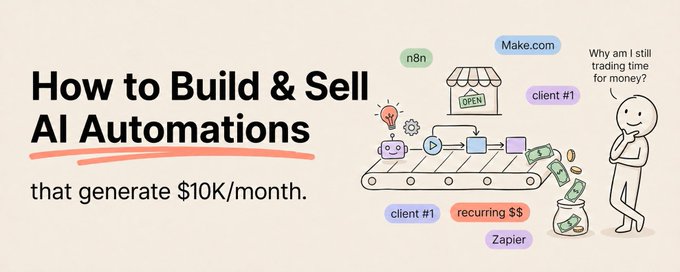
There is a massive gap in the market right now, and it is growing every single week.
Save this :)
On one side you have millions of businesses that know AI can save them time and money but have absolutely no idea how to implement it.
On the other side you have a tiny number of people who know how to build Claude workflows, set up MCP servers, design skill files, and create automations that genuinely save 10-20 hours per week.
The people on the builder side are charging $3,000 to $15,000 per project and have more demand than they can handle.
This is the full course on how to become one of those people. Not in theory. Not "someday." This month.
Why This Opportunity Is Bigger Than Most People Realize
Every business has the same problem. They have 5 to 15 tasks that eat hours every week. Research. Reporting. Content creation. Data processing. Customer responses. Document preparation. Email management.
These tasks are predictable, repeatable, and process-driven. They are perfect for AI automation.
But here is the thing. The business owner does not know how to automate them. They tried Claude once, got a generic answer, and concluded that AI is not ready. They do not understand skill files, context engineering, MCP servers, or workflow design.
You do. Or you will by the end of this article.
And the willingness to bridge that gap between "AI exists" and "AI is doing the work" is worth $5,000 to $15,000 per engagement.
Phase 1: Build Your Automation Toolkit (Week 1-2)
Before you sell anything, you need to be genuinely good at building automations. That means mastering four core skills.
Skill 1: Context File Design
Every automation starts with context. You need to be able to interview a client, understand their workflow, and translate their world into a context file that makes Claude produce industry-specific, voice-matched, high-quality output.
Practice: Build 3 context files for 3 different hypothetical businesses in 3 different industries. A real estate agency. A marketing consultancy. An e-commerce brand. Each one should contain: business description, audience profile, voice and tone, current projects, and quality standards.
Skill 2: Skill File Architecture
The skill file is the engine of every automation. You need to be able to design workflows that Claude follows reliably. Process steps, output formats, edge case handling, quality checks, and error recovery.
Practice: Build 5 skill files for 5 different tasks. A weekly report generator. A content repurposer. An email response drafter. A competitive analysis system. A meeting prep workflow. Test each one 10 times with different inputs. Refine until they work reliably.
Skill 3: MCP Server Setup
Connecting Claude to external tools is what separates a chatbot from an automation system. You need to be comfortable setting up Tavily for web search, Google Drive for file access, Gmail for email, and Slack for communications.
Practice: Set up all four MCP servers on your own machine. Build one workflow that chains all four: search the web for information, save a summary to Drive, email it to yourself, and post a notification to a Slack channel.
Skill 4: Scheduled Automation Design
The highest-value automations are the ones that run without anyone pressing a button. Daily briefings. Weekly reports. Monthly financial processing. You need to understand the /schedule command, timing considerations, and how to design automations that handle missing data gracefully.
Practice: Build 3 scheduled automations that run on your own workflow. A daily briefing. A weekly review. A monthly summary. Let them run for 2 weeks. Fix any issues.
Phase 2: Choose Your Niche (Week 2-3)
Do not try to serve every business. Pick one niche and become the AI automation specialist for that industry.
How to pick your niche:
1. You understand their workflow well enough to identify what to automate
2. They have enough revenue to pay $3,000-$5,000 for a project
3. They have at least 5 recurring tasks that are process-driven
4. They are not so technical that they would just do it themselves
Proven niches:
- Real estate agencies: CMA reports, listing descriptions, client follow-ups, market analysis
- Marketing agencies: Client reporting, content production, competitive analysis, SEO briefs
- E-commerce brands: Product descriptions, review responses, inventory reports, customer emails
- Professional services firms: Proposals, SOPs, client onboarding, billing narratives
- Content creators: Research, drafting, repurposing, newsletter production, audience analysis
- Financial advisors: Client reports, market summaries, meeting prep, compliance documentation
- Healthcare practices: Intake summaries, clinical notes, prior authorization drafts, patient communications
Each niche has 5-10 high-value automations waiting to be built.
Phase 3: Build Your First Case Study (Week 3-4)
Find one person in your chosen niche. Build their automation for free. In exchange, you get three things worth more than money: a working system, a case study with real results, and a testimonial.
How to find your first client:
- Post in industry-specific communities: "I'm building AI automations for [niche] and looking for one [role] to work with for free in exchange for a case study."
- Ask your network. Someone you know works in your target niche or knows someone who does.
- Cold outreach to 10 businesses in your niche with a specific offer: "I will build one AI automation that saves you at least 5 hours per week. Free. All I need is 2 hours of your time to understand your workflow and your permission to use the results as a case study."
What to build for them:
Start with their most painful recurring task. The one they complain about every week. Build the skill file, set up the context, connect the necessary tools, and run it on real data.
Measure everything. How long did the task take manually? How long does it take now? What is the quality difference? What is the weekly time savings?
A case study that says "saved 8 hours per week on client reporting" with a specific testimonial is worth $10,000 in marketing.
Phase 4: Package and Price (Week 4-5)
You now have a proven automation and a case study. Time to productize.
The Automation Build Package:
What you deliver:
- Discovery session (2 hours) to understand their workflow
- Custom skill files for 3-5 automated tasks
- MCP server setup and configuration
- Context file tailored to their business
- Testing and refinement (2 weeks)
- Documentation so they can maintain the system
- 30 days of support after launch
Pricing framework:
Price based on value delivered, not hours worked.
If your automation saves 10 hours per week at a billing rate of $75/hour, that is $3,000/month in value.
Charging $3,000-$5,000 one-time for the build is a no-brainer ROI. The client pays once and saves every month forever.
For more complex builds (multi-agent systems, custom MCP servers, cross-platform automations), charge $5,000-$15,000.
Phase 5: Find Paying Clients (Week 5-8)
You have the skills. You have the case study. You have the package. Now you need clients.
Channel 1: Content Marketing
Post about what you build. Show the before and after. Share the specific time savings. Demonstrate the actual output.
"I built an AI automation for a marketing agency that generates client reports in 3 minutes instead of 3 hours. Here is exactly how it works."
That post attracts exactly the right audience - people who need the same thing built for them.
Channel 2: Direct Outreach
Find businesses in your niche with obvious automation opportunities. Send a short, specific message:
"I built an AI system for [similar business] that automates [specific task] and saves them [specific hours] per week. Would you be open to a 15-minute call to see if something similar could work for your workflow?"
3-5 outreach messages per day. Within a month you will have paying clients.
Channel 3: Referrals
Your free case study client knows other people in their industry. Ask for introductions. "Do you know 2-3 other [roles] who spend too much time on [task]? I would love to help them the same way I helped you."
One great referral is worth 10 cold emails.
Phase 6: Scale (Month 3+)
Once you have 3-5 paying clients, patterns emerge. You notice that every marketing agency needs the same 3 automations. Every e-commerce brand has the same 5 pain points.
Productize the patterns:
Build template automation packages for each common use case. The discovery session gets shorter because you already know the workflow. The build gets faster because you are customizing templates, not building from scratch. Your margins increase while your delivery time decreases.
Add recurring revenue:
Offer monthly maintenance and optimization for $500-$1,000/month. You refine their automations, add new ones, and ensure everything keeps running. This turns project-based income into predictable recurring revenue.
At 5 clients paying $750/month maintenance plus 2 new builds per month at $5,000 each, you are at $13,750/month.
That is $165,000 per year from AI automations.
The Uncomfortable Truth
This window will not stay open forever.
Right now the supply of people who can build AI automations is tiny compared to demand. That means you can charge premium prices, clients are willing to take a chance on a small portfolio, and showing up with competence is genuinely enough.
In 18 months the market will be more crowded. The people who establish themselves now will own their niches. The people who wait will compete on price.
Most people will read this and think about it for a few weeks.
The ones who build their first case study this month will have a $10,000/month business within 90 days.
Follow me @eng_khairallah1 for more automation architectures, workflow designs, and business AI playbooks.
hope this was useful for you, Khairallah ❤️
## 相关链接
- [Khairallah AL-Awady](https://x.com/eng_khairallah1)
- [@eng_khairallah1](https://x.com/eng_khairallah1)
- [393K](https://x.com/eng_khairallah1/status/2050505874125529592/analytics)
- [@eng_khairallah1](https://x.com/@eng_khairallah1)
- [Upgrade to Premium](https://x.com/i/premium_sign_up)
- [5:21 PM · May 2, 2026](https://x.com/eng_khairallah1/status/2050505874125529592)
- [393.1K Views](https://x.com/eng_khairallah1/status/2050505874125529592/analytics)
- [View quotes](https://x.com/eng_khairallah1/status/2050505874125529592/quotes)
---
*导出时间: 2026/5/2 22:30:01*
---
## 中文翻译
# 如何构建并销售月入 1 万美元的 AI 自动化业务(完整课程)
**作者**: Khairallah AL-Awady
**日期**: 2026-05-02T09:21:11.000Z
**来源**: [https://x.com/eng_khairallah1/status/2050505874125529592](https://x.com/eng_khairallah1/status/2050505874125529592)
---
目前市场上存在巨大的缺口,而且这个缺口每周都在扩大。
收藏起来吧 :)
一方面,数以百万计的企业知道 AI 可以为他们节省时间和金钱,但完全不知道如何实施它。
另一方面,只有极少数人知道如何构建 Claude 工作流、设置 MCP 服务器、设计技能文件,以及创建真正能每周节省 10-20 小时的自动化系统。
这些处于构建端的人,每个项目收费 3,000 到 15,000 美元,而且需求多到应接不暇。
这是一门关于如何成为这群人的完整课程。不是纸上谈兵。不是“有朝一日”。而是就在这个月。
**为什么这个机会比大多数人意识到的还要大**
每个企业都面临同样的问题。他们有 5 到 15 项任务每周要耗费数小时。研究、报告、内容创作、数据处理、客户回复、文档准备、邮件管理。
这些任务都是可预测的、重复的、流程化的。它们非常适合 AI 自动化。
但问题在于。企业主不知道如何自动化这些任务。他们尝试过一次 Claude,得到了一个通用的回答,于是得出结论认为 AI 还不成熟。他们不懂技能文件、上下文工程、MCP 服务器或工作流设计。
你懂。或者读完这篇文章后你就会懂。
而在“AI 存在”和“AI 在干活”之间搭建桥梁的意愿,每次服务价值 5,000 到 15,000 美元。
**第一阶段:构建你的自动化工具包(第 1-2 周)**
在销售任何东西之前,你需要真正擅长构建自动化。这意味着要掌握四项核心技能。
**技能 1:上下文文件设计**
每个自动化都始于上下文。你需要能够采访客户,了解他们的工作流程,并将他们的世界转化为一个上下文文件,让 Claude 生成符合行业规范、语调匹配且高质量的输出。
练习:为 3 个不同行业的 3 家假设企业构建 3 个上下文文件。一家房地产公司。一家营销咨询公司。一个电商品牌。每一个都应包含:业务描述、受众画像、语调和语气、当前项目和质量标准。
**技能 2:技能文件架构**
技能文件是每个自动化的引擎。你需要能够设计出 Claude 能可靠遵循的工作流程。流程步骤、输出格式、边缘情况处理、质量检查和错误恢复。
练习:为 5 个不同的任务构建 5 个技能文件。周报生成器、内容再利用工具、邮件回复草稿生成器、竞品分析系统、会议准备工作流。用不同的输入对每个文件测试 10 次。进行优化,直到它们能可靠运行。
**技能 3:MCP 服务器设置**
将 Claude 连接到外部工具,是区分聊天机器人和自动化系统的关键。你需要熟练设置用于网络搜索的 Tavily、用于文件访问的 Google Drive、用于邮件的 Gmail 以及用于通讯的 Slack。
练习:在你自己的机器上设置所有四个 MCP 服务器。构建一个将这四者串联起来的工作流:搜索网络信息,将摘要保存到 Drive,发邮件给你自己,并发布通知到 Slack 频道。
**技能 4:定时自动化设计**
价值最高的自动化是那些无需任何人按键就能运行的系统。每日简报、每周报告、月度财务处理。你需要了解 `/schedule` 指令、时序考量,以及如何设计能优雅处理缺失数据的自动化系统。
练习:为你自己的工作流程构建 3 个定时自动化。一个每日简报。一个每周回顾。一个月度总结。让它们运行 2 周。修复出现的任何问题。
**第二阶段:选择你的细分市场(第 2-3 周)**
不要试图服务于所有企业。选择一个细分领域,成为该行业的 AI 自动化专家。
**如何选择你的细分领域:**
1. 你足够了解他们的工作流程,能够识别什么可以自动化
2. 他们有足够的营收为项目支付 3,000-5,000 美元
3. 他们至少有 5 个流程化的重复性任务
4. 他们技术性不强,不会自己动手做
**经过验证的细分领域:**
- 房地产中介:CMA 报告、房源描述、客户跟进、市场分析
- 营销机构:客户报告、内容生产、竞品分析、SEO 简报
- 电商品牌:产品描述、评论回复、库存报告、客户邮件
- 专业服务公司:提案、SOP(标准作业程序)、客户入职、账单说明
- 内容创作者:研究、起草、内容再利用、时事通讯制作、受众分析
- 理财顾问:客户报告、市场摘要、会议准备、合规文档
- 医疗诊所:接诊摘要、临床笔记、预授权草稿、患者沟通
每个细分领域都有 5-10 个高价值的自动化系统等待被构建。
**第三阶段:建立你的第一个案例研究(第 3-4 周)**
在你选择的细分领域找一个人。免费为他们构建自动化。作为交换,你将获得三样比金钱更宝贵的东西:一个能运行的系统、一个有真实结果的案例研究,以及一个推荐证言。
**如何找到你的第一个客户:**
- 在行业特定的社区发帖:“我正在为 [细分领域] 构建 AI 自动化,寻找一名 [职位] 免费合作,以换取一个案例研究。”
- 询问你的人脉。你认识的人在你目标细分领域工作,或者认识相关的人。
- 给你细分领域的 10 家企业发陌生冷邮件,并提供具体的报价:“我将为你构建一个 AI 自动化,每周至少为你节省 5 小时。免费。我只需要你给我 2 小时时间了解你的工作流程,并允许我将结果作为案例研究。”
**为他们构建什么:**
从他们最痛苦的重复性任务开始。那个他们每周都在抱怨的任务。构建技能文件,设置上下文,连接必要的工具,并在真实数据上运行它。
测量所有数据。手动做这项任务要多久?现在要多久?质量有何差异?每周节省了多少时间?
一个写着“在客户报告上每周节省 8 小时”并附有具体证言的案例研究,在营销上价值 10,000 美元。
**第四阶段:打包与定价(第 4-5 周)**
你现在拥有了一个经过验证的自动化系统和一个案例研究。是时候将其产品化了。
**自动化构建套餐:**
**你交付的内容:**
- 探索会议(2 小时)以了解他们的工作流程
- 3-5 个自动化任务的定制技能文件
- MCP 服务器设置和配置
- 为其业务量身定制的上下文文件
- 测试和优化(2 周)
- 文档交付,以便他们维护系统
- 上线后 30 天的支持
**定价框架:**
基于交付的价值定价,而不是工作时长。
如果你的自动化每周节省 10 小时,计费费率为 75 美元/小时,那就是每月 3,000 美元的价值。
一次性收取 3,000-5,000 美元的构建费,绝对是无可挑剔的投资回报率(ROI)。客户只需支付一次,就能永久地每月节省时间。
对于更复杂的构建(多智能体系统、自定义 MCP 服务器、跨平台自动化),收费 5,000-15,000 美元。
**第五阶段:寻找付费客户(第 5-8 周)**
你有了技能。你有了案例研究。你有了套餐。现在你需要客户。
**渠道 1:内容营销**
发布你构建的内容。展示前后的对比。分享具体节省的时间。演示实际的输出。
“我为一家营销机构构建了一个 AI 自动化系统,可以在 3 分钟内而不是 3 小时内生成客户报告。下面是它的具体工作原理。”
这种帖子能吸引完全精准的受众——那些需要别人帮他们构建同样东西的人。
**渠道 2:直接拓展**
在你细分领域寻找有明显自动化机会的企业。发送简短、具体的信息:
“我为 [类似企业] 构建了一个 AI 系统,可以自动化 [具体任务],每周为他们节省 [具体小时数]。你愿意进行 15 分钟的通话,看看类似的方案是否适合你的工作流程吗?”
每天发送 3-5 条拓展信息。一个月内你就能拥有付费客户。
**渠道 3:推荐**
你免费案例研究的客户认识他们行业的其他人。请求介绍。“你认识 2-3 个在 [任务] 上花费太多时间的 [职位] 吗?我希望能像帮助你一样帮助他们。”
一个优质的推荐抵得上 10 封冷邮件。
**第六阶段:规模化(第 3 个月及以上)**
一旦你拥有 3-5 个付费客户,模式就会显现。你会发现每家营销机构都需要同样的 3 个自动化。每个电商品牌都有同样的 5 个痛点。
**将模式产品化:**
为每个常见用例构建模板化的自动化套餐。探索会议变短了,因为你已经了解工作流程。构建速度变快了,因为你是在定制模板,而不是从零开始。你的利润率提高了,交付时间却缩短了。
**增加经常性收入:**
提供每月 500-1,000 美元的维护和优化服务。你优化他们的自动化,添加新的自动化,并确保一切持续运行。这将基于项目的收入转化为可预测的经常性收入。
如果有 5 个客户每月支付 750 美元的维护费,加上每月 2 个新构建项目,每个 5,000 美元,你的月收入将达到 13,750 美元。
这就是通过 AI 自动化实现的年薪 165,000 美元。
**扎心的真相**
这个窗口期不会永远敞开。
目前,能够构建 AI 自动化的人才供给相对于需求来说微乎其微。这意味着你可以收取溢价,客户愿意在小作品集上试水,而且表现出真正的能力就足够了。
18 个月后,市场将变得更加拥挤。现在确立地位的人将占据他们的细分领域。等待的人将陷入价格战。
大多数人读完这些会思考几周。
而这个月构建出第一个案例研究的人,将在 90 天内拥有一家月入 10,000 美元的企业。
关注我 @eng_khairallah1 获取更多自动化架构、工作流设计和企业 AI 战略手册。
希望这对你有用,Khairallah ❤️
## 相关链接
- [Khairallah AL-Awady](https://x.com/eng_khairallah1)
- [@eng_khairallah1](https://x.com/eng_khairallah1)
- [393K](https://x.com/eng_khairallah1/status/2050505874125529592/analytics)
- [@eng_khairallah1](https://x.com/@eng_khairallah1)
- [升级到 Premium](https://x.com/i/premium_sign_up)
- [5:21 PM · May 2, 2026](https://x.com/eng_khairallah1/status/2050505874125529592)
- [39.3万次浏览](https://x.com/eng_khairallah1/status/2050505874125529592/analytics)
- [查看引用](https://x.com/eng_khairallah1/status/2050505874125529592/quotes)
---
*导出时间: 2026/5/2 22:30:01*